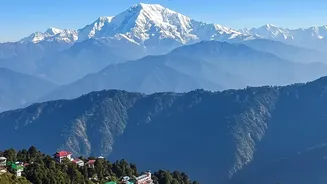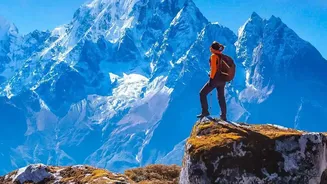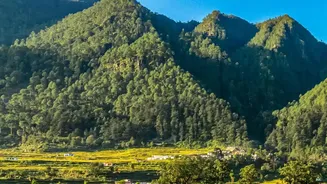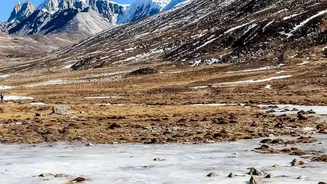

The Golden Rules of Sikkim Travel
Before you even look at a map, understand that travel in Sikkim is different. Distances are measured in hours, not kilometres, as winding mountain roads dictate your pace. The two most important factors are permits and timing. Indian citizens can travel freely
in main towns like Gangtok and Pelling, but need a Protected Area Permit (PAP) for sensitive border areas like Tsomgo Lake, Nathula Pass, and the entire North Sikkim circuit (Lachen, Lachung, Yumthang Valley, Gurudongmar Lake). These permits are typically arranged by registered local tour operators, who also provide the required Sikkim-registered vehicles. You'll need to provide copies of a photo ID (Voter ID or Passport are best; Aadhaar is not always accepted for permits) and several passport-size photos. Foreign nationals require a Restricted Area Permit (RAP) just to enter the state, plus a PAP for the protected areas, which must be arranged through an agency for groups of two or more. Always check the latest rules before travel, as they can change.
When to Go: A Seasonal Reality Check
The best time to visit Sikkim is widely considered to be spring (March to May) for blooming rhododendrons, and autumn (October to November) for clear skies and crisp mountain views. However, weather is highly localised. November, for example, offers pleasant conditions in Gangtok while high-altitude passes may already be seeing snow. The monsoon season (June to September) brings lush greenery but also a high risk of landslides and road blockages. Winters (December to February) transform the high reaches into a snowy wonderland, but many routes, including to Gurudongmar Lake and sometimes even Tsomgo Lake, become inaccessible. A news report from November 17, 2026, highlighted how heavy rainfall cut off road access to Lachen, stranding tourists and requiring rescue operations, underscoring the volatility of the region's weather.
Day 1: Arrival and Acclimatisation in Gangtok
Your journey begins with your arrival at Bagdogra Airport (IXB) or New Jalpaiguri (NJP) railway station in West Bengal. From there, it's a scenic but long 4-5 hour drive to Gangtok, the capital of Sikkim. Use this day to settle in and acclimatise to the altitude (around 1,650 metres). Hand over your documents and photos to your tour operator today so they can apply for the necessary permits for the following days. The permit offices are not open 24/7, and applications for places like Tsomgo Lake are usually submitted the day before travel. In the evening, take a leisurely stroll along the vehicle-free MG Marg, a lively hub of shops and cafes.
Day 2: Tsomgo Lake and Baba Mandir Excursion
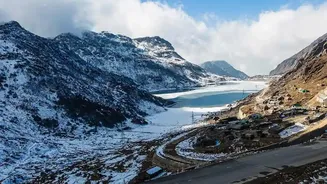
This is a full-day trip into the high-altitude region of East Sikkim. The star attraction is Tsomgo Lake, a stunning glacial lake located at about 3,750 metres. The journey itself is breathtaking, but this is your first major road and weather check. The route is prone to closure from heavy snow in winter and landslides during other times. Your permit, secured by your operator, is mandatory for this trip. If you are an Indian national, you can also apply for a special permit to visit Nathula Pass on the India-China border, but this is subject to a daily vehicle limit and is closed on Mondays and Tuesdays. Foreign nationals are generally not permitted to visit Nathula. Always be prepared for a last-minute cancellation if road or weather conditions are unfavourable.
Day 3 & 4: The North Sikkim Adventure
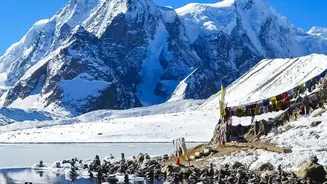
This two-day excursion into North Sikkim is the highlight for many but requires the most rigorous checks. On Day 3, you'll embark on a 5-6 hour drive from Gangtok to Lachen, a small village that serves as the base for Gurudongmar Lake. The route via the North Sikkim Highway can be precarious, with authorities often restricting travel due to weather. After an overnight stay in Lachen, Day 4 involves an early start to visit the magnificent Gurudongmar Lake, one of the highest lakes in the world. This journey is dependent on clear weather and road access, which is never guaranteed. You'll then drive to Lachung for the night. This part of the trip is entirely managed by your operator, who handles the PAP, vehicle, and accommodation bookings as a package, as self-drive is not permitted.
Day 5 & 6: Yumthang Valley and Departure
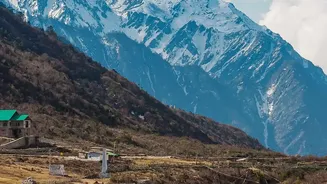
On Day 5, you will explore Yumthang Valley, known as the 'Valley of Flowers', which is famous for its vibrant rhododendron blooms in the spring. Some travellers opt to go further to Zero Point (Yumesamdong), though this often depends on road conditions and may involve an extra payment to the driver. Afterwards, you begin the long drive back to Gangtok. This journey retraces your path and is again subject to the day's road status. It is crucial to have this buffer day. Day 6 is for your departure. After breakfast, you will take the 4-5 hour drive from Gangtok back to Bagdogra Airport or NJP station for your journey home, filled with memories of the Himalayan heights.