






What Is This Pacific Pattern?
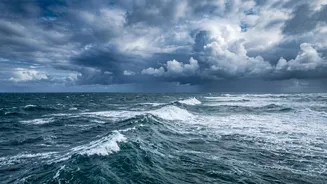
The climate pattern causing concern is the El Niño-Southern Oscillation, or ENSO. It’s a naturally recurring phenomenon involving the warming of surface waters in the central and eastern tropical Pacific Ocean. This isn't a new phenomenon, but the intensity
of the developing El Niño for 2026 is what has meteorologists on high alert. Forecasts from global agencies like the UK's Met Office and the US's National Oceanic and Atmospheric Administration (NOAA) suggest this event could become one of the strongest in over a century, with Pacific water temperatures rising more than 3°C above normal—a significant deviation from the usual 1-2°C warming seen in major events.
How It Disrupts India's Weather
This warming in the Pacific Ocean might seem distant, but it has a powerful domino effect on global atmospheric circulation. For India, the most critical impact is on the southwest monsoon. El Niño weakens the large-scale atmospheric circulation that typically drives moisture-laden winds from the ocean to the subcontinent. While not every El Niño year results in a drought, a strong correlation exists. Historically, powerful El Niño events are associated with below-average rainfall and drought-like conditions across large parts of India. The India Meteorological Department (IMD) has already forecast a weaker monsoon for this year, potentially the weakest in over a decade, linking it to the developing El Niño.
More Than Just a Weak Monsoon
The impact of a supercharged El Niño isn't limited to just the quantity of monsoon rain. Scientists note it can also alter the nature of the rainfall, leading to fewer rainy days but more intense, extreme downpours when it does rain. Beyond the monsoon, the effects can linger and expand. A stronger El Niño is expected to contribute to more frequent and intense heatwaves in the following year, which could make 2027 a record-breaking hot year globally. This also has implications for the Rabi crop season, which depends on residual moisture and stable winter temperatures. The combined stress of a poor monsoon followed by a harsh summer could create a multi-season agricultural crisis.
The Human and Economic Cost
For India, these weather shifts are not just statistics; they have profound economic and social consequences. With nearly half the workforce dependent on agriculture and a significant portion of farmland being rain-fed, a weak monsoon directly threatens crop yields, rural incomes, and food security. States with less irrigation, such as Maharashtra and Karnataka, are particularly vulnerable, with past strong El Niño events causing significant declines in foodgrain production. This can lead to rising food inflation, which impacts every household. Furthermore, the pressure extends to water resources, affecting drinking water supplies and reducing hydropower generation from strained reservoirs.
An Unpredictable Element
While the evidence for a strong El Niño is mounting, climate systems are complex. Some scientists point to another climate pattern, the Indian Ocean Dipole (IOD), which could potentially counteract some of El Niño's drying effects. A 'positive' IOD, where the western Indian Ocean is warmer than the east, can sometimes boost monsoon rainfall. However, the sheer predicted strength of the 2026 El Niño has experts worried that its influence might overpower other factors. This uncertainty underscores the challenge facing forecasters and policymakers as they prepare for a period of heightened climate volatility.