





Set Your Foundation: Adjust Chair Height
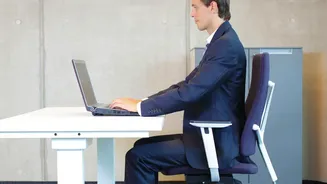
The first and most critical adjustment is your chair's height. Your feet should rest flat on the floor with your knees bent at roughly a 90-degree angle, and your thighs should be parallel to the ground. This position distributes your body weight evenly
and provides a stable base for your entire posture. If your feet are dangling, it puts strain on your lower back. If they are tucked underneath you, it can affect circulation. If your desk is too high and you need to raise your chair, use a footrest or even a stack of sturdy books to ensure your feet remain flat and supported.
Mind the Gap: Perfect Your Seat Depth
Once your height is set, scoot all the way back until your buttocks touch the back of the chair. From here, check the space between the front edge of the seat and the back of your knees. You should be able to fit two or three fingers in this gap. If the seat is too deep, it will press against the back of your knees, potentially restricting blood flow and putting pressure on nerves. If it's too shallow, your thighs won't be properly supported. Many ergonomic chairs have a lever to slide the seat pan forward or backward to get this just right.
Support Your Curve: Master the Lumbar Support
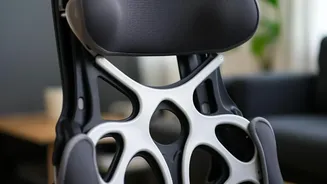
Proper lumbar support is essential for preventing slouching, which strains your lower back. Your chair's backrest should support the natural inward curve of your lower back. If your chair has adjustable lumbar support, position it so it fits snugly just above your belt line. It should feel supportive but not push your spine forward aggressively. If your chair lacks this feature, a simple rolled-up towel or a small cushion can work wonders. Place it in the small of your back to maintain that gentle arch and prevent you from slumping as you tire.
Relax Your Shoulders: Position Your Armrests
Armrests aren't just for resting; they play a key role in reducing strain on your neck and shoulders. Adjust them so that your elbows can rest comfortably at a 90-degree angle when your shoulders are relaxed. Your arms should be gently supported, preventing your shoulders from hunching up toward your ears. If your armrests are too high, they force shoulder shrugging, creating tension. If they're too low, you might lean to one side, causing spinal strain. Make sure they are also level with your desk surface.
Lean Back (A Little): Find the Ideal Recline Angle
Sitting perfectly upright at a 90-degree angle can actually increase pressure on your spinal discs. Instead, a slight recline of about 100 to 110 degrees is often recommended to reduce this pressure while still maintaining an engaged posture. This open angle allows your back muscles to relax a bit more. Most office chairs have a tilt-lock function that allows you to set and secure this slight recline. This encourages a more dynamic and less rigid sitting position throughout the day.
Your Best Posture is Your Next Posture
Even the most perfectly adjusted ergonomic chair can't protect you from the negative effects of prolonged, static sitting. The most important tweak of all is to incorporate regular movement into your day. Set a reminder to get up, stretch, and walk around for a few minutes every hour. Simple actions like standing during a phone call or doing quick stretches at your desk can improve circulation, reduce muscle stiffness, and give your spine a much-needed break. Remember, the goal isn't to find one perfect position but to frequently change your position.