



The Sun's Unseen Temper
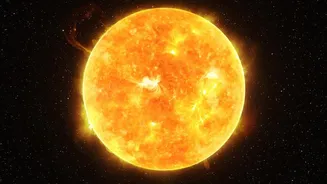
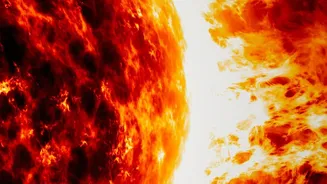
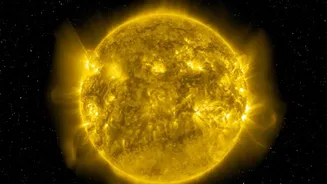
Space weather refers to the changing conditions in space, driven primarily by the sun's activity. Much like weather on Earth, it can be calm or stormy. The most extreme space weather events are solar storms. These occur when the sun's magnetic fields
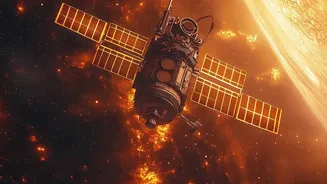
become twisted and suddenly snap, releasing vast amounts of energy. The two main types of events we worry about are solar flares and coronal mass ejections (CMEs). A solar flare is an intense burst of radiation that reaches Earth in just eight minutes, while a CME is a slower, but often more impactful, eruption of a giant cloud of solar plasma and magnetic fields that can take one to three days to arrive. When these storms are directed at Earth, they can have significant consequences for our technology.
A Fragile Digital World
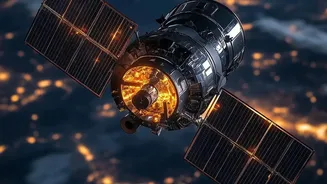
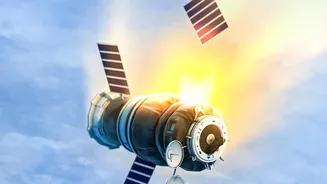
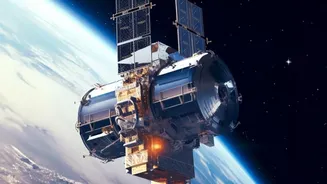
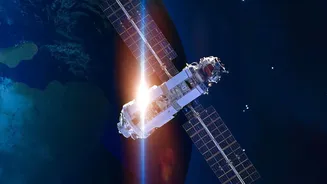
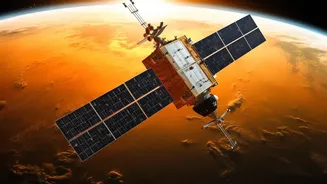
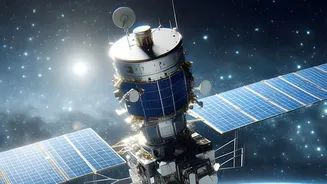
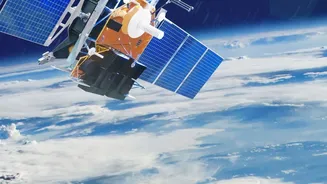
Our high-tech society is surprisingly vulnerable to these solar outbursts. Satellites are on the front line, orbiting outside the protection of Earth's atmosphere. Charged particles from a solar storm can damage sensitive electronics, degrade solar panels, and even cause satellites to lose altitude due to increased atmospheric drag. This directly threatens everything from weather forecasting to television broadcasts. Global navigation systems like GPS are also at risk. Solar storms disturb the Earth's ionosphere, the layer of the atmosphere that GPS signals must travel through. This can distort the signals, leading to positioning errors of several meters or even a complete loss of signal, affecting aviation, shipping, and even precision agriculture. Furthermore, solar flares can cause high-frequency radio blackouts on the sunlit side of the Earth, impacting communication used by airlines and emergency services.
Our Eyes on the Sun
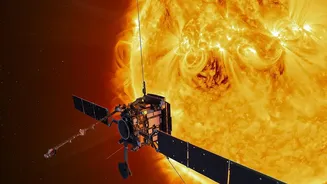
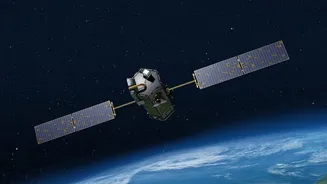
Since we can't stop solar storms, the next best thing is to see them coming. This is the job of space weather forecasters, led by organizations like the National Oceanic and Atmospheric Administration's (NOAA) Space Weather Prediction Center (SWPC). The SWPC operates 24/7, acting as the world's official warning center for space weather. Their primary tools are a fleet of satellites that act as an early-warning system. Satellites like the GOES series constantly watch the sun, providing real-time imagery of flares. The DSCOVR satellite sits at a unique point a million miles from Earth, directly in the path of any incoming CMEs. From this vantage point, it can measure the speed and magnetic orientation of a solar storm, providing a crucial 15-to-60-minute advance warning before it hits Earth's magnetic field.
From Forecast to Action
An early warning, even a short one, is enough time to take protective measures. When the SWPC issues an alert, it triggers a chain of actions across various industries. Satellite operators can put their spacecraft into a protective 'safe mode', turning off non-essential and sensitive components to weather the storm. Airlines can reroute flights away from polar regions, where Earth's magnetic field offers less protection from solar radiation, ensuring the safety of crew and passengers and maintaining communication. Power grid operators can prepare their systems for geomagnetically induced currents, which can overload transformers and cause widespread blackouts. These forecasts and alerts are essential for mitigating the worst effects of solar storms and protecting critical infrastructure.
The Growing Need for Vigilance
As our world becomes ever more reliant on satellite technology and global connectivity, our vulnerability to space weather grows. The rise of commercial spaceflight and the deployment of massive satellite constellations for global internet means there is more valuable hardware in orbit than ever before. This increases the potential for widespread disruption from a major solar event. In response, scientists are continuously working to improve forecasting models and develop new technologies to better predict the sun's behavior. The goal is to provide longer lead times and more specific forecasts, allowing for even more effective protective measures. This field of science is no longer a niche curiosity; it's a matter of global economic and national security.