




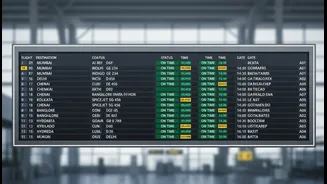



Understanding On-Time Performance (OTP)
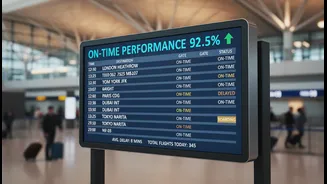
On-Time Performance, or OTP, is the primary metric used to measure an airline's punctuality. In India, the Directorate General of Civil Aviation (DGCA) is the key regulator that defines and tracks this data. According to the DGCA, a domestic flight is considered
'on-time' if it departs from the gate within 15 minutes of its scheduled departure time. This data is compiled monthly for India's four busiest metro airports: Delhi, Mumbai, Bengaluru, and Hyderabad. These airports handle a majority of the country's air traffic, making their performance a strong indicator of an airline's overall reliability. The DGCA then publishes these reports, creating a public-facing scorecard that allows passengers to see how different carriers are performing.
The Benefit: Choosing Your Airline Wisely
The most significant benefit of this data is consumer empowerment. When booking a flight, price is often the deciding factor. However, OTP data adds another crucial variable to the equation. For a business traveller with a tight schedule or a family trying to make a connecting flight, a punctual airline can be worth a slightly higher fare. Recent reports show a considerable gap between the top and bottom-ranked carriers, sometimes as much as 10-15 percentage points. Over the past year, airlines like IndiGo and Akasa Air have consistently posted high OTP scores, often above 80%. Meanwhile, a major carrier like Air India has also shown significant improvement, recently ranking fourth globally for punctuality in a June 2026 report by analytics firm Cirium. By consulting these monthly reports, flyers can make an informed decision that balances cost with the likelihood of a timely departure.
The Limits: What the Numbers Don't Tell You
While useful, OTP data has significant limitations. Firstly, the official DGCA data is limited to only four metro airports. Punctuality on flights to and from smaller, Tier-2 and Tier-3 cities is not captured in these headline figures. An airline with a stellar OTP at major hubs might have a different performance profile on regional routes. Secondly, OTP is an average. A 90% punctuality record is excellent, but it still means 1 in 10 flights are late, and there's no way of knowing if yours will be the one. Factors like seasonal weather (monsoon rains, winter fog), air traffic congestion, and reactionary delays from a late-arriving aircraft can all impact a specific flight, regardless of the airline's overall record. Therefore, data should be used as a guide, not a guarantee.
The Costs: When Delays Do Happen
Understanding your rights is crucial when delays inevitably occur. The DGCA has a specific set of rules, known as Civil Aviation Requirements (CAR), that dictate what airlines owe their passengers. These rules are not optional goodwill gestures; they are legally binding. For delays of 2-4 hours, airlines are required to provide free meals and refreshments. If a delay extends beyond six hours, passengers are typically entitled to hotel accommodation for overnight waits and the option of a full refund or an alternative flight. For certain cancellations and denied boardings, there is also provision for monetary compensation, which can range from ₹5,000 to ₹20,000, depending on the circumstances. It is important to note that these compensation rules often do not apply in cases of 'force majeure' events like extreme weather or security risks, which are beyond the airline's control.
A Practical Checklist for Smart Flyers
To make the most of the available information, flyers should adopt a multi-step approach. Before booking, take a few minutes to look up the latest monthly OTP report on the DGCA's website. Don't just look at the overall score; see if the data specifies performance at your origin or destination airport. Compare the top-performing airlines on your specific route. During peak travel seasons or periods of likely weather disruption, consider paying a small premium for an airline with a historically better punctuality record. Finally, familiarise yourself with the basic passenger rights outlined by the DGCA. Knowing when you are entitled to a meal, a hotel room, or a refund can save you significant stress and money if your travel plans are disrupted. Being an informed passenger is the best way to navigate the complexities of modern air travel.