





The Clarity of Autumn Air
Have you ever noticed the stars seem to sparkle with extra intensity on a cool autumn night? You're not imagining it. As temperatures drop, the atmosphere holds less humidity. This reduction in airborne moisture means less haze to scatter light, resulting
in a clearer, more transparent sky. The cooler air is often more stable, causing stars to twinkle less and planets to shine with a steady, unwavering light. These conditions create a darker backdrop, making faint objects pop and providing a superior viewing experience compared to many hazy summer evenings. The longer nights also mean you don't have to stay up as late to enjoy a truly dark sky.
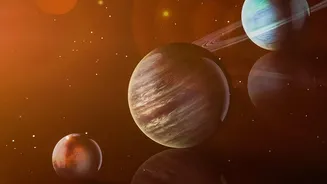
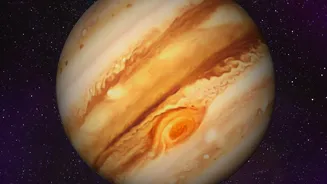
Spotting Jupiter, the King Planet
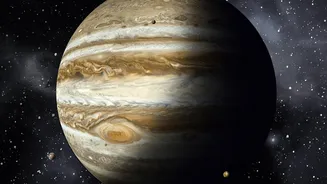
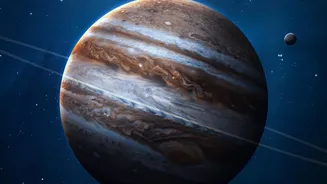
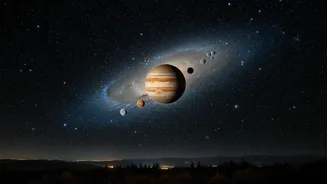
Jupiter is one of the brightest objects in the night sky, often outshining every star. You can distinguish it from a star because of its steady, brilliant light; stars twinkle, while planets typically do not. In the autumn of 2026, Jupiter will be a prominent feature in the morning sky. To find it, look towards the east before sunrise. Several stargazing apps can show you its precise location on any given night. On October 6, 2026, a special event occurs when the waning crescent moon passes directly in front of Jupiter, an event known as an occultation, which will be visible across much of North America.
A Dance of Galilean Moons
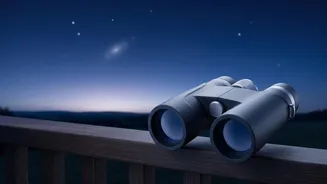
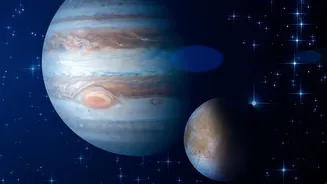
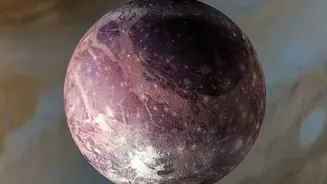
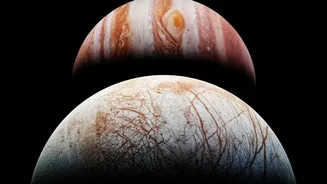
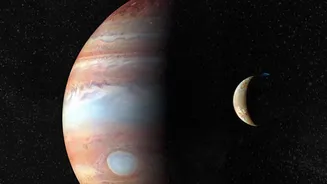
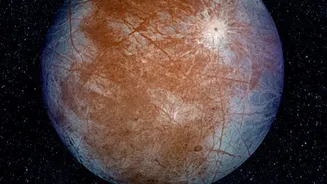
Seeing Jupiter’s largest moons is a genuine thrill, and it's surprisingly achievable with a standard pair of binoculars, such as 7x50 or 10x50 models. To get the best view, it's crucial to hold your binoculars as steady as possible. Try bracing your elbows on a solid surface like a wall or car roof, or ideally, use a tripod. When you look at Jupiter, you’ll see it as a small, distinct disc rather than a point of light. Look closely on either side of the planet for a line of up to four tiny pinpricks of light. These are the Galilean moons: Io, Europa, Ganymede, and Callisto. Their positions change from night to night, offering a dynamic view of our solar system in motion.
Finding a Galaxy Next Door
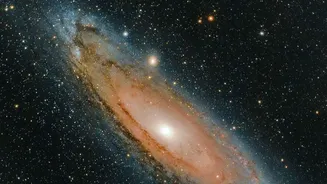
The Andromeda Galaxy, also known as M31, is the most distant object you can see with the naked eye, but binoculars make the task much easier. It’s located about 2.5 million light-years away. To find it, first locate the W-shaped constellation of Cassiopeia high in the northeastern sky. The three westernmost stars of the 'W' can be used as an arrow pointing roughly in Andromeda's direction. Another method is to start from the Great Square of Pegasus and use the stars that form the constellation Andromeda to 'star-hop' over to the galaxy. Through binoculars, it won't look like a dazzling spiral but rather a faint, elongated, fuzzy patch of light. Seeing that smudge, knowing it's a city of hundreds of billions of stars, is a truly humbling experience.
Tips for Your Stargazing Success
To make the most of your night out, a little preparation goes a long way. Find a location away from city lights; even a local park can be a significant improvement over a backyard surrounded by streetlights. Give your eyes at least 15-20 minutes to fully adapt to the darkness, and avoid looking at your bright phone screen. If you need a light to consult a chart, use a red-light torch, as it's less damaging to your night vision. Finally, dress in warm layers. Autumn nights can get cold, and you'll enjoy the cosmic views much longer if you're comfortable.