



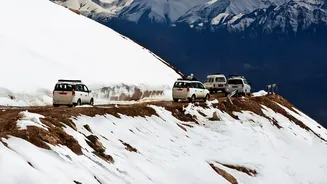


The thrill of an early winter road trip across the Himalayas is unmatched, but so are its challenges. Unpredictable, high-velocity winds can turn improperly secured roof cargo into a serious hazard, compromising safety and vehicle handling.
Understanding Himalayan Winds
Driving in the
Himalayas is not like driving anywhere else. The region's dramatic topography, with its deep valleys and high-altitude passes, funnels and accelerates wind, creating powerful, unpredictable gusts. This isn't just a gentle breeze; it's a significant force that can exert immense pressure on your vehicle. A loaded roof rack increases your car’s profile, making it more susceptible to wind resistance. This can affect stability, steering, and fuel efficiency, especially at speed. The shape of your cargo can even create aerodynamic lift, similar to an airplane's wing, putting extreme stress on your roof rack and its fastenings.
The Right Gear Is Your First Line of Defence
Your preparation starts long before you pack the car. Never use simple bungee cords; they stretch, degrade, and can easily snap under the strain of Himalayan winds. Invest in high-quality cam buckle or ratchet straps. Ratchet straps offer superior tension, locking your load in place, while cam buckles are quicker to adjust. For maximum security, consider a combination of a weatherproof, aerodynamic roof box and straps. A hard-shell cargo box not only protects your gear from the elements but also significantly reduces wind resistance compared to an open load. If using a soft cargo bag, ensure it is made of durable, waterproof material.
The Art of Loading: Balance Is Everything
How you load your cargo is as important as how you secure it. Always be aware of your vehicle's dynamic weight limit for the roof, which is often surprisingly low—typically between 75 to 100 kgs for most cars and SUVs. This limit includes the weight of the rack itself. To maintain your vehicle's centre of gravity and stability, place the heaviest items at the bottom and in the centre of the roof rack. Distribute the weight as evenly as possible from side-to-side to prevent imbalance, which can severely affect your car's handling during turns and braking. A top-heavy vehicle is much harder to control, especially when a strong crosswind hits.
Mastering the Tie-Down Technique
Once loaded, securing the cargo properly is critical. Use at least two straps, and more for larger loads. Run the straps over your cargo and secure them to the sturdy points of your roof rack. For maximum stability, cross the straps in an 'X' pattern diagonally over your load. Tighten them until there is absolutely no slack. Once tightened, give the cargo a firm shake from all sides; it should not move independently of the vehicle. Finally, secure any loose ends of the straps so they don’t flap in the wind, which can be distracting and cause friction damage. Using a cargo net over the entire load can provide a valuable secondary layer of security.
Adjust Your Driving for the Load
A loaded roof rack fundamentally changes how your vehicle handles. The higher centre of gravity and increased wind resistance mean you must adjust your driving style. Reduce your speed, especially on exposed high altitude passes and bridges where crosswinds are strongest. Increase your following distance to allow for longer braking distances. Be particularly cautious on winding roads; the added weight on top can make the car feel less stable in sharp turns. In very snowy or icy conditions, these effects are magnified, so drive even more slowly and gently.
Vigilance Is Non-Negotiable
Securing your cargo is not a 'set it and forget it' task. Webbing on straps can stretch and settle, especially during the first few kilometres of a journey. It is crucial to stop after about 20–30 minutes of driving to re–check the tension of all straps and make adjustments. Make this check a routine at every rest stop. A quick tug on each strap is all it takes to ensure your load remains secure. This simple habit can prevent a catastrophic failure on the road, where loose cargo can become a life–threatening hazard to you and other drivers.