






Understanding the Price Fluctuations
Gold prices have seen a notable recovery in August 2026, with domestic prices for 10 grams rising significantly. This upward trend follows a correction in June and a period of stability in July. The current firmness is influenced by a mix of global and domestic factors.
Globally, a weaker U.S. dollar, expectations around monetary policy, and continued investment in gold Exchange Traded Funds (ETFs) are providing support. Domestically, factors like import duties, the USD/INR exchange rate, GST, and strong festive demand play a crucial role. As of mid-August 2026, 24-carat gold is trading around ₹1,60,000 per 10 grams. While prices are high, increased exchange of old gold is keeping local supply available.
Look for the Six-Digit HUID Hallmark
To ensure you are buying authentic gold, the most critical factor is the BIS (Bureau of Indian Standards) Hallmark. Since April 1, 2023, it is mandatory for all gold jewellery sold in India to have a six-digit alphanumeric Hallmark Unique Identification (HUID) number. This code provides traceability and confirms the purity of the gold. You can instantly verify the HUID using the government's 'BIS Care' app on your smartphone. The app will display the jeweller's details, the hallmarking centre, and the purity of the item. This system protects you from fake hallmarking and ensures you get what you pay for.
Don't Ignore Making Charges
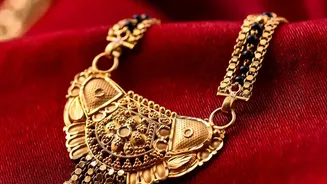
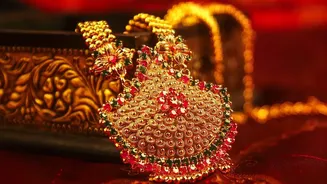
The final price of gold jewellery is not just the cost of gold; it includes making charges, which can significantly increase your bill. These charges cover the labour and craftsmanship involved in creating the piece and can range anywhere from 5% to over 25% of the gold's value. Jewellers calculate these charges in two ways: as a percentage of the gold value or as a fixed rate per gram. Machine-made jewellery or simpler designs usually have lower making charges, while intricate, handcrafted pieces are more expensive. It's always wise to ask for a detailed bill that breaks down the gold price, making charges, and GST. Don't hesitate to compare these charges across different jewellers, as there's often room for negotiation.
Purity Is Paramount: Know Your Karats
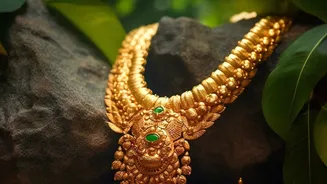
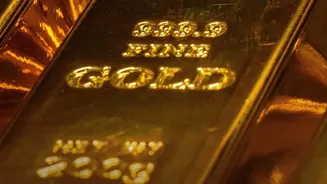
Gold purity is measured in karats (K). 24K gold is the purest form (99.9% pure) and is typically used for investment purposes like coins and bars. It is too soft to be used for regular jewellery. Most traditional Indian jewellery is made from 22K gold, which is 91.6% pure gold mixed with other metals like silver and zinc for durability. Modern and diamond-studded jewellery is often made from 18K gold (75% pure). Your bill should clearly state the karatage, and the BIS hallmark will include a corresponding purity mark, such as '916' for 22K gold or '750' for 18K gold.
Physical vs. Digital Gold: A Modern Choice
Today, consumers are not limited to buying physical gold. Digital gold has emerged as a popular alternative for investment. When you buy digital gold online, you own 24K gold that is stored in secure, insured vaults by a third party. This eliminates making charges (though a 3-5% spread applies), storage concerns, and theft risk. You can buy it in small denominations, making it accessible for systematic saving. However, for those who value tradition and want to wear their investment for occasions, physical jewellery remains the preferred choice. For pure investment, digital gold or Gold ETFs often prove to be more cost-effective and liquid options.