





Go Beyond the Basic Forecast
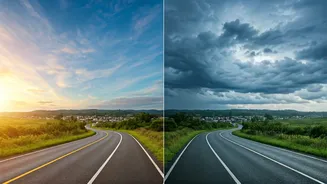
Relying on a simple daily forecast—'40% chance of rain'—is like navigating with a blurry map. Modern weather technology offers something far more powerful: hyperlocal, minute-by-minute precipitation alerts. Instead of a vague probability for your entire
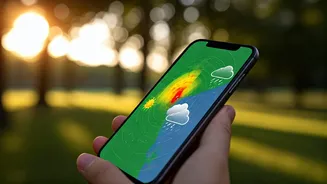
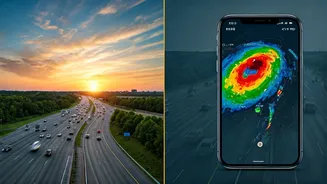
city, these alerts can tell you that light rain will start at your exact location in 15 minutes and last for an hour. [12, 13, 14, 19] This level of precision, often powered by real-time radar and localised data, is the key to making informed, flexible decisions rather than cancelling your plans outright. [9, 13, 21] Many advanced apps provide interactive radar maps that let you see the direction and intensity of approaching rain, giving you a visual edge. [9, 10]
Choose Your Digital Weather Watcher
Not all weather apps are created equal. For saving your weekend, you need one that excels at real-time, hyperlocal alerts. Look for apps with features like minute-by-minute forecasts and customizable notifications. In India, several apps provide reliable services. The government's official 'Mausam' app offers forecasts and warnings from the India Meteorological Department (IMD). [3, 8, 16] Another government app, 'Damini', specifically warns about lightning strikes. [16] International apps like AccuWeather, known for its 'MinuteCast' feature, and The Weather Channel are also highly effective in India, providing detailed hourly updates. [3, 9, 12, 16] Skymet Weather is another popular choice, particularly known for tracking the Indian monsoon. [16] Many of these offer free versions with the essential features you need. [3]
Customise Your Alerts Wisely
The goal is to receive useful information, not a constant stream of notifications that you learn to ignore. Dive into your chosen app’s settings to tailor the alerts to your needs. A good app will let you set notifications for specific precipitation intensities (e.g., alert for heavy rain but not light drizzle), define a radius around your location, and schedule 'quiet hours'. [5, 17, 18] For example, you can set an alert to only trigger if there's a high probability of rain starting in the next 30 minutes. [18] This ensures that when your phone buzzes, it's for a weather event that truly impacts your immediate plans, like an outdoor cricket match or a market trip.
Turn Information into Action
An alert shouldn't automatically mean cancellation. It means it's time to adapt. A notification that says, "Heavy rain starting in 20 minutes," is your cue to pack up the picnic and move to a nearby café, not to go home. An alert for "Light rain for the next 45 minutes" might mean it's the perfect time to visit that indoor exhibit you had planned for later. Understanding the difference between a 'Watch' (conditions are favourable for hazardous weather) and a 'Warning' (hazardous weather is imminent or occurring) is also crucial. [22, 30] These alerts empower you to make small adjustments, find windows of clear weather, and salvage the majority of your day with confidence.
Understand the Tech and Its Limits
Hyperlocal forecasts are powered by incredible technology, including Doppler radar, a vast network of weather stations, and powerful prediction models. [20, 23] The IMD, for instance, uses a sophisticated Decision Support System that integrates satellite and radar data to generate timely warnings. [20, 23] Apps like Weather Underground even incorporate data from thousands of personal weather stations for hyper-local accuracy. [21] While these tools have dramatically improved forecast accuracy, no prediction is 100% infallible. [21] Weather can be unpredictable, especially during volatile seasons like the monsoon. Think of these alerts as a highly reliable guide, not a guarantee. They give you a significant advantage, allowing you to stay prepared and flexible, which is the ultimate key to a successful weekend.