



From Textbooks to Touchdown
For most students, space exploration is a concept confined to science textbooks, filled with diagrams of planetary orbits and the physics of rocket propulsion. A visit to an Indian Space Research Organisation (ISRO) centre transforms these abstract ideas
into tangible reality. Seeing a full-scale model of a Polar Satellite Launch Vehicle (PSLV), touching the smooth, curved surface of a heat shield, or watching a film about the intricacies of a satellite launch can make science come alive in a way no classroom can. Studies on learning show that such experiences, which engage students in a new environment, boost curiosity and make complex scientific concepts more memorable and meaningful. It is the difference between reading the recipe and tasting the dish; the experience provides a context and sensory richness that deepens understanding and ignites genuine interest.
A Journey Through India's Space Hubs
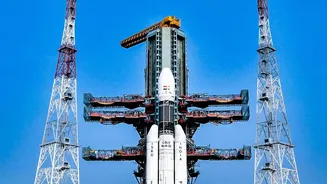
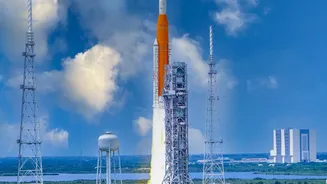
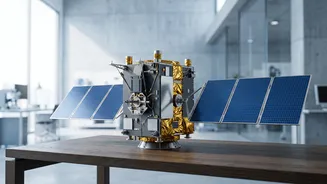
Several ISRO facilities across the country welcome student groups, offering a glimpse into the heart of India's space programme, provided they receive prior permission. The Vikram Sarabhai Space Centre (VSSC) in Thiruvananthapuram, the cradle of India's launch vehicle technology, houses a comprehensive space museum. Students can learn about India's space history, from the early days of launching sounding rockets from a church to the development of sophisticated multi-stage rockets. At the Satish Dhawan Space Centre (SDSC) in Sriharikota, India's spaceport, visitors can see the massive Vehicle Assembly Building and launch pads where history is made. On launch days, a public viewing gallery even offers a direct view of the ascent. In Bengaluru, the U R Rao Satellite Centre (URSC) provides a look at where India's satellites are designed and built. Each centre offers a unique piece of the larger puzzle, showcasing the collaborative effort behind every mission.
The Chandrayaan Effect and a New Job Frontier
The historic landing of Chandrayaan-3 near the lunar south pole didn't just place India in an elite club of spacefaring nations; it ignited a fire in the minds of young Indians. Following the mission, applications to ISRO reportedly spiked, and aerospace engineering became a sought-after preference for the first time in decades. This surge of interest coincides with a pivotal moment for India's space sector. The government's opening of the sector to private enterprise in 2020 has led to the creation of over 400 space startups. India's space economy, currently valued at over $8 billion, is projected to grow to more than $40 billion by the early 2030s. A visit to a space centre is no longer just about admiring past achievements; it is a preview of a booming industry with diverse career opportunities.
Careers Beyond the Cockpit
The term 'space career' often conjures images of astronauts. However, visits to ISRO centres reveal the vast ecosystem of professionals who make space exploration possible. For every astronaut, there are thousands of engineers, data scientists, materials experts, software developers, and policy specialists working on the ground. The exhibits and interactions at these centres highlight roles in satellite communications, remote sensing for agriculture and disaster management, and navigation systems that power our daily lives. As India's private space industry grows, so too does the demand for talent in manufacturing, geospatial intelligence, and space-based applications. By showcasing this diversity of roles, these visits can broaden a student's ambition from the dream of being an astronaut to the achievable goal of becoming a space sector professional.
An Investment in National Ambition
Ultimately, encouraging students to visit these epicentres of innovation is more than an educational activity; it's a national investment. It's about planting a seed of curiosity that might one day grow into a groundbreaking scientific discovery or a billion-dollar space-tech company. These visits help students connect their personal aspirations with a grand national purpose. They see firsthand how science and technology are being used to solve real-world problems and push the boundaries of human knowledge. Seeing engineers in action and interacting with scientists provides powerful role models and helps students envision a future where they too can contribute. In a nation aiming for global leadership, inspiring the next generation to reach for the stars is not just a poetic notion, but a strategic necessity.