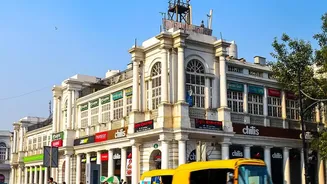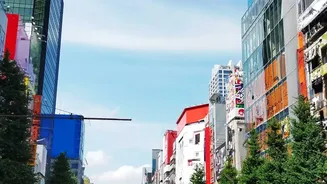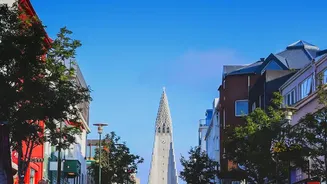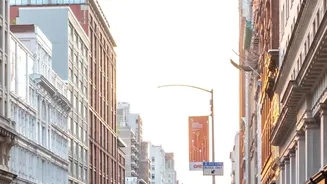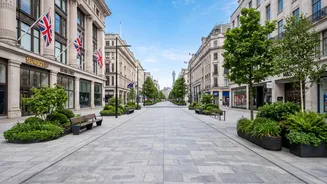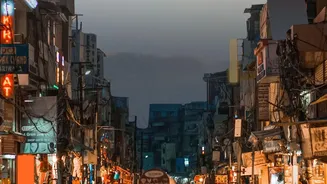






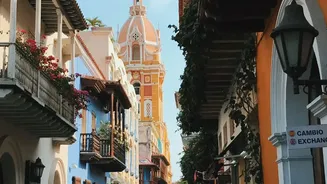
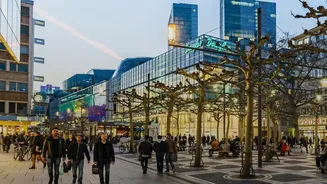
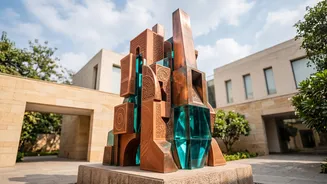
The transformation of Delhi's Chandni Chowk from a traffic-clogged artery into a pedestrian-friendly promenade is more than just a local upgrade. It’s a sign of India joining a global movement to reclaim city centres for people, not just cars.
Chandni Chowk, Delhi: A Heritage Revival
For centuries,
Chandni Chowk was the vibrant, chaotic heart of Old Delhi. A 1.3-km stretch built in the 17th century, it devolved into a bottleneck of cars, rickshaws, vendors, and tangled overhead wires. The recent redevelopment project sought to change that by pedestrianising the main stretch from 9 a.m. to 9 p.m.. The transformation is striking. The project focused on decongesting the area by banning motorised traffic during the day, burying a web of electrical wires underground, and creating wide, clear footpaths with red sandstone and granite.. With dedicated lanes for non-motorised vehicles, benches for shoppers, and restored building facades, the project aimed to enhance the Mughal-era architectural aesthetics while improving the quality of life and user experience.. This revitalisation isn't just about reducing chaos; it's about preserving heritage and boosting the local economy by creating a more inviting atmosphere for tourists and locals alike. It proves that even the most complex urban environments can be reimagined for people.
Strøget, Copenhagen: The European Pioneer
Long before most cities considered going car-free, Copenhagen did. In 1962, the city converted its main street, Strøget, into a pedestrian-only zone as a temporary experiment.. The idea was controversial; merchants feared losing business, and many believed Danes wouldn't embrace public life on the street.. They were wrong. The experiment was made permanent in 1964 and became a resounding success, proving that pedestrianisation could boost retail and create a vibrant civic space.. At 1.1 km, it became one of Europe's longest pedestrian shopping streets, linking major city squares.. Today, Copenhagen's pedestrian network has expanded to over 100,000 square metres.. Strøget, whose name fittingly means 'to stroll', didn't just change Copenhagen; it inspired cities worldwide, showing that prioritising people over vehicles was a viable and profitable urban strategy..
La Rambla, Barcelona: The Social Artery
More than just a street, La Rambla is Barcelona's social and cultural backbone. The 1.2-km boulevard inverts typical street design, placing a wide pedestrian promenade in the centre while pushing cars to narrow lanes on the sides.. Its name comes from the Arabic word 'ramla', meaning 'sandy riverbed', as it was built over a seasonal stream.. Lined with trees, kiosks, flower stalls, and street performers, La Rambla is divided into several sections, each with its own character.. It connects the central Plaça de Catalunya to the port, guiding visitors past landmarks like the La Boqueria Market and the Liceu Opera House.. While it now struggles with over-tourism, its fundamental design remains a masterclass in creating a multi-use public space.. It serves as a living room for the city, a place for celebration, strolling, and socialising—a true people's street.
Shijo Dori, Kyoto: Balancing Tradition and Traffic
Kyoto's Shijo Dori presents a different challenge: how to make a major, historic thoroughfare more pedestrian-friendly without eliminating traffic entirely. The city's solution, implemented around 2015, was a 'traffic calming' approach.. Instead of a full ban, the project widened sidewalks and reduced traffic lanes. This simple change reallocated space, giving pedestrians more room to walk comfortably while still allowing for vehicle access.. This is particularly important in a city where covered sidewalks are beloved public spaces, offering shelter during rainy seasons and connecting people to public transport.. For locals and tourists navigating the busy street, there is even an underground passage that provides a quieter, faster route and doubles as a local art exhibition space.. Shijo Dori shows that pedestrianisation isn't an all_or_nothing concept; sometimes, a strategic rebalancing is all that's needed.