






Start With a Clean Canvas
The first rule of flawless makeup is to never apply it over yesterday's impurities. Starting with a clean face is non-negotiable. Use a gentle cleanser suited to your skin type to wash away any dirt, excess oil, and residue from your overnight skincare.
This ensures that you aren't trapping debris under your foundation, which is a primary cause of clogged pores. For those prone to breakouts, consider a cleanser with salicylic acid to help gently exfoliate and keep pores clear from the start. A clean base allows products to apply smoothly and prevents a cakey or uneven finish.
Hydration Creates a Protective Barrier
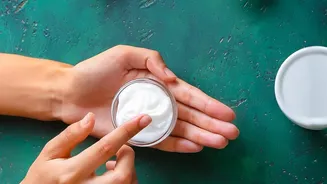
It might seem counterintuitive to layer products on your skin, but moisturizer is a critical step. A well-hydrated face provides a smoother canvas, preventing makeup from clinging to dry patches or settling into fine lines. More importantly, moisturizer acts as a protective barrier between your skin and your makeup. This barrier helps prevent foundation and concealers from seeping deep into your pores. Even if you have oily skin, a lightweight, oil-free, or gel-based moisturizer is essential to help regulate oil production and prevent your skin from overcompensating with more shine later in the day.
The Power of a Non-Comedogenic Primer
Think of primer as the final gatekeeper for your pores. This step is designed to create a perfectly smooth surface for makeup application, but its benefits go beyond that. A good primer fills in fine lines and minimizes the appearance of pores, helping your makeup last longer. For this specific purpose, it is crucial to choose a product labeled 'non-comedogenic', which means it's formulated not to clog pores. Silicone-based primers are excellent at creating a silky-smooth barrier, which can actually protect your pores from potentially clogging ingredients in your foundation. For those with very sensitive or severely acne-prone skin, a water-based primer can be a lighter, hydrating alternative.
Choose Your Makeup Wisely
While skin prep is half the battle, the products you use also matter. When possible, opt for foundations and concealers that are labeled 'non-comedogenic' or 'oil-free'. Heavy, occlusive makeup formulas are more likely to block pores, leading to a type of acne known as 'acne cosmetica'. This doesn't mean you can't go for full coverage; many brands now offer high-performance, long-wear products that are formulated to be gentle on the skin. A little research into your product's ingredients can make a significant difference in how your skin reacts after a long day of wear.
The Removal Ritual: Double Cleanse Thoroughly
What you do at the end of the night is just as important as what you did in the morning. Simply washing your face once may not be enough to remove heavy, long-wearing makeup, sunscreen, and oil. This is where the double cleansing method is essential. Start with an oil-based cleanser or a cleansing balm. Massage it onto dry skin to dissolve and lift away all the oil-based impurities like makeup and sebum. After rinsing, follow up with your regular water-based cleanser to wash away any remaining residue, sweat, and dirt. This two-step process ensures your pores are truly clean and can breathe overnight, significantly reducing the risk of post-makeup breakouts.