

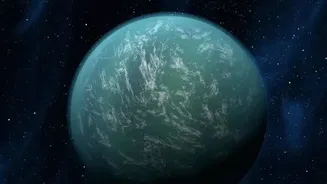
Beyond 'Earth-Like'
For decades, the search for extraterrestrial life has been a search for a mirror image of our own world—an 'Earth 2.0'. But a compelling scientific concept flips this idea on its head, asking whether Earth is truly the pinnacle of habitability. What if,
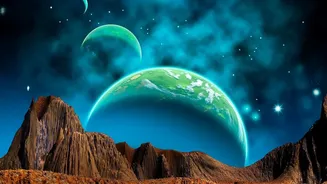
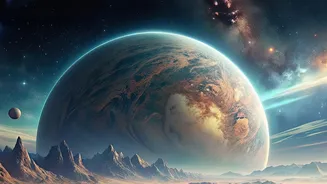
instead, there are 'superhabitable' planets, worlds with conditions even more conducive to the flourishing of life? The concept, introduced in 2014, challenges our geocentric assumptions. It suggests that by looking only for planets that perfectly mimic our own, we might be overlooking worlds that offer a richer, more stable, and more diverse environment for life to emerge and evolve. This isn't about finding a bigger or better home for humanity, but about refining our search for life by understanding the absolute best conditions the universe has to offer.
The Superhabitability Checklist
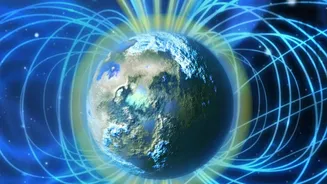
So, what makes a planet 'super'? Astronomers have a checklist. Instead of orbiting a G-type star like our Sun, which has a lifespan of about 10 billion years, a superhabitable planet might orbit a smaller, cooler, and much longer-lived K-type orange dwarf. These stars can remain stable for 20 to 70 billion years, giving complex life a far greater window of time to evolve. The ideal planet would be slightly older, larger, and more massive than Earth—perhaps about 1.5 times the mass. This extra mass would help it retain its atmosphere and ensure its interior stays geologically active for longer, powering crucial processes like plate tectonics and a protective magnetic field. A slightly warmer global average temperature of around 25°C, combined with more shallow water distributed across many small landmasses, could create sprawling, life-rich tropical zones far exceeding Earth's biodiversity hotspots.
Promising but Unproven Worlds
This checklist is more than just a theoretical exercise. In 2020, a team of scientists sifted through over 4,000 known exoplanets and identified 24 top candidates that might fit the superhabitable profile. These aren't confirmed havens of life, but distant points of interest that tick some of the right boxes. One of the most promising candidates often cited is KOI-5715.01, a planet estimated to be about 5.5 billion years old and orbiting a stable orange dwarf star. However, all these candidates are incredibly distant, typically more than 100 light-years away, making any detailed analysis a monumental challenge. They remain tantalizing possibilities, representing the best-educated guesses based on limited data. Confirming their true nature is a task for future, more powerful telescopes.
The Great Cosmic Silence
Despite these exciting possibilities and a continuously growing catalogue of exoplanets, we are still confronted by a profound reality. Earth remains the only planet we know for certain hosts life. This is the heart of the famous Fermi Paradox: if the universe is so vast and potentially full of habitable worlds, where is everybody? The answer lies in the immense difficulty of the task. Detecting a planet is one thing; confirming it has an atmosphere, liquid water, and, most importantly, the chemical fingerprints of life—or biosignatures—is another challenge entirely. Even a planet as close as Proxima Centauri b, just over four light-years away, is a world we can only study from afar. The technological leap required to bridge the gap from 'potentially habitable' to 'confirmed inhabited' is enormous, leaving us in a state of knowing the ingredients for life are out there, but having no proof they have combined elsewhere.