


Not Your Average Dust Bunny
The dust covering the Moon, known as lunar regolith, is fundamentally different from the dust on Earth. Billions of years of micrometeorite impacts have pulverized the lunar rock into a collection of fine, sharp, and glassy particles. Unlike Earth's dust,
which is weathered and rounded by wind and water, lunar dust particles have jagged edges. Compounding the problem, constant bombardment from solar radiation gives the dust an electrostatic charge, causing it to cling tenaciously to any surface it touches, including spacesuits, tools, and equipment. Apollo astronauts noted its distinct smell of spent gunpowder and found it nearly impossible to brush off.
A Microscopic Menace to Health
The very properties that make lunar dust unique also make it dangerous. When inhaled, these microscopic shards can cause significant damage to the human body. Apollo astronauts reported symptoms like sneezing, watery eyes, and sore throats, a condition they dubbed “lunar hay fever.” While these symptoms were short-lived, scientists are concerned about the effects of long-term exposure. Studies using lunar soil simulants have shown that the particles can kill lung and brain cells and damage DNA. Health experts warn that prolonged exposure could lead to chronic respiratory illnesses similar to silicosis, an occupational lung disease caused by inhaling silica dust on Earth. The risk is so pronounced that NASA has established exposure limits for future missions.
From Suit to Sanctuary
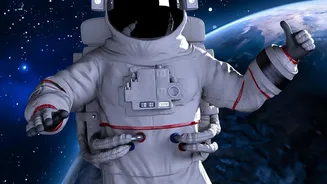
The primary challenge is preventing this hazardous dust from entering the clean environment of a lunar habitat. An astronaut returning from an extravehicular activity (EVA) will inevitably carry dust on their suit. Once they re-enter the habitat and remove the suit, the fine particles can become airborne. In the low gravity of the Moon, these particles can stay suspended in the air for longer, increasing the chances of inhalation by the entire crew. Beyond the direct health risks, the dust can contaminate water recycling systems, clog filters, and abrade seals and mechanical parts, posing a threat to the life-support equipment that keeps astronauts alive.
NASA's High-Tech Housekeeping
Recognizing the severity of the problem, NASA and other space agencies are developing a suite of technologies to combat lunar dust. Simple brushes proved ineffective during the Apollo missions, sometimes even amplifying the dust's static cling. Current research for the Artemis program focuses on advanced solutions. One of the most promising is the Electrodynamic Dust Shield (EDS), a technology that uses an electric field to actively repel dust from surfaces. This transparent shield can be applied to camera lenses, solar panels, and even woven into the fabric of spacesuits. Other strategies include developing special dust-resistant coatings, using magnetic tools to clean suits, and designing multi-stage airlocks that can decontaminate an astronaut before they enter the main habitat.