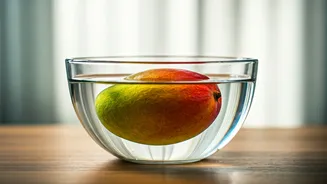









The Sticky Problem With Mangoes
Before you can enjoy the sweet, golden flesh of a ripe mango, you have to contend with its first line of defence: the sap. This milky, sticky liquid, which oozes from the stem end when the fruit is picked, is technically called latex. It contains a cocktail
of compounds, including terpenes and urushiol, the same substance found in poison ivy that can cause contact dermatitis, leading to itchy rashes on the lips and hands for sensitive individuals. Beyond being a skin irritant, the sap has an acrid, bitter taste. If it gets on the fruit's flesh while you’re cutting it, it can spoil the flavour of an otherwise perfect mango. This is why simply washing the fruit under running water often isn't enough; the sap is stubborn and clings to the skin.
Why Saltwater is the Secret Weapon
Soaking mangoes in a bowl of saltwater for about an hour is a piece of traditional wisdom that is backed by simple science. The key principle at work here is osmosis. When you place the mangoes in a salt solution, you create a system where the concentration of salt is higher in the water than it is inside the mango's skin and stem. Nature seeks balance, so the water and sap compounds near the mango’s surface are drawn out into the saline solution to try and equalize the concentration. The salt effectively 'pulls' the sticky latex and its irritating compounds out from the stem end and the pores of the skin. This process not only makes the mangoes less sticky and easier to handle but also significantly reduces the risk of skin irritation and the unpleasant bitter taste associated with the sap.
Tackling the Traditional 'Heat'
In many Indian households, you'll hear that this soaking process also helps to reduce the 'heat' (garmi) of the mango. While not a scientific term, this belief is linked to the fruit's effect on the body. Mangoes contain phytic acid, an anti-nutrient that can interfere with the absorption of minerals like iron, zinc, and calcium, and can generate heat during digestion. The saltwater soak helps to leach out a significant amount of this phytic acid from the fruit. By reducing the phytic acid content, the mangoes become easier on the digestive system, mitigating some of the effects people associate with 'heatiness,' such as acne, constipation, or headaches after consuming too many mangoes. So, this traditional practice isn't just about cleanliness; it's also about making the fruit more digestible and enjoyable.
The Perfect Soak: A Simple Guide
Achieving the perfect mango soak is incredibly simple. First, fill a large bowl with room-temperature water, ensuring there’s enough to fully submerge all your mangoes. You don’t need to use cold or hot water. Next, add the salt. A good rule of thumb is to add about one to two tablespoons of regular table salt for every two litres of water. Stir until the salt is completely dissolved. Gently place your unpeeled, whole mangoes into the saltwater bath. Make sure they are fully submerged; you can place a small plate on top if they try to float. Let them soak for a minimum of 30 minutes, but an hour is ideal for the best results. Don’t soak them for much longer than two hours, as it won't provide additional benefits. Once the time is up, remove the mangoes, give them a final rinse under clean water to wash off the salt, and pat them dry. They are now ready to be chilled, cut, and devoured.