





The End of an Era, The Start of a Marketplace
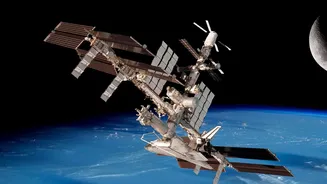
For over two decades, the International Space Station has been the sole destination for humanity in low Earth orbit, a monumental achievement of global cooperation. But the aging outpost is scheduled to be deorbited around 2030. Instead of building a single
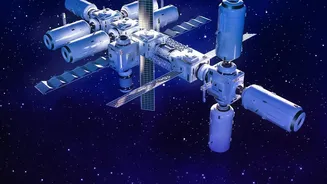
government-funded replacement, NASA is fostering a new commercial ecosystem. The agency plans to become just one of many customers, buying services from a fleet of privately owned and operated space stations. This strategic shift is designed to lower costs, stimulate a robust low Earth orbit economy, and allow NASA to focus its resources on deep space missions to the Moon and Mars. Companies like Axiom Space, Blue Origin, Sierra Space, and Voyager's Starlab are now in a race to build these orbital platforms.
Space as a Service: A New Business Model
The core innovation offered by these next-generation stations is the concept of 'space as a service'. Think of it like cloud computing for scientific research. Instead of needing to build and operate their own space infrastructure—an impossibly expensive task for most organisations—companies can lease time, space, and resources. These new stations are being designed as 'mixed-use business parks' in orbit, providing everything from transportation and logistics to fully outfitted laboratory space. This turnkey model dramatically lowers the barrier to entry, opening up the unique environment of microgravity to a wide range of industries that could never have considered it before, from pharmaceuticals and materials science to agriculture and manufacturing.
The Power of Custom and Modular Design
What makes this new model particularly powerful is the emphasis on modularity and customisation. Companies won't be limited to a one-size-fits-all lab. Axiom Space, for instance, plans to launch dedicated modules for research and manufacturing. Their station will be assembled piece by piece, starting with a module attached to the ISS before becoming a free-flying platform. Similarly, the Orbital Reef station, a joint venture of Blue Origin and Sierra Space, is being designed around a modular architecture that can grow with market demand. It will feature Sierra Space's inflatable LIFE habitats, which launch in a compact state and expand in orbit to create large, multi-story volumes that can be configured for research, manufacturing, or even tourism. This flexibility allows a company to have a dedicated research pod, a small-scale manufacturing unit, or other purpose-built facilities in orbit.
The Research Revolution in Microgravity
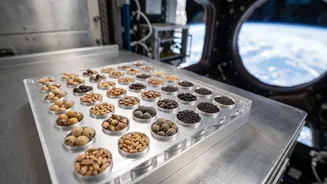
Why go to all this trouble? The microgravity environment offers unique advantages that are impossible to replicate on Earth. On the ground, forces like gravity-driven convection and sedimentation interfere with many physical and biological processes. In space, these forces are virtually eliminated. This allows for the creation of near-perfect crystals for use in pharmaceuticals and advanced semiconductors. It enables the mixing of materials to create unique alloys that are stronger and lighter. In biology, scientists can study how cells and tissues grow without the distorting effects of gravity, leading to breakthroughs in regenerative medicine and drug development. Companies are already exploring how microgravity can improve everything from 3D bioprinting and fiber optics to consumer products. These new stations will provide the dedicated, long-term lab space needed to scale this research into industrial production.