





Hiking's Edge: The Leg Day Advantage
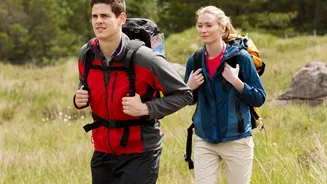
Hiking is a powerful cardiovascular activity primarily because it forces the largest muscles in your body to do serious work. Every time you ascend a hill or navigate uneven terrain, your quadriceps, hamstrings, glutes, and calves are firing. These large leg
muscles demand a tremendous amount of oxygen-rich blood to function, which in turn forces your heart and lungs to work harder. This increased demand is the essence of aerobic training. A stronger heart can pump more blood with less effort, which is why activities that consistently elevate your heart rate are so beneficial for long-term health. The intensity is also highly scalable; carrying a backpack or choosing steeper trails can significantly increase the cardiovascular challenge and calorie burn, which can range from 400 to 600 calories per hour depending on the difficulty. This makes hiking a formidable tool for improving cardiovascular endurance and leg strength.
Paddleboarding: A Core-Focused Cruise
While hiking is dominated by lower-body effort, stand-up paddleboarding (SUP) is a masterclass in core strength and stability. The simple act of standing on an unstable board requires constant, subtle adjustments from your entire core—including your abs, obliques, and lower back muscles. This continuous engagement provides a unique workout that traditional exercises often miss. Every paddle stroke is a rotational movement that engages your lats, shoulders, and arms while your core works to keep you balanced. While your legs are certainly active, acting as stabilizers, they aren't the primary drivers of the movement in the same way they are in hiking. The result is a fantastic full-body workout that is particularly effective at building a strong, stable midsection and improving your overall balance.
Head-to-Head: Cardio vs. Stability
So, which is 'better'? The headline is correct that for pure aerobic conditioning driven by large muscle groups, hiking generally has the upper hand. The sustained effort of climbing hills directly translates to a higher heart rate and greater oxygen consumption for many people. However, paddleboarding is an excellent cardiovascular workout in its own right, with a casual pace burning around 300-430 calories per hour, comparable to a moderate hike. More intense SUP activities like racing or touring can burn over 700 calories per hour. The key difference lies in the type of challenge. Hiking builds powerful cardiovascular endurance and lower-body strength. Paddleboarding excels at developing functional core strength, balance, and upper-body endurance, all while being a low-impact activity that is gentle on the joints.
Choosing Your Adventure
Your choice ultimately depends on your personal fitness goals and what you enjoy most. If your primary objective is to maximize your cardiovascular workout and build powerful leg muscles, hiking is an incredibly effective option. It’s accessible, requires minimal gear to start, and offers endlessly variable intensity. If you’re looking to build a rockndol core, improve your balance, and get a full body workout that’s also low impact, then paddleboarding is a superior choice. It challenges your stability and coordination in ways that land based exercises cannot. Both activities also offer significant mental health benefits, as spending time in nature has been shown to reduce stress and improve mood.