
Why Your Calendar is Your Most Important Tool
Visiting Greenland is not like a typical holiday where seasons bring mild changes. Here, the time of year dictates what you can see and do, and even where you can go. The country is defined by two dominant, contrasting seasons: the summer of the midnight
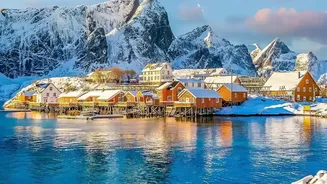
sun and the winter of the polar night. Summer (roughly June to August) offers endless daylight, accessible hiking trails, and open seas for boat travel. Winter (December to April) brings a world of snow, frozen fjords perfect for dog sledding, and the mesmerising dance of the Northern Lights. Since there are no roads connecting towns, your ability to explore different villages relies on a network of flights, helicopters, and ferries, all of which operate on schedules dictated by the weather and ice conditions.
Summer: The Season of Light and Life
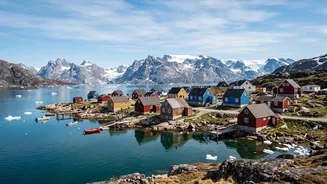
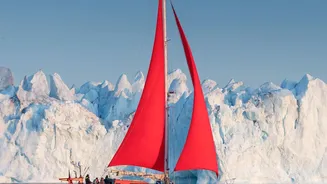
For first-time visitors, the summer months of June, July, and August are often the most accessible and flexible. During this period, the midnight sun bathes the landscape in 24-hour light, making it ideal for outdoor adventures. This is the prime time for whale watching in Disko Bay, where humpback whales are a common sight. The melting ice allows passenger ferries, like the Arctic Umiaq Line, to navigate the western coast, connecting towns from Ilulissat in the north to Qaqortoq in the south. It’s the perfect season for hiking across green tundra, kayaking among colossal icebergs, and visiting remote settlements that are often isolated during winter. Greenland's National Day on June 21st, the longest day of the year, is celebrated with outdoor festivals and local feasts.
Winter: Embracing the Arctic Dark
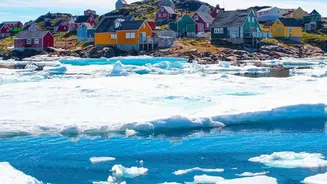
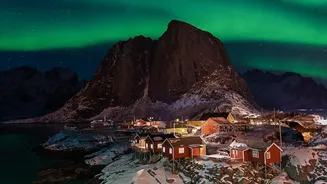
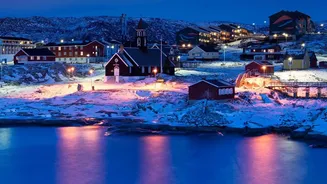
If your dream is to witness the aurora borealis, a winter trip is essential. The season for Northern Lights typically runs from September through April, when the nights are dark enough for the spectacle. This is a time of profound quiet and stunning, snow-covered beauty. While travel is more logistically challenging, it offers unique Arctic experiences. Dog sledding becomes a primary mode of transport in many areas, a tradition still very much alive in communities like Uummannaq and Qaanaaq. In towns like Sisimiut, snowmobiling across the frozen landscape is a popular activity. While many boat routes are closed, helicopters and smaller planes still connect the main towns, offering breathtaking views of the icy world below.
Must-Visit Villages and Towns
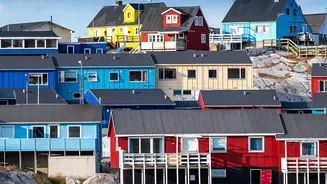
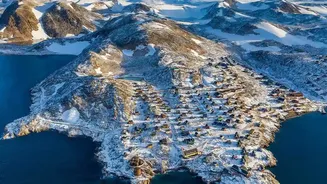
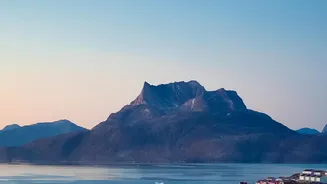
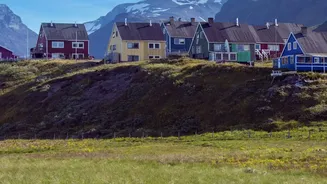
Ilulissat, located on Disko Bay, is arguably Greenland's most popular destination, famous for the UNESCO-listed Ilulissat Icefjord which constantly sheds massive icebergs. Further south, Qaqortoq is known for its vibrant arts scene and Norse history, while the nearby settlement of Igaliku offers a glimpse into Greenlandic sheep farming amidst lush valleys. For a taste of East Greenland's dramatic and remote character, Tasiilaq serves as the region's largest town, surrounded by jagged peaks and deep fjords. Smaller settlements, or 'bygder', offer an even more authentic experience. Villages like Oqaatsut, a short boat ride from Ilulissat, provide a look into traditional hunting and fishing life where community resilience shines.
Essential Planning and Packing Tips
Regardless of the season, planning is non-negotiable. Flights to Greenland typically route through Copenhagen, Denmark, or Reykjavik, Iceland. Booking domestic travel—whether by Air Greenland plane, helicopter, or ferry—well in advance is crucial, especially in the peak summer season when accommodations also sell out quickly. Packing requires a 'layering' strategy. Even in summer, weather can change rapidly. Essential items include a waterproof and windproof outer shell, thermal base layers, warm sweaters (wool or fleece are best), sturdy waterproof hiking boots, and a hat and gloves. In summer, a sleep mask is a must-have to cope with the 24-hour daylight, as is strong sunscreen and insect repellent.