




Saturn at its Brightest in October
Mark your calendars for October 4, when Saturn reaches opposition. This is the point in its orbit where Earth passes directly between the Sun and Saturn, making the ringed planet appear at its biggest and brightest for the entire year. It will be visible
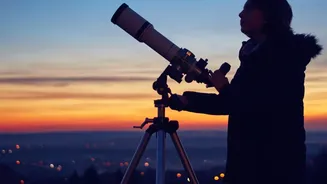
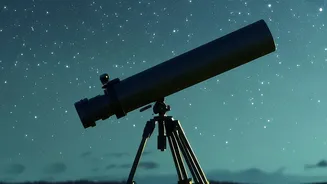
all night long, rising in the east at sunset and setting in the west at sunrise. While you can spot Saturn as a steady, golden point of light with your naked eye, even a small telescope will reveal its famous rings. For observers in India, the post-monsoon period offers an excellent window to view the planet in its full glory.
The Orionid Meteor Shower
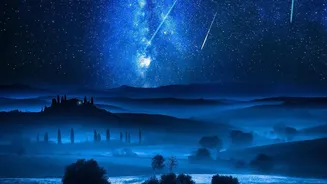
Debris from the famous Halley's Comet brings us the Orionid meteor shower, which peaks around October 21-22. Known for their speed and brightness, Orionid meteors travel at about 66 kilometres per second and can leave behind glowing trails that last for several seconds. While the Moon will be bright during the peak evening hours in 2026, it sets after midnight, leaving the pre-dawn sky dark for optimal viewing. For your best chance, find a dark location away from city lights, lie back, and look up. You can expect to see about 10 to 20 meteors per hour under good conditions.
The Fast and Furious Leonids in November
The Leonid meteor shower, peaking on the night of November 16-17, is famous for its speed. These meteors are among the fastest, entering the atmosphere at 71 kilometres per second, which often results in spectacular fireballs and persistent trains. While a 45% full moon will be present in 2026, the brightness of Leonid fireballs often cuts through the moonlight. This shower has produced historic meteor 'storms' in the past, and while a storm isn't predicted for this year, it's always a shower worth watching for its potential to surprise. Clear November skies in locations like Spiti Valley or parts of Rajasthan provide an excellent opportunity to catch the show.
The Grand Finale: The Geminid Meteor Shower
If you see only one celestial event for the rest of the year, make it the Geminids. Peaking on the night of December 13-14, this is widely considered India's best and most reliable meteor shower of 2026. The viewing conditions are nearly perfect: the peak occurs when December skies are typically clear across the country, and a thin crescent moon will set early in the evening, ensuring a dark sky. The Geminids can produce up to 120 meteors per hour in ideal conditions, and unlike many other showers, you can start watching from 9 p.m. onwards as its radiant point rises early. These meteors are often slow and colourful, making for a truly stunning display.
Winter Constellations and Deep-Sky Jewels
As winter sets in, the post-monsoon haze gives way to crisp, transparent skies, perfect for exploring constellations. The magnificent constellation of Orion, the Hunter, will dominate the winter sky. Within it, look for the fuzzy patch in its 'sword'—this is the Orion Nebula, a stellar nursery where new stars are being born, visible even to the naked eye from a dark location. Nearby, you can find the Pleiades star cluster (M45), known in India as Krittika. This beautiful cluster of bright stars is often mistaken for a tiny dipper and is a breathtaking sight in binoculars. These objects are fantastic targets for beginner astronomers and offer a sense of the universe's scale beyond our solar system.