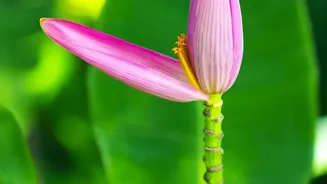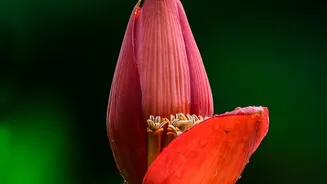



That large, purplish, teardrop-shaped flower hanging at the end of a banana bunch is more than just a botanical curiosity. Often discarded, the banana blossom is a culinary gem packed with nutrients, and using it is a delicious way to reduce waste.
What Exactly Is a Banana Flower?
Known
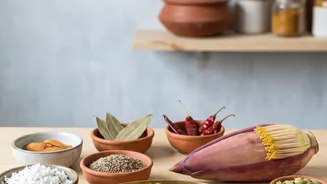
as 'vazhaipoo' in southern India or 'banana heart', the banana blossom is an edible flower that plays a significant role in South and Southeast Asian cuisine. Its texture is often compared to artichoke or even fish, making it a popular plant-based substitute. The large, tough, purple outer leaves, called bracts, are peeled away to reveal rows of small, yellowish florets. Deeper inside is the tender, pale heart, which is the most prized part. The flavour is mild and slightly nutty, with a hint of bitterness that mellows beautifully with cooking. This versatile ingredient can be used in everything from stir-fries and curries to salads and fritters, adding a unique texture and subtle taste to any dish.
A Treasure Trove of Nutrients
Don't let its humble appearance fool you; the banana flower is a nutritional powerhouse. It is exceptionally rich in dietary fibre, both soluble and insoluble, which is crucial for digestive health, helping to regulate bowel movements and promote a healthy gut microbiome. The blossom is also a fantastic source of essential minerals, including potassium, calcium, magnesium, copper, zinc, and iron. This makes it particularly beneficial for boosting iron levels and combating anaemia. Furthermore, it is loaded with antioxidants like quercetin and catechin, which help protect the body against damage from free radicals and may reduce the risk of chronic diseases. With a low-calorie profile and a wealth of nutrients, it's a valuable addition to a balanced diet.
The Art of Preparation
Preparing a banana flower might seem daunting, but it's a straightforward process. The most time-consuming part is cleaning the individual florets, which is necessary to remove any bitter or tough parts. Start by applying oil to your hands and knife to prevent the sticky sap from staining them. Peel away the tough, dark outer bracts one by one. Underneath each bract, you'll find a row of florets. For each floret, you need to remove two inedible parts: a single, stiff stamen with a bulb on top, and a small, translucent, scale-like petal. As you get closer to the core, the florets become too tender to clean; these can be used whole. The pale, tender heart at the centre can also be chopped and used. As you chop the cleaned florets and heart, immediately immerse them in a bowl of acidic water (buttermilk or water with lemon juice) to prevent them from browning due to oxidation.
Bringing It to Your Table
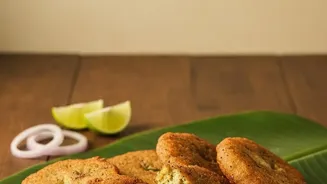
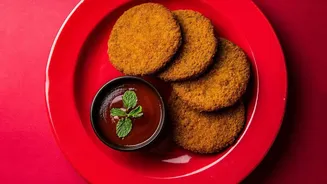
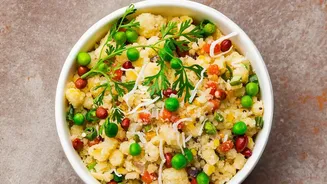
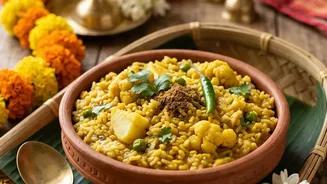
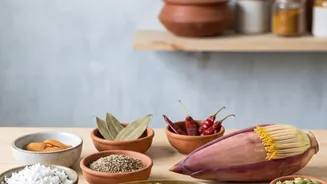
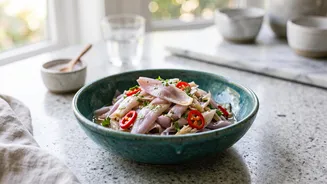
Once cleaned and prepped, the banana flower can be incorporated into a variety of delicious dishes. In South Indian cuisine, it is famously used to make 'vazhaipoo poriyal' or 'thoran', a simple stir-fry tempered with mustard seeds, lentils, and curry leaves, and finished with grated coconut. The chopped blossoms can also be added to dal or lentils to make a hearty kootu. For a savoury snack, they can be mixed with spices and lentil batter to create crispy vadas. The flower's flaky texture makes it an excellent vegan substitute for fish; it can be battered and fried for a plant-based 'fish and chips'. You can also boil it for use in soups, add it to rich curries like the Filipino kari-kari, or even use the tender heart raw in salads. Its ability to absorb spices makes it a flavourful and texturally interesting component in many recipes.