







Why This Trend Has Soul
In many Indian homes, the humble sandook or petti was more than just a storage box; it was a vault for family treasures, from bridal saris to precious documents. Today, this piece of our heritage is finding a new voice in modern interiors. The trend of using
old trunks as furniture isn't just about aesthetics; it's about sustainability and storytelling. In a world of mass-produced furniture, a vintage trunk brings a sense of history, character, and authenticity that is impossible to replicate. It’s an eco-conscious choice that reduces waste and a design choice that adds a layer of depth and personality to a minimal, contemporary space. This blend of old-world charm with clean, modern lines creates a living room that feels curated, personal, and deeply rooted.
The Hunt for Hidden Treasure
The best place to start your search is within your own family. Ask older relatives if a family heirloom trunk is waiting to be rediscovered. These pieces come with an invaluable personal history. If not, your next stop is the local flea market or antique shop. Think of places like Mumbai’s Chor Bazaar or Delhi’s Hauz Khas Village, where hidden gems await. When inspecting a trunk, look for good “bones.” Solid wood is ideal, but don't be deterred by surface-level flaws like scratches, peeling paint, or minor rust on the hardware—these add character. Check for major structural damage like wood rot, severe warping, or a strong, musty odour that might suggest mould. A little bit of wear tells a story; a lot of damage just creates a headache.
Breathing New Life into Old Wood
Once you’ve found your trunk, a bit of prep work is essential to make it home-ready. First, give it a thorough cleaning. Start by vacuuming the inside and outside to remove loose dust and debris. Then, wipe it down with a damp cloth and a mild solution of wood soap and water. Be gentle, especially if the trunk has painted details you want to preserve. Address any musty smells by leaving it open in a sunny, airy spot for a few days, or by placing a box of baking soda inside. If you suspect pests, consult a professional. To protect the wood and your floors, consider sealing it. A clear matte or satin polyurethane coat will protect the surface without making it look overly glossy, preserving its rustic charm while making it durable enough for everyday use.
The Perfect Minimalist Coffee Table
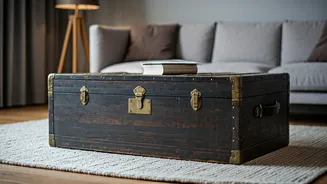
The most popular and impactful way to use a vintage trunk is as a coffee table. Its low, sturdy profile makes it a natural fit in front of a modern sofa. The key to making it work in a minimalist setting is contrast. Pair the rustic, detailed trunk with a sleek, low-profile sofa, a simple area rug, and clean-lined accent chairs. This juxtaposition highlights the trunk as the room's focal point. Keep the styling on top simple. A small tray to contain items like a candle and a couple of coasters, a single art book, and a small vase with fresh greenery is all you need. The trunk itself is the main event; let it shine without clutter.
More Than Just a Table
Don’t limit your imagination to the living room centrepiece. A vintage trunk is a versatile workhorse. Place a long, narrow trunk at the foot of your bed. It adds a touch of rustic elegance and provides the perfect storage spot for extra blankets and pillows. A smaller trunk can serve as a unique side table next to an armchair, offering a surface for a lamp and a cup of tea. In an entryway, a trunk can function as a bench for putting on shoes, with the added benefit of hidden storage for scarves, bags, or other out-the-door essentials. Each application brings the same benefits: functional storage, a conversation-starting design element, and a tangible link to the past.