



The jump rope is one of the most efficient, affordable, and fun tools for a great workout. But the key to unlocking its full potential isn’t speed or complex tricks; it's about starting slowly and mastering the simple, repeated jump.
Why Start with a Jump Rope?
Before you begin,
it helps to know why this simple tool is so powerful. Jumping rope is a full-body workout that engages your legs, core, and upper body. It's an incredible cardiovascular exercise that strengthens your heart, improves blood circulation, and boosts your stamina. Research shows it's a highly effective way to burn calories, sometimes even more so than running. Beyond the burn, it enhances coordination, balance, and agility by forcing your brain and body to work in perfect sync. It’s a low-cost, high-impact way to improve your overall fitness.
Choosing Your First Rope
The right equipment makes all the difference. For beginners, a beaded rope or a slightly weighted PVC rope is often recommended over a very light speed rope because it provides better feedback, making it easier to feel the rope's rotation and find your rhythm. Sizing is crucial. To find the right length, stand on the middle of the rope with both feet. The handles should reach your armpits. If you're between sizes, it's always better to start with a rope that is slightly too long rather than too short, as you can always adjust it later. An improperly sized rope can throw off your timing and lead to frustration.
Mastering the Basic Bounce
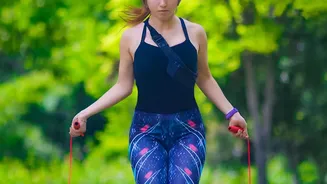
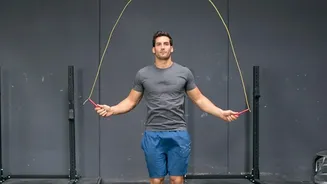
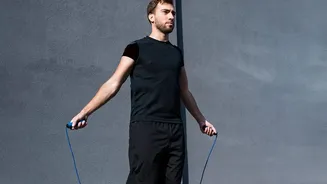
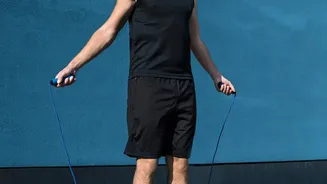
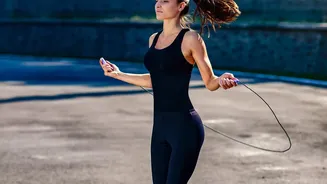
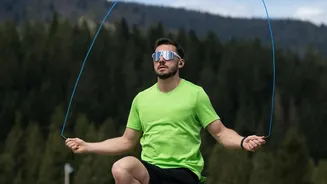
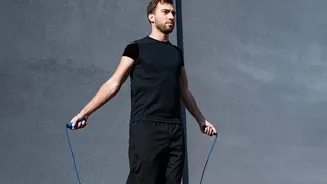
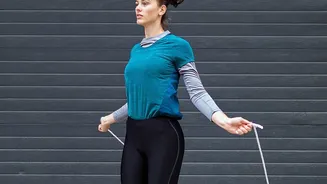
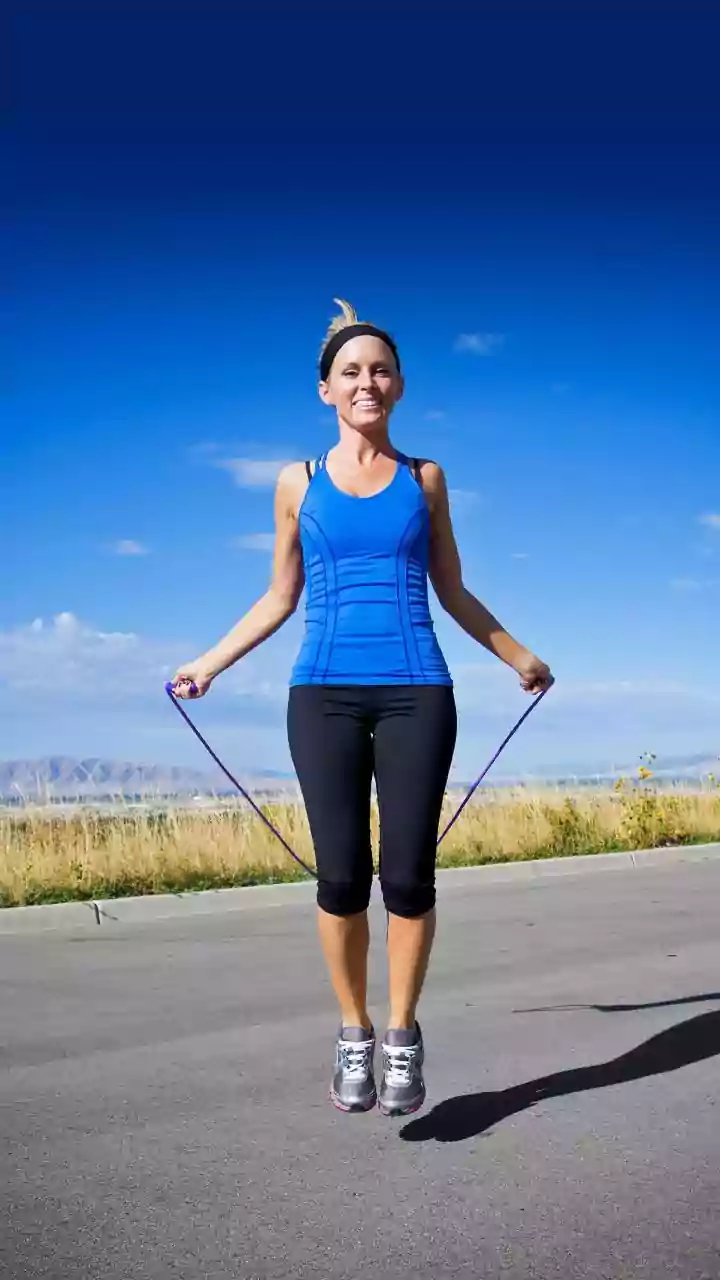
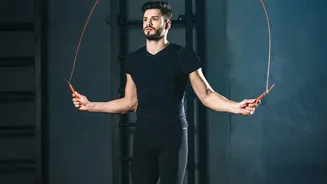
The foundation of all jump rope training is the 'basic bounce' or 'bounce step'. This is a simple, two-footed jump. Start with your feet together and the rope behind your heels. Keep your posture upright, chest up, and look straight ahead. Your elbows should be tucked in close to your ribs. The real secret is that the motion comes from your wrists, not your shoulders or arms. Swing the rope over and jump just one or two inches off the ground—only high enough to clear the rope. Land softly on the balls of your feet, keeping your knees slightly bent to absorb the impact. The goal is one jump per rotation of the rope; avoid the common beginner mistake of adding a small 'double-bounce' between each proper jump.
Common Mistakes to Avoid
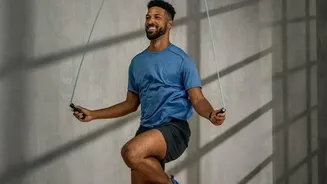
Most beginners make the same few errors, but they are easy to correct. The most frequent mistake is jumping too high, which wastes energy and puts unnecessary strain on your joints. Another is using your entire arms to swing the rope instead of your wrists. This is inefficient and will tire you out quickly. Keep your elbows in and let your wrists do the work. Also, check your posture. Hunching over or looking down at your feet can throw off your balance and form. Finally, make sure you are wearing supportive athletic shoes and jumping on a forgiving surface like a gym floor, a mat, or wood, rather than hard concrete.
Your First Week: A Simple Plan
Consistency is more important than intensity when you're starting out. Don't try to jump for 20 minutes straight on your first day. Instead, focus on intervals to build endurance and muscle memory. A great starting point is a simple work-to-rest ratio. Try this routine: 30 seconds of jumping, followed by 30 to 60 seconds of rest. Repeat this cycle for 5 to 10 minutes. This approach allows you to focus on your form without getting overly fatigued. As you get more comfortable, you can gradually increase the jump time and decrease the rest time. The goal is to build a sustainable habit, not to burn out.
As with any new exercise, your body needs time to adapt. It's normal to feel some soreness in your calves. However, pay attention to any sharp pains, especially in your shins, as this could be a sign of doing too much, too soon. Rest days are essential for recovery and injury prevention. Once you can comfortably jump for several minutes without stopping and your form feels solid, you can start to progress. This could mean increasing the duration of your workouts, trying different jump variations like the 'alternate-foot step' (running in place), or incorporating jump rope into a HIIT circuit with bodyweight exercises like squats or planks.