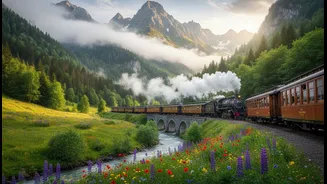






The Coastal Marvel: Konkan Railway (Mumbai to Goa)
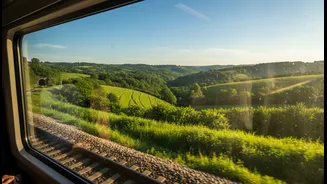
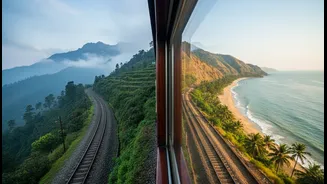
Often hailed as a masterpiece of engineering, the Konkan Railway route is a visual treat, especially during the monsoon. Spanning about 741 kilometres, this line runs parallel to India's western coastline, connecting Maharashtra, Goa, and Karnataka. The
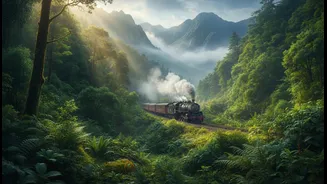
journey from Mumbai to Goa is particularly famous, taking you through lush green paddy fields, dense forests of the Western Ghats, and past quaint villages. The train navigates over 2,000 bridges and through more than 90 tunnels, offering stunning views of the Arabian Sea, sparkling rivers, and waterfalls that come alive between June and October. For the best daytime views, consider the Mandovi Express, a legendary train on this scenic route.
The Himalayan Queen: Kalka to Shimla
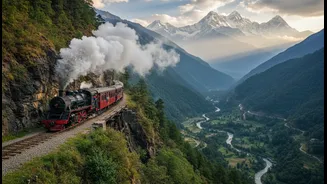
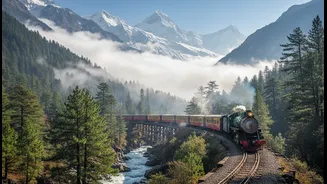
A journey on the Kalka-Shimla Railway is like stepping back in time. This UNESCO World Heritage Site, affectionately known as the 'Toy Train', has been charming travellers since its inauguration in 1903. The narrow-gauge train covers a 96-kilometre route through the foothills of the Himalayas, navigating a staggering 102 active tunnels and over 800 bridges. As it climbs from Kalka to the former summer capital of British India, Shimla, the train offers panoramic views of pine-covered hills, verdant valleys, and charming colonial-era stations. The slow pace allows you to soak in the scenery, making it an unmissable heritage experience.
Paradise on Rails: The Kashmir Valley Railway (Banihal to Baramulla)
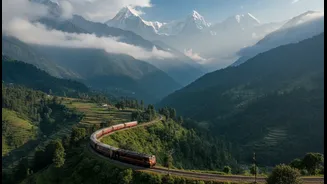
Connecting the pristine Kashmir Valley, the railway line from Banihal to Baramulla is nothing short of breathtaking. The journey offers sublime views of snow-capped Pir Panjal mountains and vast Kashmiri meadows, especially after crossing Qazigund. A key feature of this route is the Pir Panjal Railway Tunnel, an 11.2-kilometre engineering marvel that connects Banihal with the valley. The trains, often featuring large glass windows, are designed to give passengers an uninterrupted view of Kashmir's sublime beauty. This route is part of the larger Jammu–Baramulla line, a strategic project connecting the valley with the rest of India.
The Mountain Gem: Nilgiri Mountain Railway (Mettupalayam to Ooty)
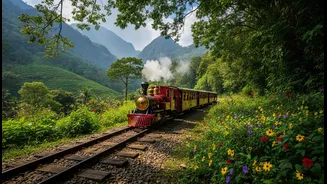
Another UNESCO World Heritage Site, the Nilgiri Mountain Railway offers a unique journey up to the popular hill station of Ooty. Operational since 1899, this is the only rack railway in India, using a special toothed track system to climb the steep gradients of the Nilgiri Hills. The 46-kilometre journey from Mettupalayam is renowned for its scenic beauty, passing through 16 tunnels and over 250 bridges. The most picturesque section, between Mettupalayam and Coonoor, is often powered by a classic Swiss-made steam locomotive, pushing the distinctive blue and cream carriages through dense forests and verdant tea plantations.
The Ocean Glide: Mandapam to Rameswaram
This is one of India’s most thrilling and unique train journeys. The route connects mainland India to Pamban Island, home to the holy town of Rameswaram, via the historic Pamban Bridge. Opened in 1914, this was India's first sea bridge. As the train travels over the 2.3-kilometre bridge, passengers are treated to breathtaking views of the turquoise ocean on both sides, creating the sensation of gliding over the water. The slow speed of the train on the bridge allows you to fully absorb the surreal coastal landscape, making it an unforgettable experience that blends adventure with spirituality.
The Eastern Delight: Darjeeling Himalayan Railway (New Jalpaiguri to Darjeeling)
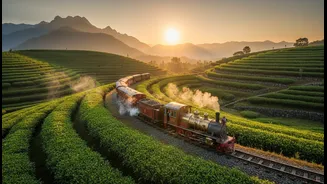
The Darjeeling Himalayan Railway, also called the 'Toy Train', is one of India's oldest and most famous mountain railways. A UNESCO World Heritage Site since 1999, it has been operational since 1881. The 88-kilometre narrow-gauge line climbs from the plains near New Jalpaiguri to the hill station of Darjeeling, offering spectacular views of the Eastern Himalayas, including the majestic Kanchenjunga peak. The train uses a series of ingenious loops and zig-zags to gain altitude, with the Batasia Loop being a famous highlight where the train completes a 360-degree turn, providing panoramic vistas of the surrounding tea gardens and mountains.