




Understanding Your Mint Plant's Goal
Mint is an ambitious herb. Its natural tendency is to grow tall and fast, a trait that helps it compete for sunlight outdoors. This upward growth is driven by something called apical dominance. A plant's main, central stem grows more strongly than its
side stems. The very top of the main stem, the 'apical bud', produces a hormone that suppresses the growth of the smaller, dormant buds further down the stem. If left alone, this leads to a tall, sometimes 'leggy' plant with leaves concentrated at the top of long stems, which is not ideal for a potted indoor herb. The goal of a home gardener is usually the opposite: a short, bushy plant with dense foliage for easy harvesting.
The Problem with Cutting Entire Stems
It can feel efficient to grab a pair of scissors and snip off a whole stem from the base. While this gives you a large harvest at once, it's a short-sighted approach. Cutting an entire stem down to the soil line removes all of its leaf nodes on that stalk. This forces the plant to spend its energy creating a brand new shoot from the root system, a slow and energy-intensive process. Plucking off individual leaves from the bottom up is even worse; it gradually strips the stem bare without encouraging any new growth, leading to a weak, spindly plant. Both methods fight against the plant's natural desire to branch out, ultimately resulting in less mint over time.
The Magic of Pinching: How It Works
The superior method is known as 'pinching' or 'topping'. This involves removing only the top portion of each stem. When you snip off that top growing tip, you remove the source of the growth-suppressing hormone. This 'breaks' the apical dominance and sends a signal to the plant to wake up the dormant buds located at the nodes just below the cut. Almost immediately, those dormant buds spring to life, and where you once had one stem, two new ones will begin to grow. This simple action redirects the plant's energy from growing tall to growing wide, creating a much fuller, bushier, and more productive herb.
How to Pinch Your Mint Correctly
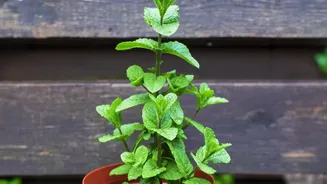
To correctly pinch your mint, you don't need special tools; your fingertips can work, but clean scissors provide a neater cut and prevent damage. Identify a main stem and look down from the top. You will see pairs of leaves growing on opposite sides of the stem. These junction points are called nodes. Choose a node—usually two to four sets of leaves down from the top is a good spot—and make your cut about a quarter-inch above it. Be careful not to damage the tiny new leaves you'll likely see forming in the 'armpit' where the bigger leaves meet the stem. That's where your two new branches will sprout from. Regular harvesting using this method is the key to maintaining a compact, healthy plant.
More Flavor, Fewer Flowers
Beyond promoting a bushier shape, this harvesting technique has other benefits. The youngest leaves at the top of the plant contain the highest concentration of essential oils, making them the most fragrant and flavorful. By regularly pinching the tips, you are always harvesting the best-tasting parts of the plant. This process also significantly delays flowering. When a mint plant starts to produce flowers, it diverts energy away from leaf production, and the flavor of the existing leaves can become bitter or less potent. Pinching off the tips as soon as you see flower buds forming keeps the plant in a continuous state of leaf growth, ensuring your supply of delicious mint lasts much longer.