





Beyond Days and Dates: The Lunar Rhythm
Most of us live by the solar Gregorian calendar, a system of 365 days. But for centuries, Indian life has also been guided by a luni-solar calendar, or the Panchang. [11] This system isn't just about tracking days; it’s about aligning with the cosmos.
It divides the month into two fortnights based on the moon's phases: the waxing phase (Shukla Paksha), leading to a full moon, and the waning phase (Krishna Paksha), ending in a new moon. [5, 11] Each of the days within these phases, called a *tithi*, carries its own unique energy and significance, encouraging people to live in rhythm with nature. [13]
The Prelude: Ekadashi's Spiritual Focus
To understand Dvadasi, we must first look at the day before it: Ekadashi. The eleventh day of each lunar fortnight, Ekadashi is widely observed as a day of fasting and spiritual devotion dedicated to Lord Vishnu. [2, 12] For devotees, it is a powerful opportunity for spiritual cleansing, self-discipline, and purifying the mind and body. [2] Observers often abstain from grains and beans, focusing instead on prayer, meditation, and chanting. [12] This day of introspection and restraint sets the stage for what comes next, creating a spiritual crescendo that finds its resolution on Dvadasi.
Dvadasi: The Day of Auspicious Completion
Dvadasi, the twelfth day (*dva* meaning two and *dasi* meaning tenth), is most widely known as the day for *Parana*, the ceremonial breaking of the Ekadashi fast. [6, 8] This act must be performed at a specific time, usually after sunrise on Dvadasi, to complete the observance successfully. [8, 9] Far from being a simple meal, this moment is a ritual of fulfillment, signifying the successful completion of a spiritual vow. [14] It is a day of reaping the benefits of the previous day's discipline. This makes Dvadasi a day of gentle celebration, of returning to nourishment with a renewed sense of clarity and purpose.
A Day of Many Meanings
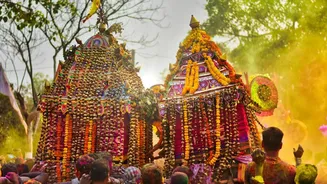
Dvadasi's significance extends far beyond breaking a fast. The entire day is considered auspicious for religious ceremonies and is strongly associated with the worship of Lord Vishnu. [3, 19] Different Dvadasi days throughout the year hold special importance. For instance, Govatsa Dvadasi, which often marks the beginning of Diwali celebrations, involves the worship of cows and their calves. [3, 19] Other notable observances include Kurma Dvadasi, celebrating Lord Vishnu's tortoise avatar, and Vamana Dvadasi, honouring his fifth incarnation. [3] Some traditions also associate the day with Vijaya Devi, a goddess of victory, suggesting that Dvadasi is a day when our efforts, spiritual or otherwise, are crowned with success. [10]
Finding Your Own Rhythm
In a world that often demands constant productivity, the Ekadashi-Dvadasi cycle offers a built-in rhythm of restraint and release, introspection and worldly engagement. You don’t need to observe a strict fast to benefit from this cycle. Simply being aware of the lunar calendar can add a layer of meaning to your week. You could mark Ekadashi with a lighter meal or a few moments of quiet reflection. On Dvadasi, you could mindfully prepare and enjoy a nourishing meal, perhaps including foods like amla (gooseberry) which are traditionally eaten when breaking the fast. [4] For example, Yogini Ekadashi falls on July 10, 2026, making the following Dvadasi a timely opportunity to connect with this ancient rhythm. [15, 20] It’s an invitation to pause, connect with a timeless tradition, and find a gentle, recurring pattern of meaning in your own life.