









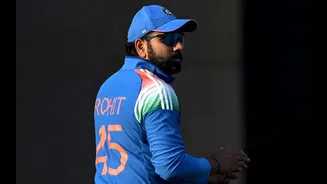
A First-Over Catastrophe
The disaster unfolded with breathtaking speed in the fourth ODI at Mount Maunganui. Chasing a formidable target of 334, India’s hopes were effectively extinguished within the first over of their innings. New Zealand pacer Matt Henry produced a sensational
spell, removing stalwarts Rohit Sharma and Virat Kohli for ducks before dismissing stand-in captain Shreyas Iyer, leaving India reeling at an unbelievable 0/3. The top-order demolition set the tone for a procession of wickets, with the team eventually folding in just 26.4 overs. Henry finished with remarkable figures of 6/27, orchestrating India's second-biggest defeat in terms of runs in their ODI history.
Gambhir's Blunt Assessment
In the post-match press conference, a visibly concerned Gautam Gambhir did not mince words. 'You're always concerned when you get bundled out for 90-odd. Why won't I be concerned?' he stated. However, his primary worry was not the low total itself, but the alarming speed of the collapse. 'The bigger concern is not the runs. It's how quickly we got bundled out, around 26 or 27 overs. That is something which is always a concern,' Gambhir explained. This rapid capitulation, he stressed, exposed a deeper vulnerability than a simple bad day at the office.
A Worrying Pattern Emerges
Gambhir was quick to point out that this was not an isolated incident. He drew attention to the previous match, where India, while chasing a modest 135 in a rain-shortened game, had stumbled to 111 for seven. 'There is no point putting it under the carpet. This issue wasn't just in this match; in the previous match, chasing 135, we were seven down for 111, which is also a concern,' he said. This pattern of instability, particularly in seam-friendly conditions away from home, highlights a persistent weakness in the Indian batting lineup that cannot be ignored.
The World Cup Warning
The head coach directly linked this performance to the team's prospects at the upcoming World Cup in South Africa. He noted that the swinging and seaming conditions in New Zealand are the closest preview India will get to the challenges they will face in the global tournament. This makes the collapse a critical warning sign. Gambhir stressed that while Indian pitches are often batter-friendly, overseas tours present a 'good contest between bat and ball', and his team must adapt. He refused to blame the conditions or label any delivery as 'unplayable', putting the onus squarely on the batters to improve their technique and mental fortitude.
The Path Forward: Technique and Temperament
According to Gambhir, the solution lies in a fundamental shift in approach, especially during the initial powerplay. He explained that surviving the first 10 overs in New Zealand is paramount, even if it means scoring slowly. 'If you get 35 or 40 in the first 10 overs without losing a wicket, that is also good enough,' he remarked. He identified indecisive footwork and getting 'stuck into the crease' as key technical faults that led to the dismissals. Gambhir's message was clear: the batters need to show sharper skills and greater resilience to navigate the moving ball, a skill that will be non-negotiable for any success at the World Cup.