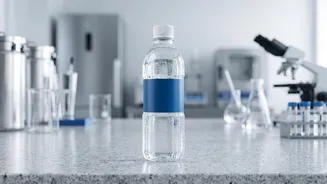






For millions in India, a sealed bottle of water is a daily purchase driven by a simple assumption: it is safe. But recent findings from the Food Safety and Standards Authority of India (FSSAI) challenge this trust, putting a spotlight on what’s really
inside.
A Crack in Consumer Trust
The conversation around water safety intensified in late November 2026 when the FSSAI sanctioned prosecution against Bisleri International, a leading brand, after a sample was declared unsafe. According to the regulator, a sample collected from a Goa facility was found to have bromate levels above the permissible limit. Upon appeal, a referral laboratory also declared it unsafe, citing the presence of polynuclear aromatic hydrocarbons (PAHs), another harmful contaminant. This high-profile case is part of a wider enforcement drive by the FSSAI, which has been collecting samples from major packaged water brands across the country. The regulator has made it clear that legal action will be taken against any company found to be non-compliant, signalling a broad crackdown on an industry that many consumers take for granted. This isn't an isolated issue; parliamentary data from February 2025 showed that hundreds of packaged water samples fail to meet standards annually.
Understanding the Rules
To be legally sold in India, packaged water must adhere to strict guidelines. The two main categories are 'Packaged Drinking Water' (IS 14543), which is treated water, and 'Natural Mineral Water' (IS 13428), which is sourced from underground springs. All manufacturers require a 14-digit license from FSSAI to operate. Historically, a Bureau of Indian Standards (BIS) certification, visible as the ISI mark, was mandatory. However, this requirement was changed in October 2024. Since January 1, 2026, FSSAI has implemented its own comprehensive testing framework, which requires manufacturers to conduct rigorous checks on the source water, the treatment process, and the final product to ensure they are free from microbiological and chemical contaminants. This makes the FSSAI license the primary indicator of regulatory oversight, even if the familiar ISI mark is no longer a mandatory feature on all bottles.
The Hidden Health Risks
When compliance fails, the risks are not just about poor taste or appearance. Contaminants found in non-compliant water can pose serious health threats that are invisible to the naked eye. Bromate, the chemical initially flagged in the recent FSSAI findings, is a potential carcinogen that can form during the ozonation process used for water purification. Similarly, polynuclear aromatic hydrocarbons (PAHs) are a group of chemicals that can be harmful. Beyond these, unsafe packaged water can be a source of waterborne diseases caused by bacteria, or it can contain other chemical pollutants like arsenic, lead, and fertilizer residues. Long-term exposure to even low levels of certain contaminants has been linked to a range of health issues, including cancer, hormone disruption, and damage to the liver and immune system. This underscores why strict adherence to safety standards is not a matter of mere paperwork, but a critical public health necessity.
How to Be a Smart Consumer
While regulators are stepping up enforcement, consumers can also play a vital role in protecting themselves. It starts with inspecting the bottle before you buy it. First, look for the FSSAI logo and the 14-digit license number. This number can be verified on FSSAI’s Food Safety and Compliance System (FoSCoS) portal to confirm the manufacturer is legitimate. Check the basics: the manufacturing date, best-before date, and a clear, legible label with the manufacturer's name and address. The bottle's seal should be intact, with no signs of tampering, leaks, or damage. Be wary of bottles with scratched or reglued labels, mismatched caps, or an unusually low price, as these can be signs of counterfeit products. If you suspect a product is unsafe, you can report it to the district Food Safety Officer or use the FSSAI’s Food Safety Connect app.