





The Ultimate Logistical Challenge
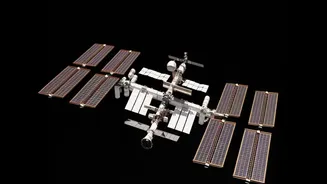
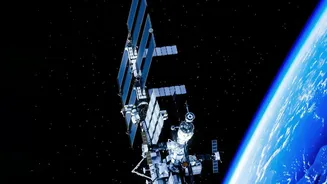
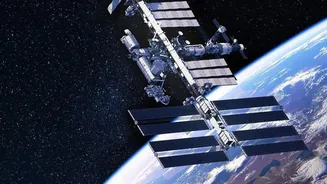
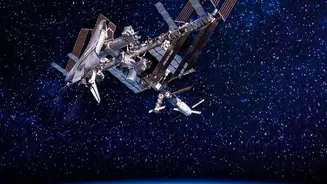
Orbiting 400 kilometres above Earth, the International Space Station (ISS) is a marvel of engineering, but it's also an isolated outpost in an environment where humans cannot survive unprotected. Providing basic necessities like water and oxygen is a monumental
task. Every kilogram of supplies launched from Earth is incredibly expensive, making frequent resupply missions for something as heavy as water unsustainable for long-term habitation. For the ISS to support a crew of six or more, it needed to become as self-sufficient as possible. This dependency spurred the development of one of the most advanced life support systems ever created: the Environmental Control and Life Support System (ECLSS).
From Wastewater to Drinking Water
The foundation of making oxygen in space is water. The ECLSS includes a sophisticated Water Recovery System that reclaims every possible drop. This system collects moisture from the cabin air, which includes the crew's exhaled breath and sweat. It also processes wastewater from hygiene activities and, most impressively, a Urine Processor Assembly purifies astronauts' urine. Through processes like distillation and filtration, this wastewater is treated until it is cleaner than most tap water on Earth. Recent upgrades, like a new Brine Processor Assembly, have pushed the efficiency of this system to an incredible 98 percent water recovery rate, meaning almost nothing is wasted. This reclaimed water is then used for drinking, food preparation, and as the crucial ingredient for generating oxygen.
Creating Air Through Electrolysis
With a steady supply of purified water, the station's Oxygen Generation System (OGS) gets to work. The primary method used is electrolysis, a process that might sound complex but is based on a simple principle. The OGS passes an electric current—powered by the station's large solar arrays—through the reclaimed water (H₂O). This current splits the water molecules into their fundamental components: hydrogen and oxygen. The oxygen is then vented into the cabin atmosphere, replenishing the air the crew breathes. The hydrogen, which is a byproduct, is safely vented into space or, in more advanced setups, used in other systems like the Sabatier reactor to create even more water from waste carbon dioxide.
A Closed-Loop Lifeline
Together, these systems create a near-closed-loop environment where the essentials for life are continuously regenerated. The American OGS and the Russian Elektron system both use electrolysis to provide the crew with a reliable supply of breathable air. There are also backup systems, such as chemical oxygen generators that use solid fuel canisters, for emergencies. This multi-layered approach ensures that the crew's oxygen supply is protected and constant. By recycling air and water, the ISS drastically reduces its reliance on Earth-based supplies, cutting down on prohibitive launch costs and freeing up cargo space for scientific experiments and other critical hardware.
Paving the Way for Deep Space Exploration
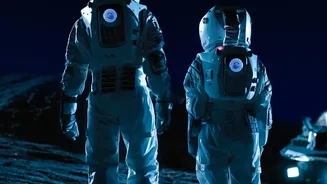
The innovations in life support aboard the ISS are more than just a way to sustain the current mission; they are a critical testbed for future exploration. When humanity ventures to the Moon or Mars on missions that could last for years, resupply from Earth will be impractical or impossible. Achieving near-total recycling of air and water—a closed-loop system—is essential for the survival of those future crews. The lessons learned and the technology proven on the ISS, from water purification to oxygen generation, are the foundational building blocks that will enable astronauts to live and work sustainably far from our home planet, pushing the boundaries of human exploration into the solar system.