





Meet the Seven Sisters
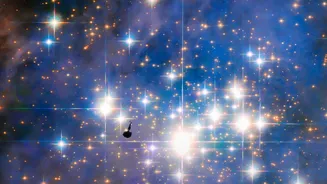
The Pleiades, also known by its catalog name M45, is an open star cluster located about 440 light-years from Earth in the constellation Taurus. While it contains over 1,000 stars, most people can spot a tiny, dipper-shaped group of six or seven with the naked
eye. These are the brightest members of a stellar family born from the same cloud of gas and dust roughly 100 million years ago, making them cosmic youngsters. The stars are incredibly hot and luminous, shining with a distinct blue-white light that makes them a striking sight against the dark canvas of the night.
October: A Prime Viewing Window
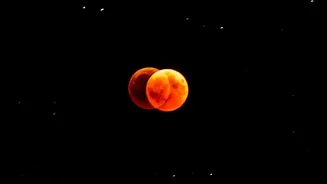
October marks the beginning of the prime season for viewing the Pleiades in the Northern Hemisphere. As the month progresses, the cluster rises in the east shortly after sunset, remaining visible for most of the night as it journeys across the sky. This extended visibility gives stargazers ample opportunity to catch a glimpse. According to NASA's skywatching guide for October 2026, a special event occurs on the night of October 27-28, when the Moon will pass very close to the cluster, creating a beautiful celestial pairing. In some parts of the world, the Moon will even briefly hide some of the stars in an event called a lunar occultation.
How to Find This Cosmic Jewel
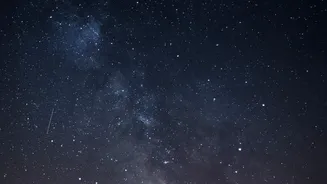
Finding the Pleiades is surprisingly simple, even for novice astronomers. The easiest way is to first locate the famous constellation of Orion, with its distinctive three-star belt. Trace a line from Orion's belt upward and to the right, and you'll first arrive at a bright, reddish star named Aldebaran, which marks the eye of Taurus the bull. Continue that line a short distance further, and you'll spot a small, fuzzy-looking patch of stars—that's the Pleiades. While they are visible from most places, your view will be best away from city lights. Binoculars are a fantastic tool for observing the cluster, revealing dozens more stars and offering a more spectacular view than the naked eye alone.
A Cluster Woven into Culture
The Pleiades' visibility from nearly everywhere on Earth has made it a cornerstone of mythology for countless cultures. In Greek mythology, they are the seven daughters of the Titan Atlas and the nymph Pleione, transformed into stars to escape the hunter Orion. In Japan, the cluster is known as 'Subaru,' meaning 'to gather,' and its image of unity is famously represented in the car company's logo. For many Native American tribes, the stars represent a group of children or maidens who ascended to the sky. In India, the cluster is known as Krittika, the six celestial mothers who nursed the war god Kartikeya. These stories, passed down through generations, highlight the deep connection humanity has always felt with this particular gathering of stars.