
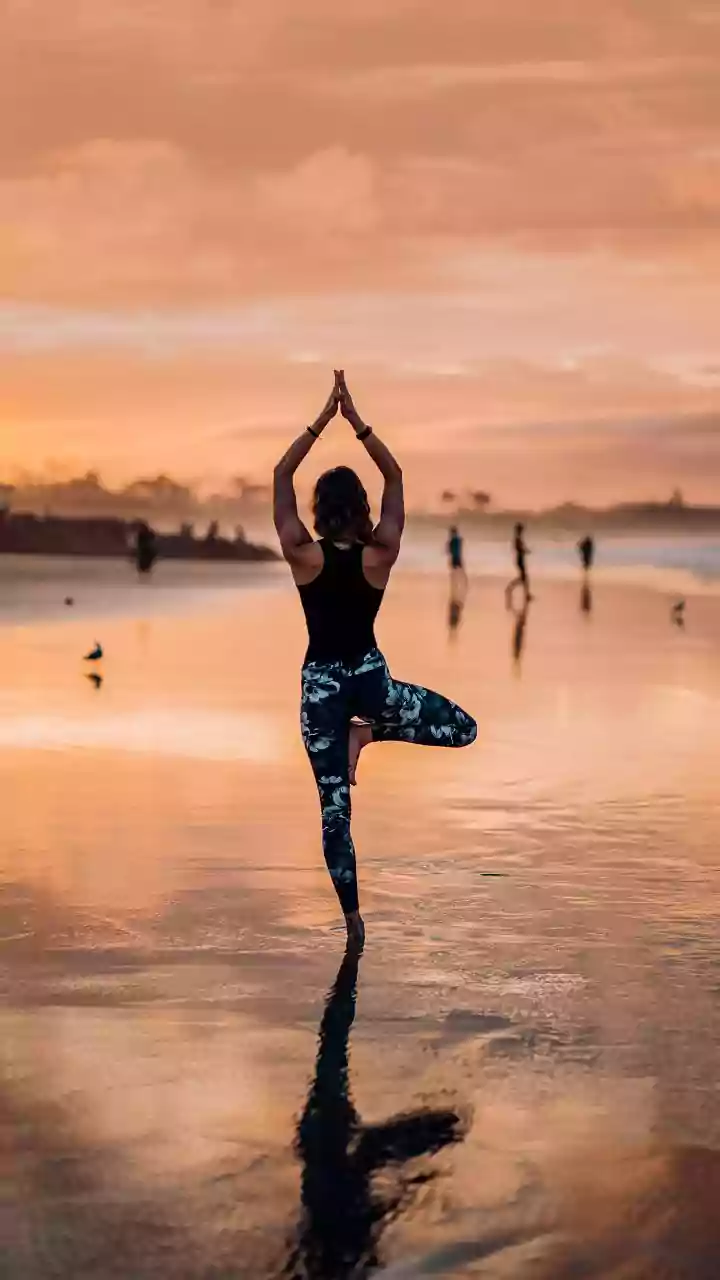

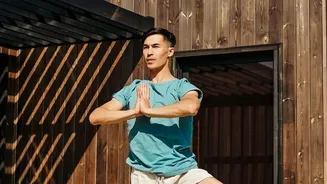
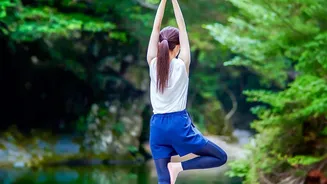
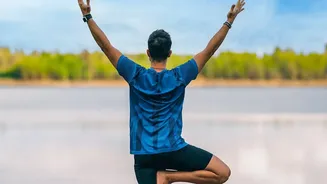
Vrikshasana, or Tree Pose, is a beautiful expression of balance and stillness in yoga, but it can be wobbly for beginners. These practical tips will help you find your roots, correct common mistakes, and grow your tree with confidence.
Establish Strong Roots
Every stable tree
needs a strong root system. In Tree Pose, your standing leg is your foundation. Start in Mountain Pose (Tadasana), with your feet together or hip-width apart. Spread your toes and press down firmly through all four corners of your standing foot. Feel the connection to the ground. Shift your weight into one leg, making it feel solid and active. A common mistake is to lock the knee of the standing leg, which actually reduces stability. Instead, keep a tiny micro-bend in the knee; this allows for small, necessary adjustments to maintain your balance.
The Golden Rule of Foot Placement
Where you place your lifted foot is the most critical adjustment for safety. The absolute rule is to never press your foot directly onto the side of your knee. The knee is a hinge joint, not designed for sideways pressure, and doing so risks injury. Instead, beginners have several great options. You can place the sole of your foot on your inner calf, or high up on your inner thigh, above the knee. For those just starting, an excellent modification is to place the foot against the inner ankle of the standing leg, keeping the toes of the lifted foot on the floor like a kickstand. This provides stability as you build strength and confidence.
Find Your Centre: Engage Your Core
While Tree Pose is a standing balance, its stability comes from your core. Gently engage your abdominal muscles by drawing your lower belly in and up. This simple action helps to stabilize your pelvis and spine, preventing your torso from swaying. Another key adjustment is to keep your hips level and facing forward. Beginners often hike one hip up or let the hip of the standing leg jut out to the side. To correct this, actively press your lifted foot into your standing leg, and simultaneously press your standing leg back into your foot. This creates an active, stable connection that engages your hips and keeps them squared.
Steady Your Gaze (Drishti)
Your eyes are a powerful tool for balance. In yoga, this is called 'drishti', a steady, focused gaze. Find a fixed point in front of you that isn't moving—perhaps a spot on the wall or the floor. Rest your gaze there gently. When your eyes wander, your mind and body tend to follow, leading to wobbling. By keeping your gaze fixed, you provide your brain with a stable reference point, which significantly calms your nervous system and improves your ability to balance. You cannot balance effectively while thinking about something else, and a steady drishti is the key to bringing your focus into the present moment.
Grow Your Branches: Arm Variations
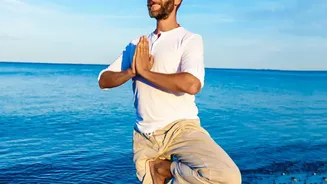
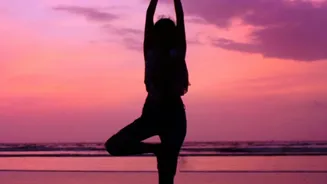
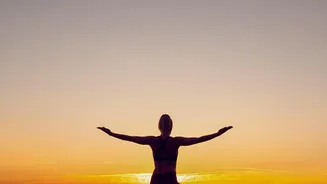
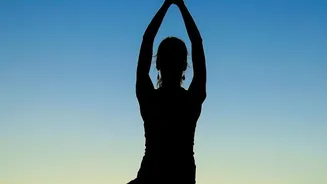
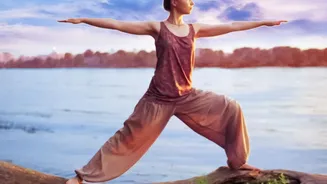
Once you feel relatively stable in your legs and core, you can begin to explore arm variations. The most common starting position is bringing the palms together in front of your chest in a prayer position (Anjali Mudra). This keeps your centre of gravity low and stable. As you feel more confident, you can 'grow your branches' by inhaling and raising your arms overhead, either parallel or with palms touching. For another variation, you can extend your arms out to the sides in a 'T' shape. Remember to keep your shoulders relaxed and away from your ears, no matter the arm position.
Supportive Modifications for Beginners
There is no shame in using support; in fact, it's a smart way to learn correct alignment without the fear of falling. Practice near a wall and gently rest a hand on it for balance as needed. This allows you to focus on hip alignment and core engagement. A chair can also be used for support. For those with high blood pressure, it's recommended to keep your hands at your heart centre rather than raising them overhead. Listening to your body is the most important part of the practice. If you feel pain, gently release the pose.