
The Slow March of Saturn's Seasons
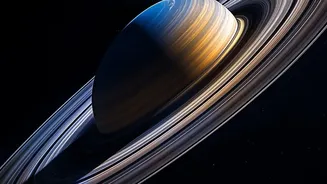
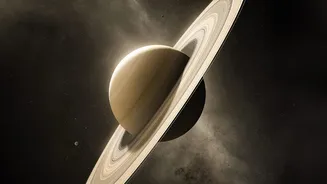
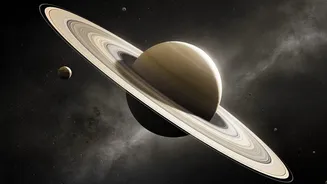
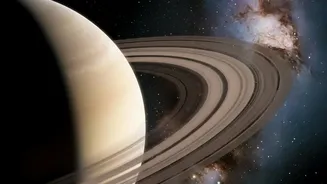
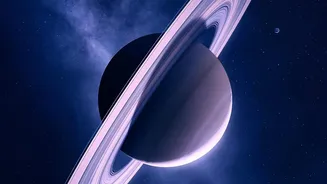
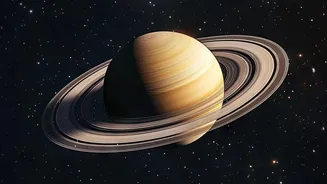
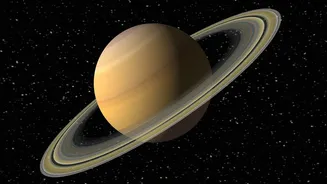
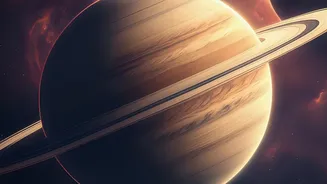
To understand the changes Hubble is seeing, you first have to appreciate the scale of time on Saturn. The ringed giant takes over 29 Earth years to complete one orbit around the sun. This means each of its four seasons lasts for more than seven Earth years.
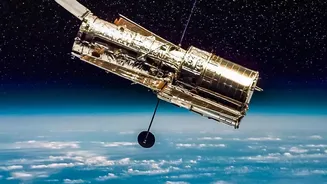
Because of this long, slow cycle, observing seasonal change requires patience and consistent monitoring over decades. This is where programmes like the Hubble Outer Planet Atmospheres Legacy (OPAL) come in. Since 2014, OPAL has dedicated time to annually check in on our gas giant neighbours, creating a priceless long-term record of their atmospheric evolution. For Saturn, these observations began in earnest in 2018, picking up where the Cassini mission left off.
Seeing the Unseen with Infrared
While Hubble can take stunning pictures in visible light—what our own eyes can see—its infrared capabilities are the key to unlocking Saturn's atmospheric secrets. Infrared light is essentially heat radiation. By looking at Saturn in these wavelengths, scientists can peer through the upper layers of haze and see the deeper, warmer layers of the atmosphere. This allows them to track not just the colour of the clouds, but also their temperature, altitude, and chemical makeup. It’s like being able to peel back the layers of an onion to understand how the entire system works together, revealing storms, jet streams, and chemical processes that are otherwise invisible.
A World of Subtle but Significant Change
So, what has Hubble actually revealed? As Saturn’s northern hemisphere moved from its summer solstice towards autumn, scientists observed subtle but fascinating shifts. Between 2018 and 2020, data showed the planet’s equatorial region brightened by 5 to 10 percent. There was also a slight reddish haze developing over the northern hemisphere, possibly caused by increased heating from summer sunlight, which could be altering atmospheric circulation or creating more photochemical haze. Even the wind speeds have shown variability. Winds at the equator, measured around 1,600 kilometres per hour in 2018, decreased back to the 1,300 km/h speeds recorded by the Cassini spacecraft in previous years, suggesting changes in cloud deck altitude. These year-to-year snapshots are the first hints of the larger seasonal transformations underway.
The Bigger Picture: From Hexagons to Exoplanets
Hubble’s long-term watch has also captured changes in Saturn's famous north polar hexagon, a massive six-sided jet stream. As summer progressed, the colour of the hexagon and its surrounding polar region changed. Observations have also noted the formation and dissipation of warm polar vortices, with temperature shifts of up to 30 degrees Celsius in the stratosphere as seasons turn. Understanding these dynamics isn't just about Saturn. These giant planets are natural laboratories for extreme meteorology. The insights gained from Saturn’s atmosphere—how its energy is distributed and how its weather is driven by seasons—help scientists model the atmospheres of planets orbiting other stars, known as exoplanets. Every detail we learn about our own celestial neighbours brings us one step closer to understanding the countless worlds beyond.