






The Problem with Packing Everything
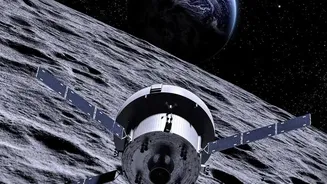
For any long-term mission, especially one as ambitious as NASA's Artemis program to establish a sustainable lunar presence, relying on resupply missions from Earth is incredibly expensive and risky. Every kilogram of material launched into space has a significant
cost, and essential resources like water, food, and oxygen add up quickly. Oxygen isn't just for breathing; it's also a critical component of rocket propellant, which would be needed for return trips or journeys farther into the solar system, like Mars. To make a lunar base truly sustainable, astronauts need to be able to live off the land, a concept space agencies call In-Situ Resource Utilization, or ISRU. This means finding and processing local materials to create everything from shelter to breathable air.
An Unexpected Abundance of Oxygen
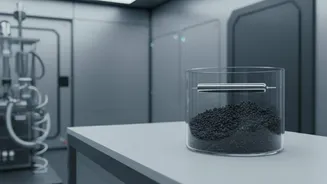
While the Moon has virtually no atmosphere, its surface is surprisingly rich in oxygen. The fine, rocky dust covering the Moon, known as regolith, is composed of about 45% oxygen by weight. However, this oxygen is not free-floating gas. It's chemically locked inside oxide minerals, combined with elements like silicon, aluminum, iron, and titanium. Think of it like rust, where oxygen is chemically bonded to iron. To be useful for life support or as a propellant oxidizer, this oxygen must be broken free from its mineral bonds. The sheer abundance of this raw material makes it a prime target for ISRU efforts, promising a nearly limitless supply if an efficient extraction method can be deployed.
The Science of Making Air from Rocks
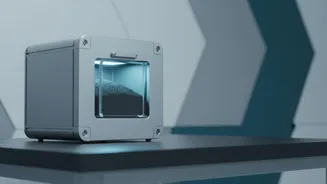
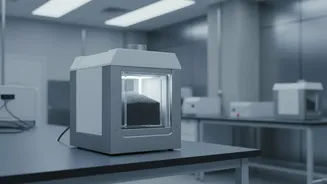
There are several methods being developed to liberate this trapped oxygen, but one of the most promising is called molten oxide electrolysis, or MRE. The process involves heating the lunar regolith to extremely high temperatures, around 1,600 degrees Celsius, until it melts into a molten slag, similar in consistency to honey. An electric current is then passed through this molten material using electrodes. Much like how electrolysis splits water into hydrogen and oxygen, this process splits the molten metal oxides. Oxygen bubbles form at the positive electrode (anode), where they can be collected, while the molten metals pool at the negative electrode (cathode). NASA and its commercial partners, like Sierra Space, have been successfully testing prototypes in vacuum chambers that simulate the lunar environment.
More Than Just Breathable Air
A fascinating aspect of this process is that oxygen isn't the only valuable product. The metals left behind—including iron, aluminum, and silicon—are also incredibly useful resources. Instead of being a waste product, this metallic alloy could be used for manufacturing and construction on the Moon. These materials could be refined and fed into 3D printers to create tools, spare parts, or even building blocks for habitats, further reducing the need to ship materials from Earth. This dual-purpose extraction—producing both life-sustaining oxygen and construction materials—is a cornerstone of the strategy for building a truly self-sufficient and permanent lunar outpost.
From Lab Prototypes to Lunar Reality
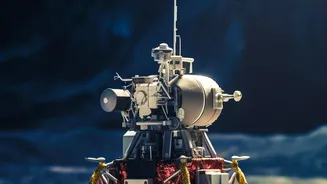
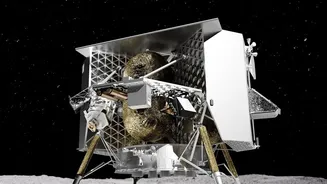
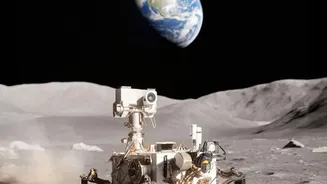
This technology is moving rapidly from theory to practice. NASA is actively funding and managing several projects, such as the Carbothermal Reduction Demonstration (CaRD) and the GaLORE project, to perfect this process. Recent tests have successfully demonstrated the ability to extract oxygen from lunar soil simulants in a vacuum, proving the fundamental concept works under moon-like conditions. The next major step is to build a flight-ready version of these reactors to be tested on the lunar surface as part of upcoming Artemis missions. The goal is to scale up this technology to eventually support a permanent human habitat and a fueling station for rockets, paving the way not just for long-term lunar settlement, but for future crewed missions to Mars and beyond.