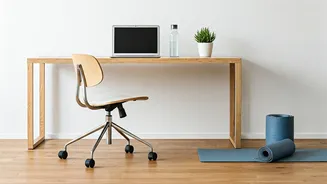









Why Sitting Is a Health Hazard
The phrase “sitting is the new smoking” might sound like an exaggeration, but it highlights a serious modern health concern. Prolonged sitting is linked to a host of problems, including an increased risk of heart disease, type 2 diabetes, and certain
types of cancer. When we sit for extended periods, our large muscle groups, particularly in the legs, are inactive. This inactivity impairs the body's ability to regulate key metabolic functions. Blood flow slows, muscles don't help clear sugar from the bloodstream as effectively, and our internal systems become less efficient. This can lead to elevated blood sugar levels after meals, higher blood pressure, and a general feeling of fatigue. Even if you exercise regularly, long stretches of uninterrupted sitting can still pose risks, making it crucial to find ways to break up the day.
The Five-Minute, Thirty-Minute Rule
So, what's the most effective way to counteract this? Researchers at Columbia University sought a precise answer. In a lab-based study, they tested different 'movement snacks' to see what worked best. The results were clear: the optimal formula was five minutes of light walking for every 30 minutes of sitting. This specific regimen was the only one tested that significantly lowered both blood sugar and blood pressure. One of the most striking findings was its effect on blood sugar spikes after a large meal, which were reduced by a staggering 58% compared to sitting all day. While other break frequencies, like one minute of walking every hour, offered some benefits, the five-minutes-per-half-hour routine delivered the most comprehensive health advantages.
More Than Just Physical Benefits
The positive effects of these short breaks aren't just metabolic. Participants in the studies also reported significant improvements in their mental well-being. Taking regular walking breaks led to a better mood and a considerable decrease in fatigue. A more recent large-scale study published in the British Journal of Sports Medicine confirmed these findings in a real-world setting. While taking a break every 30 minutes was the most effective for boosting mood and energy, it was also the hardest for people to stick with. The research found that a five-minute walk every hour offered the best balance of being both effective and practical for most workers, without hurting productivity. Participants felt more energized and engaged with their work on days they took movement breaks.
How to Put This Into Practice
Knowing the science is one thing; implementing it into a busy workday is another. The key is to make these breaks a non-negotiable part of your routine. Set a timer on your phone or computer for every 30 to 60 minutes to remind yourself to get up and move. Your five-minute walk doesn't need to be a power walk; a light stroll is sufficient. You can walk to the kitchen for a glass of water, take a lap around your office floor, or even just walk in place while on a phone call. The goal is simply to activate your muscles. If a five-minute break every half-hour feels too disruptive, start with one every hour and see how it feels. The most important thing is to interrupt the long, continuous periods of sitting.