






A New Player in Brain Health
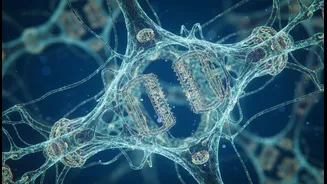
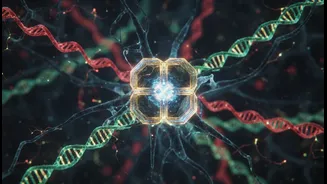
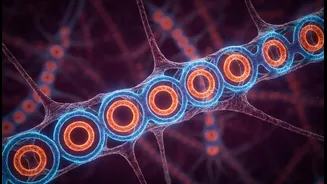
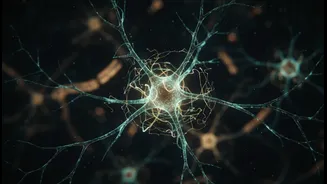
Scientists have uncovered a previously underappreciated role for a structure inside our neurons, or brain cells. Think of it as a hidden skeleton, a lattice-like structure just beneath the cell's surface known as the membrane-associated periodic skeleton, or MPS.
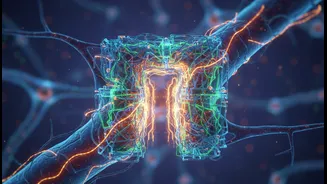
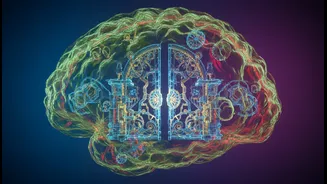
For a long time, researchers believed its main job was simply to help the neuron hold its shape. However, new research from Penn State has revealed it does something far more critical: it acts as a gatekeeper. This microscopic skeleton controls the flow of materials into the cell, a process vital for learning, memory, and basic brain cell maintenance.
The Gatekeeper's Role in Alzheimer's
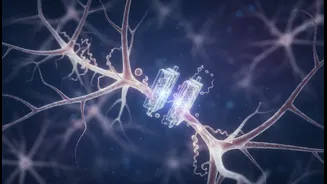
The traditional villains in the Alzheimer's story are two proteins: amyloid, which forms plaques between neurons, and tau, which creates tangles inside them. These hallmarks of the disease disrupt communication and ultimately lead to cell death. The new discovery links the MPS directly to this process. Researchers found that this skeleton acts as a protective barrier, regulating how neurons absorb substances from the fluid around them. When this gatekeeper structure is weakened or damaged, the floodgates open. The neuron begins to rapidly absorb materials from outside, including the harmful proteins associated with Alzheimer's.
A Vicious Cycle of Destruction
The research revealed a destructive feedback loop. When the MPS gatekeeper is compromised, it allows toxic proteins to enter the cell more easily. In experiments, weakening the MPS caused neurons to take in amyloid precursor protein (APP) more rapidly. Once inside, APP is processed into the toxic amyloid fragments that are a key feature of Alzheimer's. Worse still, this increased uptake triggers signals that cause the cell to further break down its own skeletal gatekeeper, accelerating the destructive process. This finding provides a crucial new insight into how the disease might progress at a cellular level, showing how a structural failure can lead to a toxic takeover.
A New Target for Future Therapies
This is where the hope comes in. For decades, many therapeutic strategies have focused on trying to clear out the amyloid plaques after they have already formed, with limited success. This new understanding of the cell's own defense mechanism offers a completely different approach. Instead of just cleaning up the mess, what if we could reinforce the gates to prevent the damage in the first place? The research suggests that finding ways to stabilize and strengthen the MPS could be a powerful new strategy. By keeping this skeletal structure intact, it may be possible to slow or even prevent the rapid intake of harmful proteins, protecting the neuron from the cascade of events that leads to cell death.
The Road Ahead
It is important to maintain perspective. This is a fundamental scientific discovery, not a cure that is ready for patients tomorrow. The research was conducted on neurons in a lab setting, and much more work is needed to translate these findings into a viable human therapy. However, every major medical advance begins with such a fundamental shift in understanding. By identifying a new player and a new mechanism in the complex puzzle of Alzheimer's, scientists have opened up a fresh avenue for exploration. This discovery provides a new target for drug development and a renewed sense of optimism that we can find ways to protect the brain and fight back against this relentless disease.