





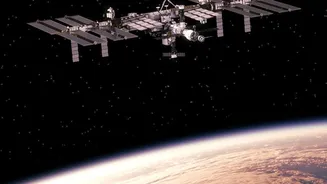
A Changing of the Guard in Orbit
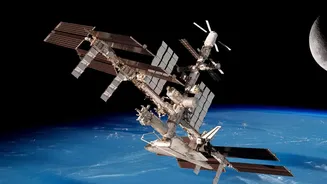
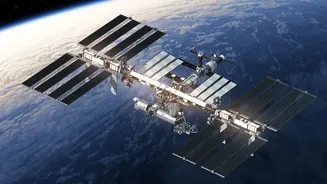
The ISS has been the centerpiece of human spaceflight for a generation, a symbol of international cooperation and a crucial laboratory for microgravity research. However, its operational life is finite. In anticipation of its decommissioning, NASA has initiated
the Commercial Low-Earth Orbit Destinations (CLD) program. The goal is to avoid an American gap in orbit by fostering a commercial market for space stations, where NASA can be one of many customers rather than the sole owner and operator. This strategic shift is designed to stimulate a robust LEO economy, spanning research, manufacturing, and tourism, while freeing up agency resources to focus on deep space exploration missions to the Moon and Mars. A brief period of uncertainty arose in early 2026 when NASA floated a plan to build its own core module, but after industry feedback, the agency reaffirmed its commitment to supporting commercially developed free-flying stations.
Vast's Race to Be First
California-based startup Vast is positioning itself to be the first company to operate a private, free-flying commercial space station. Its single-module habitat, Haven-1, is currently targeting launch in the first quarter of 2027 aboard a SpaceX Falcon 9 rocket. The station is designed to support a crew of four for missions lasting up to 30 days. Following the station's launch, the first crewed mission, Vast-1, will follow in a SpaceX Crew Dragon spacecraft. Though initially planned for 2026, the timeline was adjusted to allow for further integration and safety verification. Vast has already announced that Haven-1 will feature a microgravity research facility, with companies like Redwire and Yuri Gravity signed on as initial payload customers. The company also has ambitious plans for a larger, multi-module follow-up called Haven-2.
Axiom Space: Building on the ISS
Axiom Space is taking a unique, phased approach. The Houston-based company has already established itself as a major player by flying multiple private astronaut missions to the ISS. Its strategy leverages this existing partnership, with plans to first attach its own commercial modules directly to the International Space Station. The first module is targeted for attachment around 2027. Over the following years, additional habitat and research modules will be added. Before the ISS is deorbited, the entire Axiom segment will detach and become a fully independent, free-flying commercial station. This allows Axiom to begin operations and generate revenue using ISS resources before its station is fully assembled, giving it a distinct advantage and deep operational experience.
Blue Origin's 'Mixed-Use Business Park'
Another major contender is Orbital Reef, a project led by Jeff Bezos's Blue Origin and its primary partner, Sierra Space. Envisioned as a "mixed-use business park in space," Orbital Reef is designed to be a larger, more versatile destination for a wide range of clients, including researchers, industrial clients, and space tourists. The station's design features large, flexible modules, including the inflatable LIFE habitat from Sierra Space, and aims to support a crew of up to ten people. While an operational date of 2027 was initially projected, development has faced some reported friction between the partners, though both companies maintain their commitment to the project. NASA awarded the project $130 million in initial funding under the CLD program, and the team has successfully passed several key design and testing milestones.
A New Frontier for Research
While space tourism often grabs headlines, the primary business case for these new orbital platforms is research and development. The microgravity environment offers unique advantages for a variety of fields. Pharmaceutical companies can study protein crystallization to design more effective drugs. Materials scientists can create novel alloys and semiconductors impossible to produce on Earth. Other applications include bio-printing tissues and organs, advanced Earth observation, and in-space manufacturing. By providing more frequent and cost-effective access to orbit, these commercial stations aim to dramatically lower the barrier to entry for space-based R&D, potentially unlocking breakthroughs across numerous industries and accelerating a new wave of innovation.