


Setting the Stage for Success
Before you start, it’s important to manage expectations. Herbs grown in low light will be less vigorous and productive than their sun-soaked counterparts. They may grow more slowly or have a less intense flavour, but they will still provide the joy of
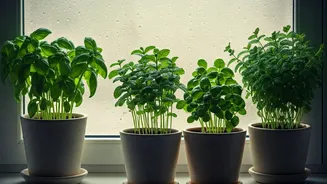
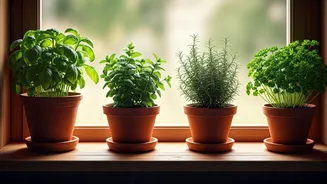
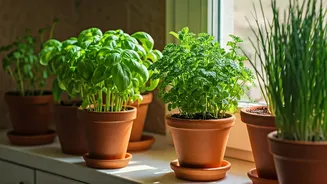
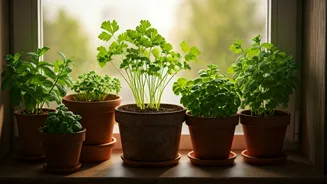
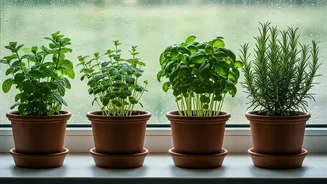
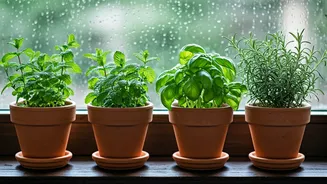
a fresh, homegrown harvest. The key is choosing herbs that are naturally more tolerant of shade. For any windowsill herb garden, choose pots with excellent drainage to prevent root rot, a common issue in lower-light conditions where water evaporates more slowly. A quality, well-draining potting mix is also essential; never use dense garden soil for indoor pots.
1. Mint: The Eager and Forgiving Grower
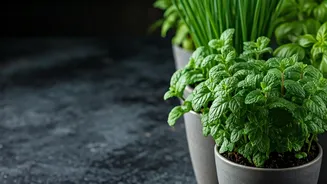
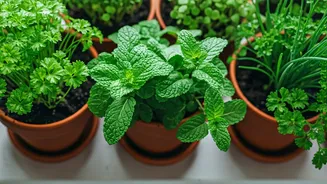
Mint is famous for its vigorous, almost invasive growth, and this tenacity serves it well indoors. It's one of the most forgiving herbs and adapts surprisingly well to partial shade. In fact, some shade can prevent its leaves from scorching and help maintain moisture. While it won't grow as wildly as it does outdoors, a low-light plant will still produce enough for your tea or mojitos. Keep mint in its own container, as its roots are aggressive and will quickly take over a mixed planter. Water it regularly, keeping the soil consistently moist but not waterlogged. If the plant starts to look long and stretched—a condition known as being 'leggy'—it's reaching for light. Pruning it back regularly will encourage it to become bushier and more compact.
2. Parsley: The Resilient Kitchen Staple
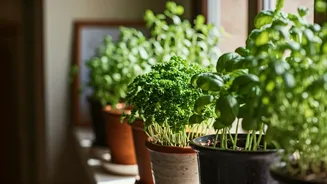
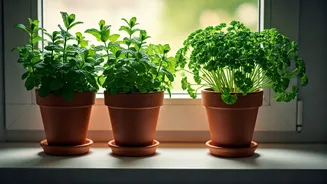
Both flat-leaf and curly parsley varieties are surprisingly adaptable and can manage with less sun. While they thrive in full sun, they will reliably grow with just a few hours of light, making them a great candidate for a less-than-ideal windowsill. Indoor plants may be a bit more spindly than garden-grown ones, but the flavour remains. Parsley has a long taproot, so it requires a deeper pot than you might expect—aim for one at least 6-8 inches deep to give it room to grow. Keep the soil consistently moist. Harvest the outer stalks first, snipping them close to the base. This allows the inner stalks to continue growing and ensures a continuous supply for your kitchen creations.
3. Chives: The Subtle Onion All-Star
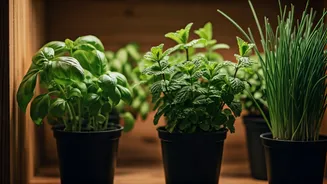
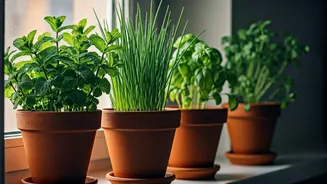
Chives are another low-maintenance herb perfect for beginners. Their slender, grass-like shoots will grow happily with just a few hours of sun per day. While a chive plant in a low-light spot might not grow as rapidly or flower as much as one in full sun, it will still produce flavourful leaves. These herbs prefer to be kept consistently moist but are susceptible to root rot if overwatered, so good drainage is crucial. To harvest, use scissors to snip the leaves about two inches from the soil. This encourages quick regrowth. Regularly harvesting your chives helps keep the plant productive and healthy.
4. Lemon Balm: The Aromatic Tea Herb
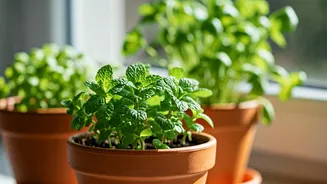
A cheerful member of the mint family, lemon balm shares its relative's tolerance for partial shade. It's an excellent choice for a low-light windowsill where you want a touch of green and a beautiful, calming citrus fragrance. Lemon balm does well with at least 4-6 hours of bright, indirect light. It prefers consistently moist soil, so check the top inch and water when it feels dry. Like mint, lemon balm can spread readily, so keeping it in its own pot is a wise move. Pinching off the tips of the plant will encourage it to grow bushier and more compact, preventing it from getting leggy. You can use its fragrant leaves to make a soothing herbal tea or add a citrusy note to water.