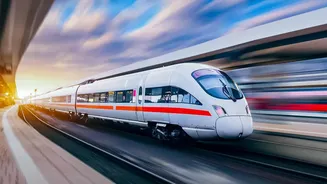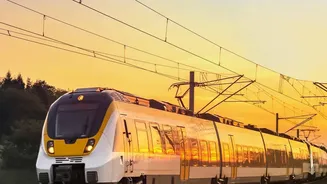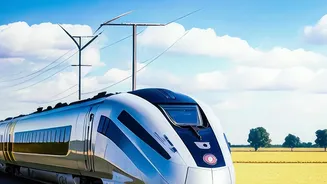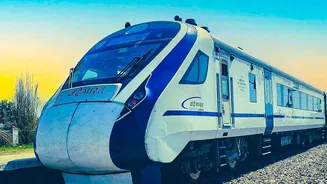




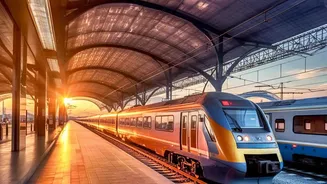
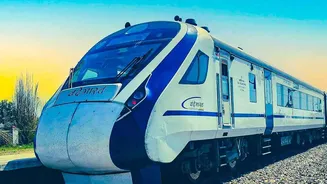
India's long-held dream of high-speed rail is rapidly becoming a reality. The ambitious Mumbai-Ahmedabad corridor is set to begin its journey not with a single grand launch, but with a strategic first run on the crucial Surat-Vapi section.
The First Step in a 508-Kilometre Journey
The first bullet
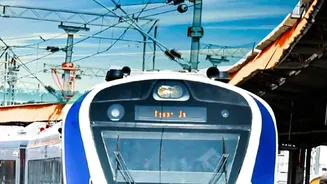
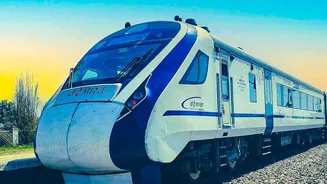
train in India will not wait for the entire 508-km Mumbai-Ahmedabad High-Speed Rail (MAHSR) corridor to be completed. Instead, Indian Railways is adopting a phased approach, with the initial services planned for the Surat-Vapi section in Gujarat. According to Railway Minister Ashwini Vaishnaw, this first section is expected to be operational in the last quarter of 2027. This strategy allows the public to experience the benefits of high-speed rail sooner while work continues on more complex parts of the route, particularly in Maharashtra.
Why Surat-Vapi (and Bilimora) First?
The choice of the Gujarat portion for the initial launch is strategic. Construction progress, including the building of elevated viaducts, stations, and track installation, has been faster in this section. While the first commercial service is targeted for the larger Surat-Vapi stretch, the very first trial runs are scheduled for an even smaller, 50-km segment between Surat and Bilimora. These trials are expected to begin in May 2027. This section is a hotbed of industrial and commercial activity, and introducing high-speed connectivity here first is expected to provide an immediate economic boost. Key infrastructure milestones, like the energisation of the overhead electrical systems, have already been achieved on the Surat-Bilimora stretch, paving the way for testing.
Cutting-Edge Tech on Indian Tracks
The project is being developed with technological assistance from Japan, utilising its famous Shinkansen system. The trains are designed for a maximum operating speed of 320 kmph, which will drastically reduce travel time. However, the initial trial runs will use the new indigenous B-28 trainset, which is designed for speeds up to 280 kmph. This move highlights a parallel goal of the project: to build a domestic ecosystem for high-speed rail technology and manufacturing. The corridor itself is an engineering feat, with most of the route being elevated and featuring advanced noise barriers and power systems.
Timeline and What to Expect
After years of planning, land acquisition challenges, and construction, the project has a clearer timeline. Trial runs for the Surat-Bilimora section are slated for May 2027. Following successful trials, the first commercial service on the Surat-Vapi section is targeted for the last quarter of 2027. After this, the network will be expanded in phases. The service is expected to reach Thane by 2029. The entire 508-km corridor, once fully operational, will connect 12 stations and cut the travel time between Mumbai and Ahmedabad from around eight hours to just over two.
A Landmark for National Infrastructure
The Mumbai-Ahmedabad High-Speed Rail project is more than just a fast train; it represents a significant leap in India's infrastructure and technological capabilities. The National High Speed Rail Corporation Limited (NHSRCL), the body overseeing the project, has managed immense logistical challenges, from constructing viaducts over rivers to preparing for India's first undersea rail tunnel in Maharashtra. The project has faced delays but has gained significant momentum, with hundreds of kilometres of viaducts and track work already completed. The launch of the first service will be a watershed moment, demonstrating India's capacity to execute complex, world-class engineering projects.