



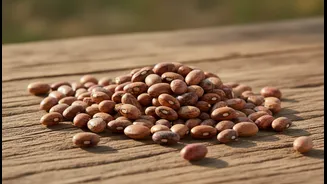


The Superfood in Your Own Backyard
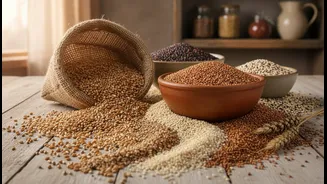
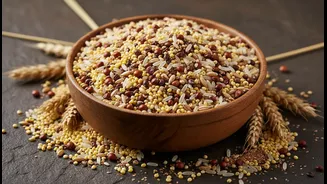
For years, urban Indian kitchens have embraced global health trends, making space on their shelves for grains like quinoa. Yet, a quiet revolution is bringing focus back to our own heritage. Millets, often called 'nutri-cereals', have been a staple in India for centuries.
Their recent resurgence, championed by government initiatives and a greater wellness consciousness, is well-founded. These tiny grains are not just nutritionally dense but are also incredibly sustainable. They are hardy crops that thrive in arid conditions, require significantly less water than rice and wheat, and have a lower carbon footprint, making them a smart choice for both our bodies and the environment.
Know Your Local Champions
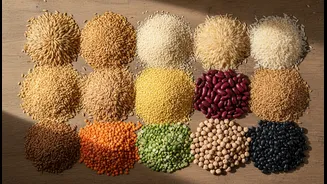
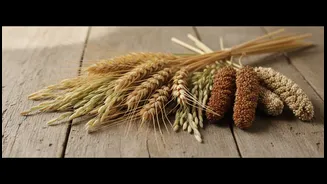
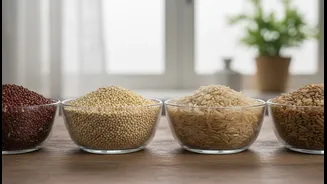
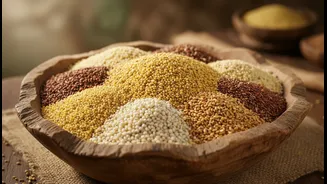
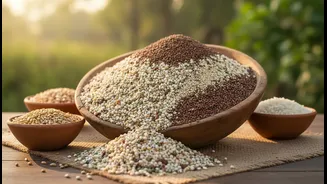
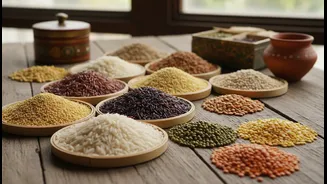
India's millet basket is diverse, with each grain offering a unique profile. The most common are Jowar (Sorghum), Bajra (Pearl Millet), and Ragi (Finger Millet). Ragi is a calcium powerhouse, making it excellent for bone health. Bajra is rich in iron and protein, perfect for boosting energy. Jowar is packed with fibre and antioxidants, known to help manage cholesterol. Beyond these, there are smaller varieties like Foxtail millet (Kangni) and Barnyard millet (Samak), each with its own set of benefits and culinary uses. The key is to see them not as one single entity, but as a versatile team of ingredients.
The Quinoa Swap: Foxtail and Kodo Millets
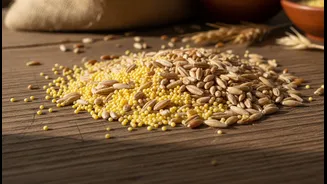
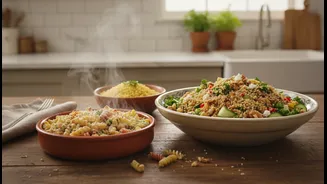
Quinoa's popularity stems from its fluffy texture and role as a complete protein. While quinoa is a great grain, many Indian millets offer a comparable experience. Foxtail and Kodo millets, when cooked, have a light, fluffy texture that makes them an excellent substitute in salads, pilafs, and upmas. Nutritionally, while quinoa has a slight edge in being a 'complete' protein, this is less relevant in an Indian context where grains are almost always paired with dal or legumes, which balances the amino acid profile. Furthermore, millets often outperform quinoa in key minerals like iron and calcium, which are critical for Indian diets.
Rethinking Breakfast: Beyond Oats
A warm bowl of oatmeal is a breakfast favourite, but millets offer equally comforting and arguably more nutritious alternatives. Ragi porridge, or Ragi Malt, is a classic example. It's prepared by cooking ragi flour with water or milk and can be sweetened with jaggery. This simple dish is incredibly rich in calcium and iron. Similarly, Bajra and Jowar can be cooked into creamy porridges. Unlike processed oats, whole millets are high in dietary fibre, which aids digestion and provides sustained energy release, keeping you full and active longer without the blood sugar spikes.
A New Foundation for Rotis and Bakes
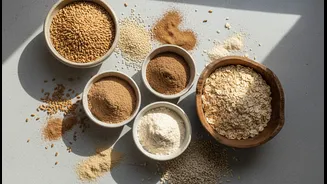
The application of millets extends well beyond replacing whole grains. Millet flours are transforming everyday staples. Jowar, Bajra, and Ragi flours have been used for generations to make traditional flatbreads like bhakri and roti. These are not only gluten-free but also add a delicious, earthy flavour. You can start by substituting a portion of your regular wheat flour with millet flour, gradually increasing the ratio as you get used to the taste and texture. These flours can also be used to make nutrient-dense pancakes, dosas, and even baked goods like muffins and breads, adding fibre and essential minerals to treats.