





A Mission to a Metal World
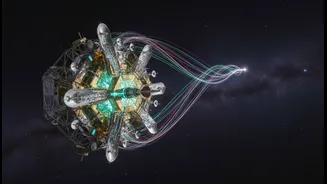
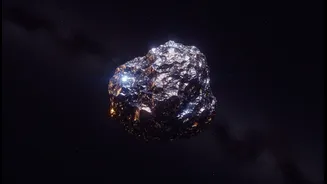
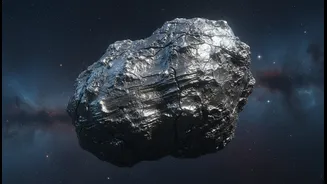
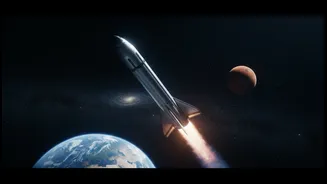
To understand the test, you first have to meet the spacecraft performing it: Psyche. Launched in October 2023, Psyche is on a multi-year journey to a unique, metal-rich asteroid also named Psyche, which orbits the Sun between Mars and Jupiter. Scientists
believe this asteroid could be the exposed nickel-iron core of an ancient, fledgling planet, offering an unprecedented look at the building blocks of worlds like our own. The spacecraft is equipped with a suite of scientific instruments to map and study the asteroid's composition. But hitching a ride on the probe is a groundbreaking piece of technology that operated independently to perform its own set of experiments.
From Radio Waves to Laser Beams
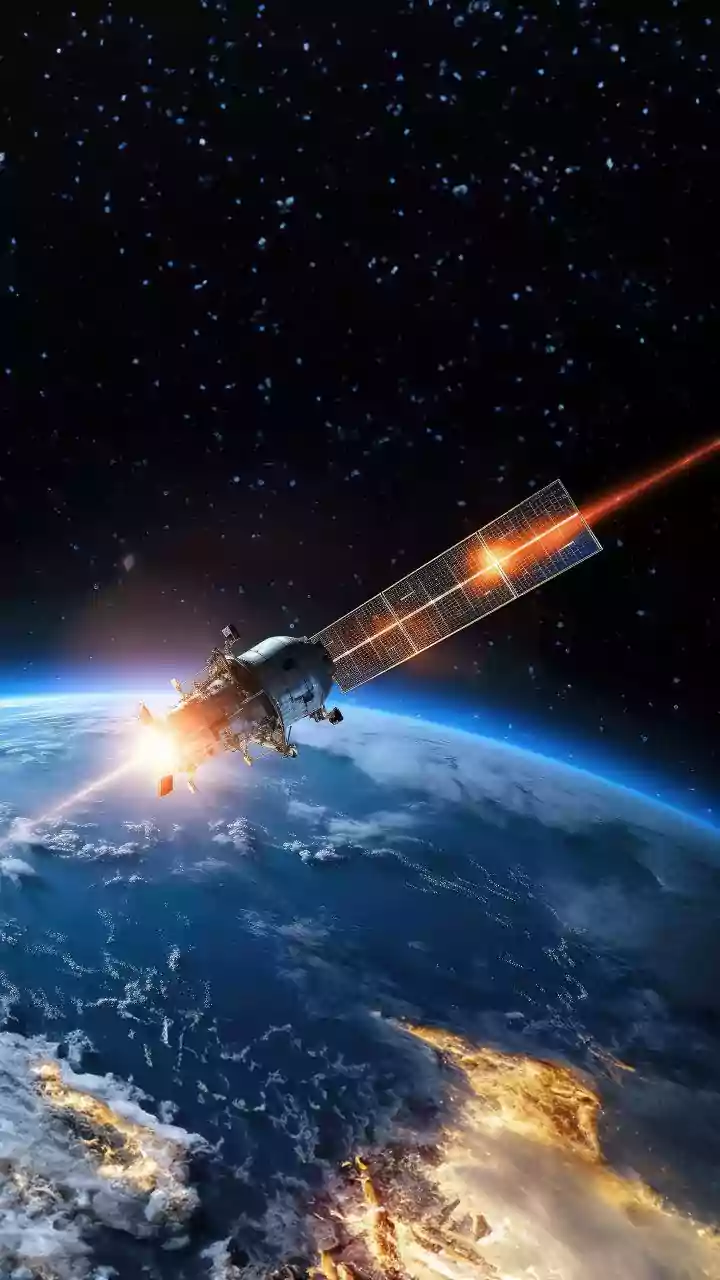
For decades, NASA has communicated with its deep-space probes using radio waves. It’s a reliable method, but it has limitations, much like a dial-up modem in an age of fibre optics. As missions send back more complex data—including high-resolution images and, one day, video from astronauts on Mars—a much faster connection is needed. Enter the Deep Space Optical Communications (DSOC) experiment. This system doesn't use radio waves; it uses an invisible, near-infrared laser to encode and transmit data. By using the much higher frequency of light, DSOC can pack in significantly more information, promising data rates at least 10 times higher than the best radio systems. The experiment consists of a transceiver on Psyche and two ground stations in California to receive the signal.
An Iconic Image Gets a New Job
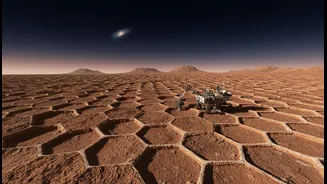
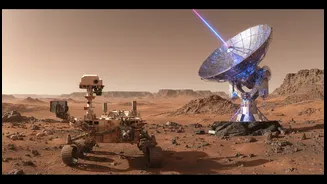
During its first two years of flight, the DSOC team has been putting the system through its paces. They needed to send a complex piece of data to prove the laser link could handle more than just simple code. The team chose a perfect test subject: a famous “selfie” taken by the Curiosity rover on Mars. These selfies are not simple snapshots; they are intricate mosaics stitched together from dozens of individual images taken by a camera on the rover's robotic arm. The arm itself is cleverly edited out of the final composite, creating a stunning, third-person-style portrait of the rover on the Red Planet. This complexity made it an ideal test pattern to check the performance of the laser link from millions of miles away.
More Than Just a Pretty Picture
Transmitting the Curiosity selfie, along with other data like a video of a cat named Taters, wasn't just a gimmick. It was a robust engineering test. A detailed image with varying colors, textures, and fine details pushes a data transmission system to its limits. Successfully beaming it across vast distances—at one point reaching a maximum bitrate of 267 megabits per second, comparable to home broadband—proved that the laser system could accurately transmit complex information without losing data. The test demonstrated that the system could handle the kind of high-fidelity scientific data and high-definition video that will be essential for future exploration. It proved the pointing technology was precise enough to hit a target on Earth from millions of miles away, a feat akin to hitting a ten-rupee coin from a kilometre away.
A Broadband Connection to the Cosmos
The successful demonstration using the Martian selfie is a major milestone. Having a high-bandwidth connection to deep space changes the game for planetary science and human exploration. It means future missions can send back massive volumes of scientific data, stream 4K video from the surface of Mars, and allow for a more immersive, “virtual presence” across the solar system. While the DSOC experiment concluded its prime mission in 2025 after exceeding all of its goals, the technology it proved is a critical stepping stone. It paves the way for a future where communication is no longer a bottleneck for our ambitions in space, enabling discoveries we can't yet imagine. This test showed that the future of interplanetary communication is not just functional, but fast enough to share the full, rich picture of exploration with everyone back on Earth.