




A Minefield in the Stars
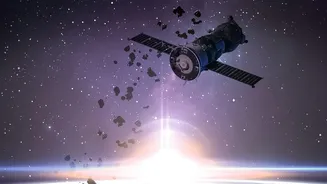
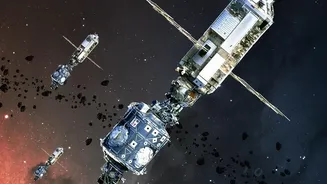
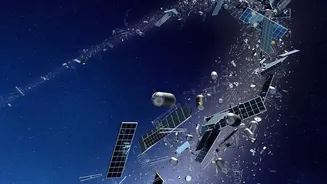
Low Earth Orbit (LEO) is turning into a cosmic junkyard. Decades of space activity have left a trail of debris, from defunct satellites and spent rocket stages to tiny fragments from past collisions. There are millions of these objects, many too small
to track, orbiting Earth at incredible speeds of up to 27,000 km/h. At that velocity, a collision with even a centimetre-sized piece of junk can be catastrophic for an operational satellite. This orbital debris poses a direct threat to the thousands of active satellites that power modern communications, commerce, and security systems worldwide. For India, with its growing constellation of space assets, the risk is escalating dramatically. The number of collision avoidance manoeuvres ISRO has had to perform has been rising steadily year after year, a clear sign of just how congested our orbital highways have become.
Inside India's Automated Defence System
To counter this ever-present danger, the Indian Space Research Organisation (ISRO) has developed a sophisticated defence mechanism. The headline-making "AI thrusters" are part of a broader, intelligent system for Space Situational Awareness (SSA). This effort is spearheaded by initiatives like Project NETRA (Network for Space Object Tracking and Analysis), which acts as an early warning system. The system uses a network of radars and optical telescopes to track objects in orbit. The artificial intelligence component comes into play by processing this vast amount of tracking data. The AI analyses potential threats, predicts collision paths with high accuracy, and determines if an evasive manoeuvre is necessary. It's less about the thrusters themselves being intelligent and more about an AI brain making the critical decisions on when and how to use them.
The AI-Powered Dodge Manoeuvre
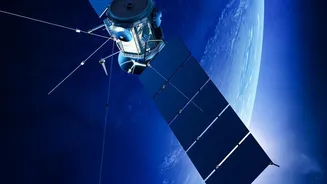
When the AI system flags a high probability of collision, it recommends a Collision Avoidance Manoeuvre (CAM). This isn't a dramatic, sci-fi-style swerve. Instead, it's a precisely calculated, gentle nudge. The system commands the satellite's onboard thrusters to fire a short, controlled burst. This alters the satellite's trajectory just enough to move it safely out of the path of the incoming debris. While these manoeuvres are essential for safety, they come at a cost. Each burn consumes precious fuel, which can shorten the operational lifespan of a satellite. By automating the detection and decision-making process, AI helps ensure that these manoeuvres are only performed when absolutely necessary, preserving fuel while maximising safety. This automated capability is a huge leap from the manual, time-consuming process that satellite operators have traditionally used.
Protecting India's Eyes in the Sky
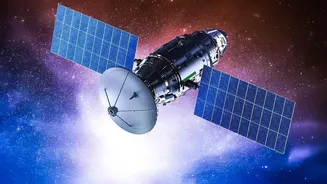
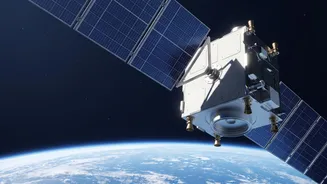
The focus on protecting Earth-observation (EO) satellites is no accident. These are among India's most critical space assets. This constellation of satellites provides invaluable data for a wide range of national needs, including agricultural planning, monitoring water resources, urban development, and forestry management. They are also indispensable for disaster management, providing crucial information for weather forecasting and tracking cyclones. Furthermore, these satellites play a key role in national security by providing high-resolution imagery and surveillance capabilities. Protecting these 'eyes in the sky' is paramount to ensuring the continued flow of data that underpins India's economic growth, environmental monitoring, and strategic defence. The use of an automated protection system ensures these high-value assets are shielded 24/7.
Securing India's Future in Space
The deployment of this AI-driven protection system marks a significant evolution in India's space capabilities. It signals a strategic shift from simply launching and operating satellites to actively and sustainably managing them in a complex environment. Through its IS4OM (ISRO System for Safe & Sustainable Space Operations Management) facility, ISRO is centralising its SSA efforts. Moreover, Indian startups like Digantara are also developing complementary AI-powered systems, creating a robust domestic ecosystem for space safety. This proactive approach is crucial as India aims for 'Debris Free Space Missions' by 2030. By mastering autonomous collision avoidance, India is not just protecting its current investments; it is ensuring that its access to space remains safe and sustainable for decades to come, solidifying its position as a responsible and forward-thinking space power.