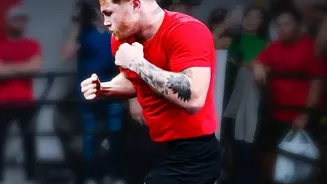




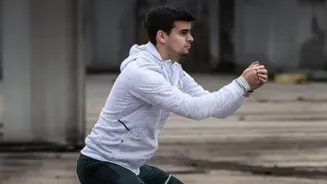
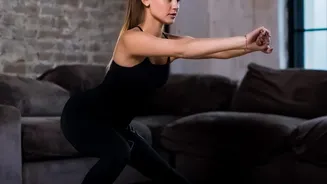
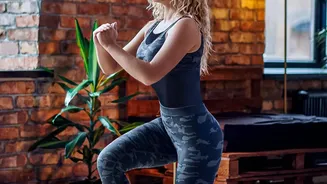
Shadow boxing is a fantastic, equipment-free workout that builds cardio and strength. But if you’re only throwing punches while standing still, you're missing half the benefits. The secret to unlocking its full potential lies in your feet.
From Arm Exercise to Full-Body Workout
One of the biggest
mistakes beginners make is planting their feet and focusing only on their arms. This turns shadow boxing into a limited upper-body drill. Proper footwork transforms it into a dynamic, full-body exercise. Every punch starts from the ground up; power is generated through your legs and transferred through your hips and core. By integrating foot movement, you engage your leg muscles, glutes, and core, dramatically increasing the intensity and calorie burn of your workout. This constant motion elevates your heart rate, providing serious cardiovascular conditioning similar to high-intensity interval training.
The Foundation: Your Stance
Before you can move effectively, you need a solid foundation. Your boxing stance provides the balance and stability needed for every punch and movement. Start with your feet about shoulder-width apart, with your non-dominant foot forward (orthodox stance for right-handers, southpaw for left-handers). Your lead foot should point slightly inward, and your rear foot should be at roughly a 45-degree angle, with the heel slightly raised. Keep your knees soft and your weight evenly distributed, ready to move in any direction. Your hands should be up to protect your face, with your elbows tucked in. This balanced base is non-negotiable for both power and defense.
Essential Footwork Movements
Good footwork is about staying balanced while moving. The golden rule is to never cross your feet. The most fundamental movement is the 'step-drag' or shuffle. To move forward, step with your lead foot, then slide your rear foot to return to your stance. To move back, do the opposite: step with your rear foot first, then slide your lead foot. For lateral movement, step with the foot in the direction you want to go—step with your left foot to move left, and your right foot to move right, always sliding the trailing foot to maintain your stance. Another key move is the pivot. By rotating on the ball of your lead foot, you can change angles quickly to evade an imaginary punch or set up your own.
Drills to Integrate Footwork
The best way to improve is to practice drills that combine hands and feet. Start simple. As you practice your jab, step forward with your lead foot simultaneously. When you throw a one-two (jab-cross) combination, practice stepping in with it and then shuffling back out of range. Another great drill is to circle an imaginary opponent. Move laterally in a circle, maintaining your stance and throwing punches as you move. You can also practice defensive movements. After a combination, pivot to your side or take a step back as if avoiding a counterpunch. Visualizing an opponent makes these drills more dynamic and purposeful.
Common Footwork Mistakes to Avoid
As you train, watch out for a few common errors that can limit your effectiveness and lead to bad habits. The most frequent mistake is being flatfooted. Staying on the balls of your feet keeps you light and mobile. Another is crossing your feet, which completely compromises your balance and leaves you vulnerable. Many beginners also only move forward and backward, neglecting lateral movement and pivots. This makes your movement predictable. Finally, avoid taking large, lunging steps. Small, controlled shuffles are more efficient, keep you balanced, and conserve energy.