


What is Cat-Cow?
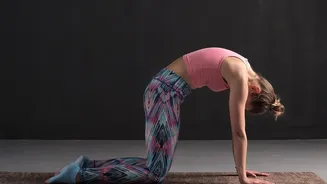
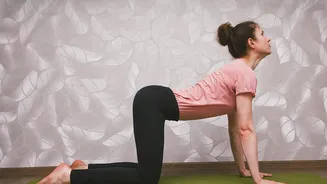
Cat-Cow, or Marjaryasana-Bitilasana, is not a single static pose but a gentle, flowing sequence between two positions. It involves moving the spine from a rounded position (flexion, like a cat) to an arched one (extension, like a cow). This dynamic movement
serves as a foundational practice in yoga, often used as a warm-up to awaken the spine and prepare the body for more activity. Its simplicity makes it one of the most accessible and recommended poses for absolute beginners, offering a profound introduction to the mind-body connection that yoga fosters.
The Gentle Benefits of a Simple Flow
Don't let its simplicity fool you; Cat-Cow offers a wealth of benefits. The primary advantage is improved spinal flexibility and mobility. The gentle undulation helps create space between the vertebrae, countering the stiffness that comes from prolonged sitting. This makes it an excellent tool for relieving and preventing back, neck, and shoulder pain. The movement also provides a gentle massage to the abdominal organs, which can aid digestion and boost circulation. Mentally, the practice is a powerful stress reliever. By synchronizing your breath with the slow, rhythmic motion, you signal your nervous system to calm down, which can reduce anxiety and improve focus.
A Step-by-Step Guide to Cat-Cow
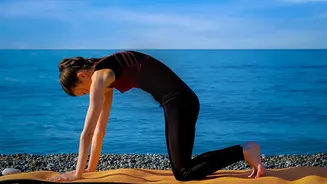
Finding the correct form is key to unlocking the pose's benefits. Follow these steps to get started:1. Start in Tabletop Position: Come onto all fours. Your hands should be directly under your shoulders and your knees directly under your hips, creating a 'tabletop' with your back. Your shins and knees should be hip-width apart.2. Find a Neutral Spine: Your back should be flat. Gaze down at the floor, keeping your neck as a natural extension of your spine.3. Move into Cow Pose (Bitilasana): On an inhale, begin to drop your belly toward the floor. Lift your chest and tailbone, creating an arch in your spine. Broaden your collarbones and look slightly forward, but avoid craning your neck.4. Flow into Cat Pose (Marjaryasana): On an exhale, reverse the movement. Gently round your spine toward the ceiling, tucking your tailbone under. Draw your navel in toward your spine and let your chin drop toward your chest, releasing your neck.5. Repeat the Flow: Continue moving between Cow on your inhales and Cat on your exhales for 5-10 breath cycles, letting your breath guide the pace of your movement.
The Heart of the Pose: Your Breath
The magic of Cat-Cow lies in linking the movement to your breath. The standard pattern is to inhale as you expand into Cow Pose and exhale as you contract into Cat Pose. The inhale naturally helps create space and lift the chest forward, while the exhale facilitates the rounding of the back and engagement of the core. Try not to force the breath; let it be slow, steady, and natural. The goal is to create a seamless, meditative flow where the breath initiates the movement, not the other way around. Rushing through the poses disconnects you from this core benefit.
Common Mistakes to Avoid
To ensure a safe and effective practice, be mindful of a few common misalignments. First, avoid rushing. This is a slow, deliberate movement. Another common error is collapsing in the lower back during Cow Pose; instead, focus on lengthening the spine from the tailbone to the crown of the head. Also, ensure your shoulders are relaxed and away from your ears, and maintain a soft, gentle bend in your elbows to avoid hyperextension. Finally, let your head and neck be a natural continuation of the spinal movement rather than forcing your gaze up or down.
Modifications for Your Body
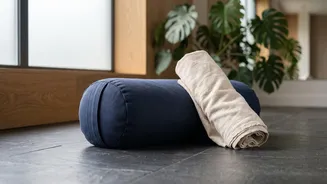
Yoga is about fitting the pose to your body, not the other way around. If you have sensitive knees, place a folded blanket or towel underneath them for extra cushioning. For wrist pain or weakness, you can perform the pose on your forearms instead of your hands, or even make gentle fists to take pressure off the wrist joint. Cat-Cow can also be adapted to a chair for those who find it difficult to be on the floor. While seated, simply place your hands on your knees and move through the same spinal flexion and extension.