







Nature's Gut-Friendly Duo: Fibre and Water
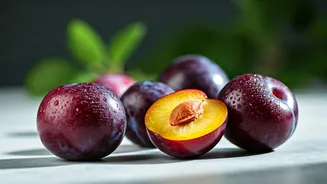
At the heart of the plum's digestive prowess is its impressive fibre content. A single medium-sized plum provides nearly a gram of this essential nutrient. [2, 3] Plums contain both soluble and insoluble fibre, which work together as a powerful team.
[4] Insoluble fibre adds bulk to stool, helping it move more efficiently through your digestive tract and preventing constipation. [4] Soluble fibre, on the other hand, absorbs water to form a gel-like substance. This not only aids in smoother bowel movements but also acts as a prebiotic, providing nourishment for the beneficial bacteria that live in your gut. [4] A healthy gut microbiome is crucial not just for digestion, but for overall immunity and well-being. Furthermore, fresh plums have a high water content, which is vital for staying hydrated and ensuring the fibre can do its job effectively.
The Secret Ingredient: Sorbitol
Beyond fibre, plums contain a natural sugar alcohol called sorbitol. [13] This compound is not fully absorbed by the body. [4] Instead, it travels to the large intestine where it draws in water, a process known as osmosis. [4] This influx of water softens stool, making it easier to pass and providing a gentle, natural laxative effect. [13, 21] This is why plums, and their dried counterparts, prunes, have long been a go-to remedy for maintaining regularity. The presence of sorbitol makes plums particularly effective for digestive support, offering a benefit that many other fruits don't. [2, 3]
More Than Just Digestion: A Burst of Antioxidants
While fantastic for your gut, the benefits of plums don't stop there. They are packed with powerful antioxidants, particularly polyphenols like anthocyanins, which give the fruit its deep red and purple colours. [2, 6] These compounds help protect your body's cells from damage caused by free radicals and reduce inflammation. [2, 7] Chronic inflammation is linked to a host of health issues, so including anti-inflammatory foods like plums in your diet is a smart move for long-term health. [6, 7] Plums are also a good source of vitamins C and K, and minerals like potassium, which supports heart health by helping to manage blood pressure. [2, 13, 14]
Enjoying Plums in Season
In India, the plum season, for varieties often called 'Aloo Bukhara', generally runs from May through the monsoon months. [12, 17] This is the perfect time to enjoy them at their freshest and most flavourful. For maximum benefits, eat the plum with its skin on, as the skin is a major source of fibre and antioxidants. [21] You can enjoy them as a simple snack, slice them into salads for a sweet and tart contrast, blend them into smoothies, or gently stew them with a touch of spice for a warm, comforting dessert. Their natural sweetness makes them a great choice to satisfy a sugar craving without causing sharp spikes in blood sugar, as their fibre content helps slow down sugar absorption. [3, 14]
Can You Have Too Much of a Good Thing?
The idea of eating plums "everyday" is a healthy goal, but moderation is key. [5] Due to their high fibre and sorbitol content, consuming too many plums at once, especially if your body isn't used to them, can lead to digestive discomfort like gas, bloating, or diarrhoea. [5, 8] A good starting point is to enjoy two to four fresh plums a day and see how your system responds. [10] This allows you to reap the digestive and nutritional benefits without overwhelming your gut. By listening to your body, you can find the right amount that helps you feel your best. Gradually increasing your intake can help your digestive system adapt.