




First, Understand the Basics
Before diving into specific snacks, it's crucial to know what you're looking for on the nutrition label. The Food Safety and Standards Authority of India (FSSAI) mandates that all packaged foods display this information. Always check the values per 100g
for a fair comparison between products, not just the 'per serving' size, which can be misleadingly small. Pay attention to the ingredients list; it's ordered by weight, so the first three ingredients make up the bulk of the product. If sugar, maida (refined flour), or palm oil are at the top, it might be best to reconsider.
The Protein Bar Puzzle
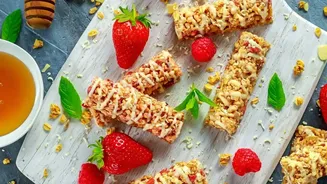
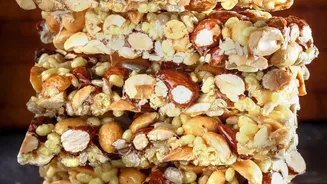
Protein bars are often seen as a healthy, convenient option, but many are closer to candy bars. The first rule is to check the protein-to-sugar ratio. A good rule of thumb is to choose a bar where the protein in grams is at least double the sugar. For example, a bar with 20g of protein and less than 10g of sugar is a solid choice. Be wary of 'hidden' sugars like high-fructose corn syrup, glucose syrup, or malt extract. Also, look for bars with a shorter ingredient list and recognisable, whole-food components. Many 'zero sugar' bars use sugar alcohols like maltitol, which can cause digestive discomfort in some people.
Navigating Packaged Nuts
Nuts are nutritional powerhouses, packed with healthy fats, protein, and fibre. However, the processing and flavouring can turn a healthy snack into a less desirable one. When buying packaged nuts, the main things to watch for are sodium and added oils. Unsalted, raw, or dry-roasted nuts are always the best choice. Flavoured nuts can be a good option, but check the sodium content. A well-salted nut might have 300-500mg of sodium per 100g, which is a significant portion of your daily limit. Avoid nuts that are 'fried' or have long lists of artificial flavourings. Sweet-coated nuts, like those covered in honey or chocolate, should be treated as an occasional dessert, not a daily health snack, as the coating can make up 20-30% of the product.
Making Sense of Makhana
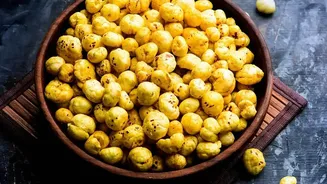
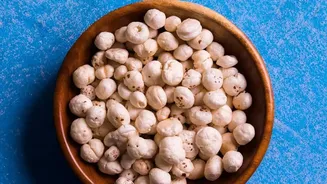
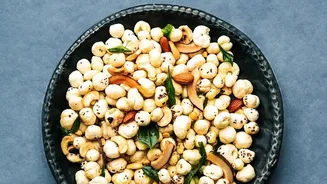
Makhana, or fox nuts, are naturally low in fat and calories and rich in nutrients, making them an excellent snack. In its plain, roasted form, it's unequivocally healthy. The challenge comes with pre-packaged, flavoured varieties. While a far better choice than fried chips, flavoured makhana can be very high in sodium and sometimes uses unhealthy fats for roasting. When you pick up a packet, check the nutrition label for sodium content and the ingredients list for the type of oil used. High-quality brands will use a minimal amount of a neutral oil like rice bran oil and specify that the makhana is roasted, not fried. If salt or palm oil is high on the ingredient list, it's best to look for another option or, better yet, roast and season them yourself at home.