



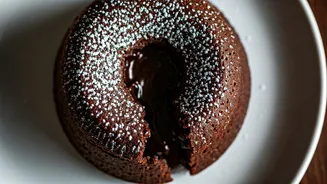


The Science of Rainy Day Cravings
There’s a scientific reason we reach for indulgent foods when it rains. The gloomy weather and lack of sunlight can cause a dip in serotonin, our body's 'happiness hormone'. [10, 16, 19] This drop in mood makes our brain seek out easy ways to feel better,
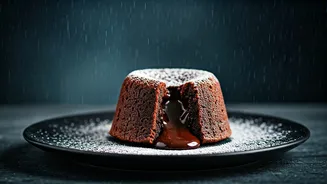
and carbohydrate-rich comfort foods are a quick fix. [7, 10, 16] The lower temperatures also mean our bodies work harder to stay warm, triggering hunger signals. [7] In India, the connection is even deeper, tied to powerful feelings of nostalgia and family. [12, 16] The monsoon season is emotionally linked with cozy kitchens and special snacks, from hot chai and crispy pakoras to something as luxurious as a lava cake. [12, 18, 21] This emotional comfort is a huge part of why certain foods feel so right during a downpour. [12, 15]
A Dessert Born from a Happy Accident
The molten chocolate cake has a contested but charming history. One popular story credits French-American chef Jean-Georges Vongerichten with its invention in New York in 1987. [2, 13] He reportedly pulled a chocolate sponge cake from the oven too early and discovered its centre was still a warm, delicious liquid. [2, 9, 13] The happy accident was a massive hit. [9] However, another French chef, Michel Bras, claims he invented the dessert, which he called "coulant au chocolat," back in 1981, inspired by the feeling of drinking hot chocolate after a ski trip. [2, 9, 11] His method was more technical, involving a frozen ganache core placed inside the batter. [2, 11] While Vongerichten's simpler, under-baking method became more popular and spread across the world in the 1990s, both stories add to the dessert's legendary status. [2, 9]
The Irresistible Allure of Molten Chocolate
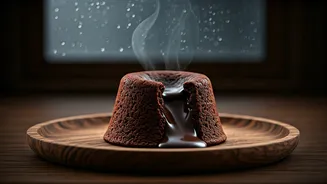
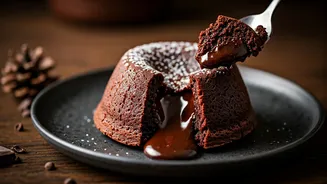
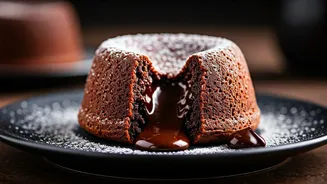
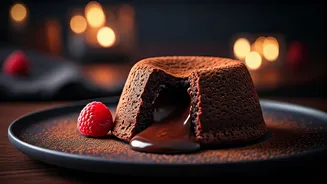
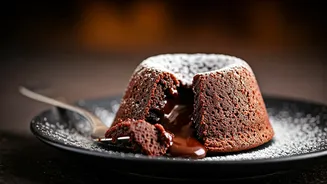
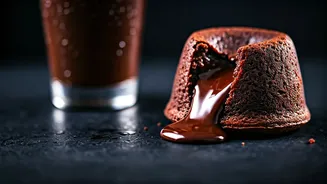
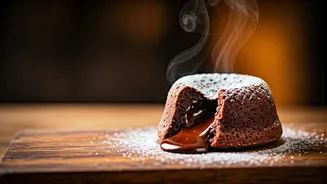
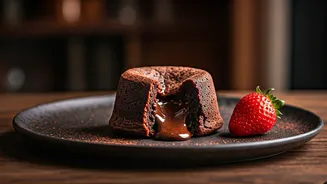
What makes the lava cake so special is the contrast of textures and temperatures. The firm, cakey exterior gives way to a warm, flowing river of chocolate, a sensory experience that is deeply satisfying. [11] This simple dessert became a staple on high-end restaurant menus and eventually a beloved choice in chain restaurants and homes across India. [9, 20] Food delivery data shows that choco lava cake is consistently one of the most ordered desserts in the country, highlighting its immense popularity. [22, 23] Its appeal is universal, offering a moment of pure indulgence that feels both sophisticated and deeply comforting.
How to Make the Perfect Monsoon Lava Cake
Crafting this dessert at home is surprisingly simple and requires only a few key ingredients. The magic lies in the baking time—a minute too long, and you have a regular (though still delicious) chocolate cake. A minute too little, and it's a soupy mess. The goal is to bake it at a high temperature until the edges are firm, but the centre remains soft and jiggly. [4] Using high-quality dark chocolate (around 60-70% cocoa) is crucial for a rich flavour and silky smooth 'lava'. [4, 5] While ramekins are ideal, you can even use a standard muffin tin if you grease it well. [4, 6] Don't be intimidated; the entire process from mixing to baking often takes less than 20 minutes. [6]
An Easy Recipe for Two
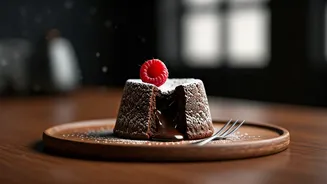
Ready to try it yourself? Here’s a simple recipe perfect for a rainy afternoon. **Ingredients:** * 85g good quality bittersweet or semi-sweet chocolate, chopped [3, 5] * 56g (1/4 cup) unsalted butter [3] * 1 large egg plus 1 large egg yolk [3] * 50g (1/4 cup) granulated sugar [3] * 1 tablespoon all-purpose flour [3] * A pinch of salt [3] **Instructions:** 1. Preheat your oven to 220°C (425°F). Generously butter and lightly flour two 170g (6-ounce) ramekins. [3, 5] 2. In a microwave-safe bowl, melt the butter and chopped chocolate together in 30-second intervals, stirring until smooth. [3, 6] 3. In a separate bowl, use an electric mixer or a whisk to beat the egg, egg yolk, sugar, and salt until the mixture is pale and slightly thickened, about 2-3 minutes. [3, 6] 4. Gently fold the warm chocolate mixture into the egg mixture. Finally, fold in the flour until just combined. Do not overmix. [3] 5. Divide the batter evenly between the two prepared ramekins. [3] 6. Bake for 11-13 minutes. The edges should look set, but the center will still be soft. [3] 7. Let the cakes cool in the ramekins for just one minute, then carefully run a knife around the edge and invert them onto your serving plates. [3] Serve immediately, perhaps with a dusting of icing sugar or a scoop of vanilla ice cream.