





A Home in High Orbit
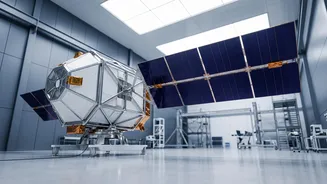
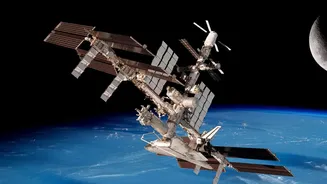
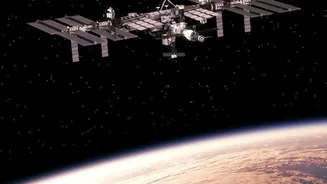
The Bharatiya Antariksh Station (BAS) is planned as a modular orbital laboratory to be constructed and operated by the Indian Space Research Organisation (ISRO). It will orbit Earth at an altitude of approximately 400 to 450 kilometres. The station is being
designed to be assembled in space, module by module, ultimately weighing around 52 tonnes. This orbiting outpost will serve as a home and workplace for three to four astronauts, allowing them to stay for missions lasting from three to six months. Unlike short-duration flights, the station will provide a continuous platform for scientific research and long-term human spaceflight. The entire project is a natural and ambitious extension of the Gaganyaan programme, which is developing the core capabilities for sending Indian astronauts into space.
The Timeline to Liftoff
The journey to establishing the space station is mapped out in phases. The first component, a robotic module known as BAS-01, is scheduled for launch by 2028. This initial phase, which has received government approval, will test foundational technologies and allow for robotic operations. The complete five-module station is targeted for assembly and operation by 2035. These modules include the base, core, science lab, and berthing components. This timeline is ambitious and depends on the success of precursor missions under the Gaganyaan programme, including uncrewed test flights and the development of critical technologies like space docking, which allows spacecraft to connect in orbit.
A Laboratory in the Sky
The primary purpose of the Bharatiya Antariksh Station is science. It will function as a dedicated microgravity laboratory, allowing researchers to conduct experiments that are impossible on Earth. The unique environment will enable breakthroughs in fields like medicine, materials science, biotechnology, and fluid dynamics. For example, scientists can study the effects of long-term space travel on the human body, develop new life-support systems, and even manufacture specialised materials that can only be created in zero gravity. The station will also act as a crucial testing ground for technologies needed for future deep-space missions, including India's goal of a crewed lunar landing by 2040.
More Than Just National Pride
While placing a national flag in orbit is a powerful symbol of prestige, the benefits of the space station are expected to be far more tangible. Economically, the project will spur innovation and growth within India's domestic aerospace industry, creating high-tech jobs and fostering a new ecosystem of private companies and startups. Strategically, it enhances India's autonomy in space, cementing its position as a leading spacefaring nation alongside the US, Russia, and China. It also opens new avenues for international collaboration, with NASA having already expressed a readiness to potentially support India's goals. Furthermore, such a monumental undertaking inspires future generations to pursue careers in science, technology, engineering, and mathematics (STEM), fuelling the country's intellectual capital for decades to come.
The Challenges Ahead
Building a space station is one of the most complex technological feats humanity can undertake, and the path is filled with challenges. The financial investment is substantial, with the expanded Gaganyaan programme, including the first module, budgeted at over ₹20,000 crore. The technical hurdles are immense, requiring mastery of rendezvous and docking procedures, advanced life-support systems, and the development of a new, more powerful Next Generation Launch Vehicle (NGLV) to carry the heavier modules into orbit. The timeline is exceptionally tight, with ISRO needing to manage the station's construction while also pursuing other major missions to the Moon and Venus. Delays are always possible in space exploration, as seen with postponements to the Gaganyaan mission itself.