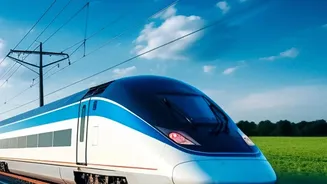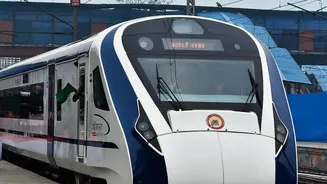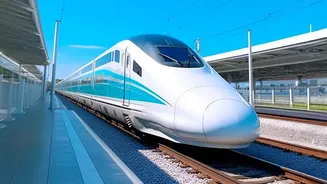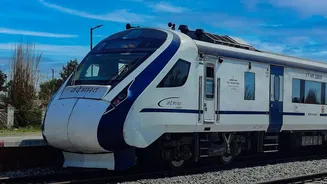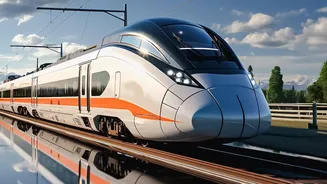





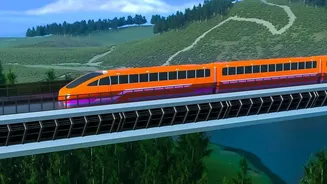
India's dream of high-speed rail is rapidly approaching its first station. The ambitious Mumbai-Ahmedabad bullet train project is now on track to launch its inaugural service on the Surat-Vapi stretch in 2027, marking a new era for transport.
A Landmark Moment for Indian Railways
For years,
the bullet train has been a symbol of India's future infrastructural aspirations. Now, that future has a date. Railway Minister Ashwini Vaishnaw has confirmed that the first section of the high-speed corridor is expected to begin operations in the last quarter of 2027. This initial launch will cover the section connecting the industrial hubs of Surat and Vapi in Gujarat. While the entire 508-kilometre corridor to Mumbai will open in phases, this first operational segment represents a tangible victory after years of planning, land acquisition, and complex construction. It signals a shift from blueprint to reality, promising to redefine inter-city travel in the country. The project, which officially began serious construction in 2021 after delays, is now making significant headway.
Why the Gujarat Section is First
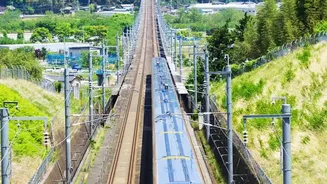
The decision to launch the Gujarat portion first is strategic, driven by rapid progress in the state. Construction of the elevated viaducts, stations, and track-laying has moved at a significant pace in Gujarat. As of late 2026, major milestones have been achieved, including the completion of hundreds of kilometres of pier and viaduct work. In a crucial step, the 50-kilometre stretch between Surat and Bilimora had its overhead electrical systems energised in November 2026, preparing it for upcoming trials. Civil construction at all eight stations in Gujarat, including Vapi, Bilimora, Surat, and Bharuch, is complete, with architectural finishing work now underway. This advanced state of readiness makes the Surat-Vapi line the logical first step in the project's phased rollout.
The Technology Driving the Dream
The Mumbai-Ahmedabad corridor is being built using Japan’s renowned Shinkansen technology, known globally for its safety and punctuality. The project is partially funded by the Japan International Cooperation Agency (JICA). However, a significant part of the project showcases India's growing manufacturing prowess. The first trains to run on the corridor will be indigenous B28 trainsets, currently being developed by BEML. These trains are designed for speeds of up to 280 km/h and are expected to undergo track trials by mid-2027. The project also incorporates an advanced 2x25 kV overhead traction system and ballastless tracks, designed for stability at high speeds. Furthermore, key components like transformers and other electrification equipment are being made in India, boosting the domestic industry.
Beyond Speed: Economic and Urban Impact
The bullet train is more than just a faster way to travel; it's an economic engine. Once the full line is operational, the journey between Mumbai and Ahmedabad is expected to take just under two hours, a massive reduction from the current seven to eight hours by conventional rail or road. This enhanced connectivity is projected to boost economic activity along the entire corridor, linking key commercial centres like Mumbai, Surat, Vadodara, and Ahmedabad. The project is also a significant job creator, generating thousands of direct and indirect employment opportunities. For cities on the first operational stretch like Surat and Vapi, the high-speed link is expected to increase their attractiveness for both businesses and residents, potentially leading to real estate and commercial growth.
The Road Ahead to Mumbai
While the 2027 launch in Gujarat is a celebrated milestone, work continues on the more complex sections in Maharashtra. A key engineering challenge is the 21-kilometre tunnel, which includes a 7-kilometre undersea portion beneath Thane Creek—India’s first of its kind. The work on this challenging segment is underway, with specialised tunnel boring machines deployed. Land acquisition delays in Maharashtra previously impacted the project's overall timeline, but with all land now acquired, construction is progressing across the entire 508-km route. Following the Surat-Vapi launch, the network will be extended in phases, with the full corridor expected to be operational by the end of 2029.