




What is the Graded Response Action Plan (GRAP)?
Think of GRAP as an emergency rulebook for fighting air pollution in the National Capital Region (NCR). It's a set of pre-planned, progressively stricter measures that are automatically triggered as the air quality worsens. First notified in 2017 following
a Supreme Court order, the plan is now implemented by the Commission for Air Quality Management (CAQM). The goal is to act proactively to prevent the air from deteriorating further, rather than just reacting once a public health emergency is declared. The plan is divided into four stages based on the Air Quality Index (AQI): Stage I ('Poor'), Stage II ('Very Poor'), Stage III ('Severe'), and Stage IV ('Severe+').
Why Was Stage 1 Activated Now?
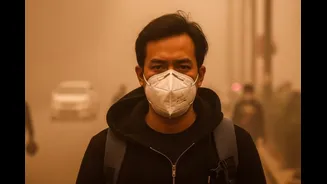
Stage 1 of GRAP is invoked whenever the AQI is forecast to fall into the 'Poor' category, which is between 201 and 300. On October 21, Delhi's average AQI crossed this threshold, climbing from 179 ('Moderate') a day earlier to 244. By the morning of October 22, the AQI was recorded at 299, right on the edge of the 'Very Poor' category. This decline is typical for this time of year, as cooler temperatures and lower wind speeds trap pollutants closer to the ground. Forecasts from the IMD and IITM predicted that the air quality was likely to remain in the 'Poor' category, prompting the CAQM to implement the first stage of curbs across the entire NCR.
The Key Rules Under Stage 1
The measures under Stage 1 are designed to control major sources of pollution without causing widespread disruption. Key directives include a strict ban on open burning of municipal solid waste and biomass. Authorities have been ordered to intensify dust control measures, including mechanised road sweeping and frequent water sprinkling. For the construction and demolition (C&D) sector, projects on plots of 500 square metres or more must be registered on the government web portal and comply with dust mitigation norms to continue operating. Additionally, hotels, restaurants, and open eateries are now banned from using coal and firewood in their tandoors. The use of diesel generator sets is also restricted, permitted only for emergency and essential services.
Which Areas and Vehicles are Affected?
These measures apply to the entire National Capital Region, which includes Delhi and major adjoining cities in Haryana, Uttar Pradesh, and Rajasthan. The goal is to create a coordinated regional response, as pollution does not respect state borders. While Stage 1 does not impose a blanket ban on vehicles, it strengthens enforcement against visibly polluting vehicles and ensures they have valid Pollution Under Control (PUC) certificates. More significantly, a key rule under the revised GRAP is to disallow inter-state buses from neighbouring states like Haryana, UP, and Rajasthan from entering Delhi unless they are electric, CNG, or BS-VI compliant diesel buses.
What Happens if Air Quality Worsens?
GRAP is designed to be incremental. If air quality deteriorates further into the 'Very Poor' category (AQI 301-400), Stage II will be invoked. This brings stricter measures, including potential restrictions on the use of diesel generators across all sectors. Stage III ('Severe', AQI 401-450) could lead to a halt on major construction activities and restrictions on BS-III petrol and BS-IV diesel cars in Delhi and several NCR cities like Gurugram, Faridabad, Ghaziabad, and Noida. The most stringent level, Stage IV ('Severe+', AQI >450), can trigger drastic steps such as banning trucks from entering Delhi, closing educational institutions, and allowing 50% of staff to work from home in public and private offices.