
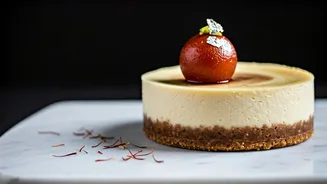


The Cheesecake Makeover
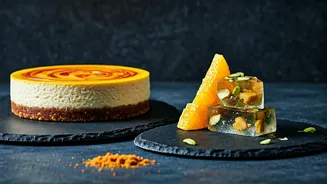
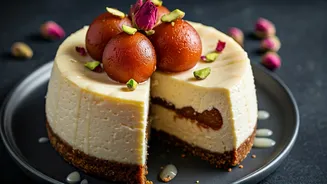
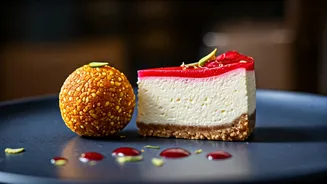
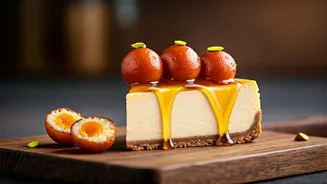
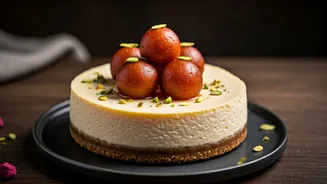
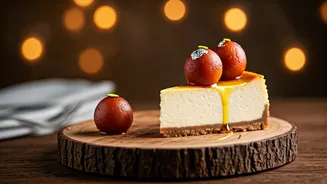
Perhaps the most famous entry in this new dessert canon is the Motichoor Ladoo Cheesecake. It’s a match made in sweet-tooth heaven, blending the best of both worlds. Imagine a crunchy, buttery biscuit base, but instead of plain digestive biscuits, it’s
made from crushed Motichoor Ladoos, giving it that iconic granular texture and a hint of cardamom and saffron. On top sits a rich, creamy, and slightly tangy cream cheese filling, which perfectly cuts through the sweetness of the ladoo. Often garnished with pistachios and delicate silver varq, it’s a dessert that looks as spectacular as it tastes. This fusion isn’t just a gimmick; it’s a thoughtful combination where the dense, ghee-rich Indian sweet finds a new, lighter expression in a globally beloved format.
From Italy with Love: Rasmalai Tiramisu
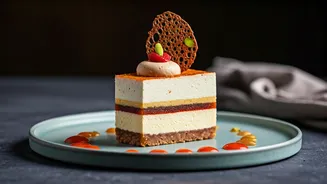
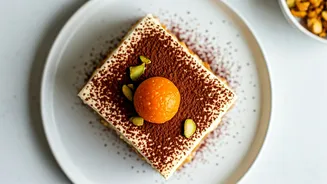
What happens when Italy’s favourite pick-me-up meets a Bengali classic? You get the incredibly indulgent Rasmalai Tiramisu. This creation swaps out the traditional coffee-soaked ladyfingers for soft, spongy pieces of rasmalai, drenched in their own sweetened, saffron-infused milk. These are then layered with a light, airy mascarpone cream that’s often subtly flavoured with cardamom or rose water instead of coffee and cocoa. The result is a creamy, delicate, and multi-layered dessert that is both familiar and shockingly new. It retains the delicate, milky essence of rasmalai while adopting the sophisticated, layered structure of a tiramisu. It’s a testament to how seamlessly Indian flavours can be woven into iconic international desserts, creating something entirely original.
When Gajar Halwa Met a Tart
Gajar ka Halwa is a winter staple, a warm hug in a bowl. But pastry chefs are taking this humble carrot pudding out of the bowl and placing it into a chic, buttery pastry shell. The Gajar Halwa Tart reimagines the dessert by giving it a structural makeover. The warm, fragrant halwa, slow-cooked with milk, sugar, and ghee, becomes a rich filling for a crisp, crumbly tart base. Sometimes it’s topped with a dollop of rabri-flavoured cream or a sprinkle of toasted almonds. This reinvention adds a delightful textural contrast—the soft, yielding halwa against the firm bite of the pastry. It elevates a rustic comfort food into a refined dessert fit for a high-tea menu, proving that even the most traditional recipes can find a glamorous new life.
Paan’s Flavourful New Forms
Paan, the quintessential Indian mouth freshener, has a complex flavour profile that is aromatic, sweet, and slightly peppery all at once. This unique taste is now making its way into a host of modern desserts. We’re seeing Paan Panna Cotta, where the creamy Italian pudding is infused with the unmistakable essence of betel leaf and gulkand (rose petal jam). Paan ice cream has become a sensation, blending the cooling sensation of the ice cream with the refreshing flavour of paan. There are even Paan Macarons and Paan Truffles, where the flavour is condensed into a single, elegant bite. This trend showcases a different kind of reinvention—it’s less about merging two desserts and more about isolating a beloved flavour and using it to create entirely new sweet experiences.
Molecular Gastronomy Meets Mithai
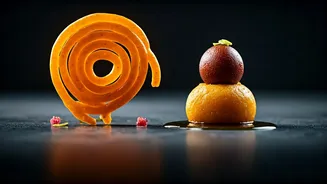
On the more experimental end of the spectrum, chefs are applying principles of molecular gastronomy to Indian sweets. Think Jalebi 'Caviar', where the essence of jalebi syrup is transformed into tiny, pearl-like spheres that burst in your mouth. Or a 'deconstructed' Kheer, where each component—the rice, the milk, the saffron, the nuts—is presented separately on the plate in different textures and forms, like a rice foam, a saffron gel, and candied almonds. These creations are more than just desserts; they are culinary art. They challenge our perceptions and force us to taste familiar flavours in a completely new context. While not something you’d make at home, these avant-garde sweets are pushing the boundaries of what Indian dessert can be, turning a simple meal-ender into a conversation starter.