



The Atmosphere's Gatekeeper
To understand this phenomenon, we first need to meet two key players: aerosols and the tropopause. The tropopause is the atmospheric boundary separating the lower layer where we live and where weather occurs (the troposphere) from the much drier, more
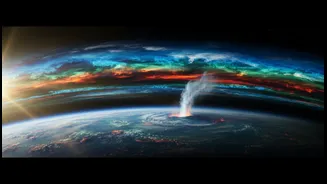
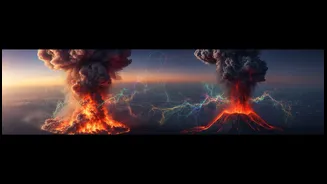
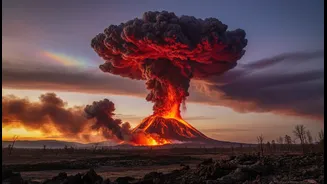
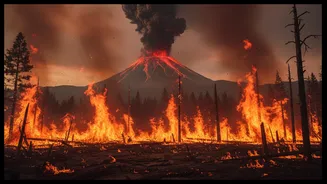
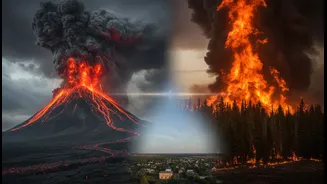
stable layer above it, the stratosphere. This boundary, found about 9 to 17 kilometres up, acts like a gatekeeper. It’s extremely cold, which effectively freeze-dries most water vapour rising from below, a process known as the 'cold trap'. This is why the stratosphere is typically very dry. Aerosols, on the other hand, are tiny solid or liquid particles suspended in the air. While some are human-made, massive amounts are blasted into the air by natural events. Wildfires produce smoke and black carbon particles, while volcanoes eject huge quantities of sulphur dioxide, which forms sulfate aerosols.
How Smoke and Ash Heat the Boundary
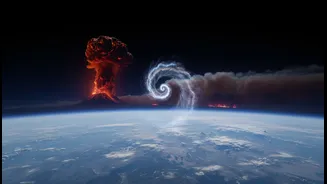
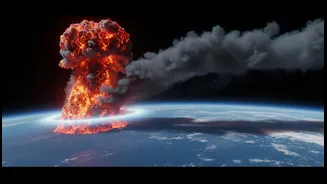
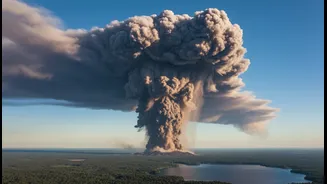
Normally, particles from the surface don't make it past the tropopause. But exceptionally intense wildfires can create their own thunderstorms, called pyrocumulonimbus clouds, which are powerful enough to punch directly through this barrier, injecting smoke deep into the stratosphere. Moderate volcanic eruptions also send plumes of aerosols high into the atmosphere. Once there, these particles, particularly dark ones like soot (black carbon) from fires, are highly effective at absorbing sunlight. This absorption heats the layer of the atmosphere where the aerosols are lingering. When this happens around the tropopause, it warms this typically frigid boundary, weakening its ability to act as a cold trap.
An Escalator for Water Vapour
With the tropopause's 'cold trap' weakened by aerosol-induced warming, the gate is effectively left ajar. This allows more water vapour from the moist troposphere below to pass through into the normally arid stratosphere. It’s not just an indirect effect; some powerful fire-driven storms are so forceful they act like elevators, physically carrying water vapour along with smoke particles directly into the upper atmosphere. The 2019-2020 Australian bushfires, for example, injected a quantity of smoke into the stratosphere comparable to a moderate volcanic eruption. Similarly, underwater volcanic eruptions, like the 2022 Hunga Tonga event, can blast staggering amounts of water vapour directly into the stratosphere. Studies have shown these processes have significantly increased moisture levels in the stratosphere since the mid-2000s.
Why More Water Up There Matters
An increase in stratospheric water vapour might not sound like a big deal, but it has significant consequences. Firstly, water vapour is a potent greenhouse gas. More of it in the stratosphere traps heat, which can lead to warming at the Earth's surface, amplifying the effects of other greenhouse gases like carbon dioxide. This feedback loop is an important factor in understanding the pace of climate change. Secondly, this extra moisture can disrupt the delicate chemistry of the stratosphere. It can enhance chemical reactions that destroy ozone, potentially delaying the recovery of the protective ozone layer that shields us from harmful UV radiation. This was observed in the wake of the Hunga Tonga eruption, where a 5% drop in ozone was recorded in just one week in the affected area. The presence of these aerosols and the resulting warming can also affect atmospheric circulation, potentially shifting jet streams and altering weather patterns down on the surface.